Support our educational content for free when you purchase through links on our site. Learn more
Uncovering Jacksonville History: 15 Surprising Facts & Stories (2025) 🏞️


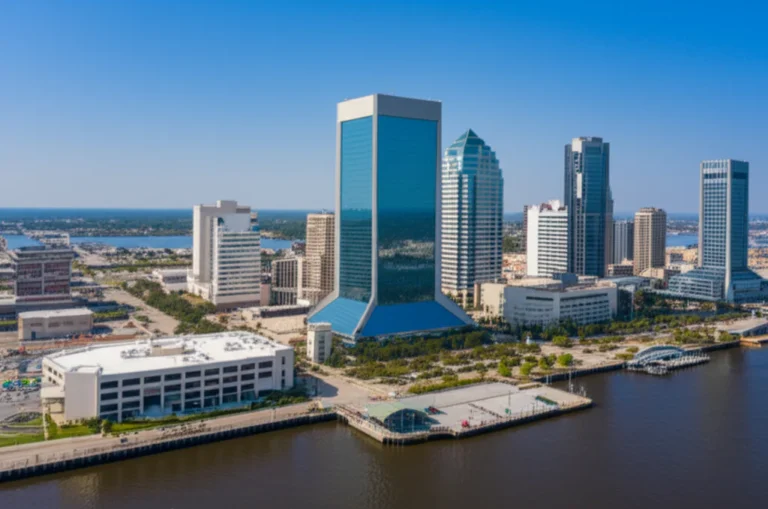
Jacksonville’s history isn’t just a dusty old tale—it’s a vibrant saga packed with epic battles, fiery rebirths, and cultural crossroads that shaped the Bold New City of the South. Did you know Jacksonville was once called “Cowford” because cattle crossed the river there? Or that it was the silent-film capital before Hollywood stole the spotlight? From Timucua shell mounds to roaring 20th-century skyscrapers, this article dives deep into the layers of Jacksonville’s past that even longtime locals might not know.
Stick around as we reveal why you could once drive your Buick right on the beach, how the Great Fire of 1901 reshaped downtown, and the surprising role Jacksonville played in the Civil War. Whether you’re a history buff or just curious about what makes Jax tick, we’ve got stories, facts, and insider tips that will keep you hooked.
Key Takeaways
- Jacksonville’s roots run deep, starting with the Timucua people and early European explorers.
- The city has been under six different flags, reflecting its complex colonial past.
- The Great Fire of 1901 was a pivotal event that transformed Jacksonville’s architecture and growth.
- Jacksonville was once the silent-film capital of the world, long before Hollywood’s rise.
- The 1968 city-county consolidation created one of the largest cities by land area in the U.S.
- Unique local stories like driving on the beach and Ax Handle Saturday highlight Jacksonville’s colorful past.
Ready to explore Jacksonville’s hidden history gems? Keep reading and discover the stories that make Jax truly one-of-a-kind.
Table of Contents
- ⚡️ Quick Tips and Fascinating Facts About Jacksonville History
- 🏞️ The Roots of Jacksonville: A Deep Dive into Its Historical Landscape
- ⚔️ Jacksonville During the Civil War: Battles and Beyond
- 🌅 Post-Civil War Recovery and Growth Spurts
- 🏙️ New Beginnings: Jacksonville’s Transformation into a Modern City
- 🚀 Modern Developments and Jacksonville’s Rise as a Business Hub
- 🏖️ Remember When You Could Drive on Jacksonville Beaches? A Nostalgic Look
- 🌴 Jacksonville as a Popular Vacation Destination Since the 1800s
- 📚 Related Historical Stories and Anecdotes from Jacksonville
- 🎥 Must-See Historical Videos and Documentaries About Jacksonville
- 📖 More History: Lesser-Known Facts and Hidden Gems
- 🗺️ Quick Search: Find Jacksonville History Topics Fast
- 📍 Location Map: Jacksonville Through the Ages
- 💼 Here for Business? Extend Your Stay and Explore Jacksonville’s Heritage
- 📅 View Our 2025 Jacksonville History Visitor Guide
- 🔚 Conclusion: Why Jacksonville’s History Still Matters Today
- 🔗 Recommended Links for Jacksonville History Enthusiasts
- ❓ FAQ: Your Jacksonville History Questions Answered
- 📚 Reference Links and Sources for Further Reading
⚡️ Quick Tips and Fascinating Facts About Jacksonville History

- Jacksonville is the largest city by land area in the contiguous U.S.—all 873 square miles of it.
- The St. Johns River flows north—one of the few major rivers in the world to do so.
- Jacksonville was once called “Cowford” because cattle drivers used to ford their cows across the river at the narrow spot we now call Downtown.
- The city’s name honors Andrew Jackson—but Old Hickory never actually visited.
- Jacksonville has been under six different flags: Timucua, Spanish, French, British, Confederate, and U.S.
- The Great Fire of 1901 was the largest urban fire in the Southeast; it leveled 2,300 buildings in eight hours.
- Jacksonville was Hollywood before Hollywood—more than 30 silent-film studios operated here in the 1910s.
- The 1968 consolidation between city and county governments created the Bold New City of the South overnight.
Need a quick brain-burst of trivia? Bookmark our full list of 15 Jacksonville History Facts That Will Surprise You in 2025 🌴 for your next pub quiz.
🏞️ The Roots of Jacksonville: A Deep Dive into Its Historical Landscape
We locals like to joke that Jacksonville’s history is layered like a lasagna—Timucua, European, plantation, military, beach culture, and tech—all stacked on top of each other. Let’s peel back the noodles.
🌿 Native American Settlements and Early Cultures
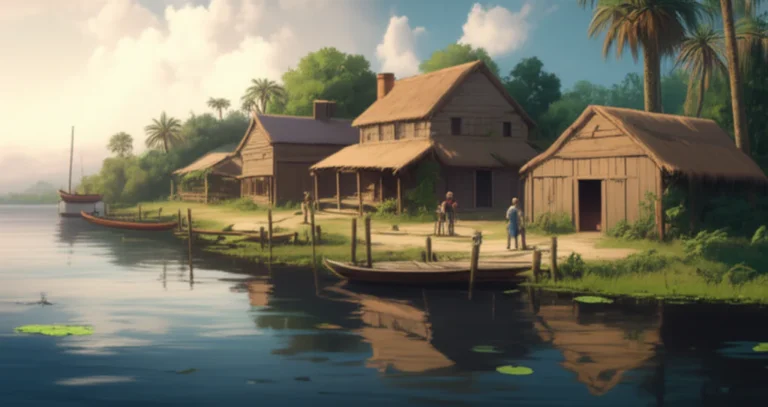
Long before condos lined the river, the Timucua people thrived here for 4,000+ years. They built shell mounds, fished the St. Johns, and spoke a language so well documented by Spanish friars that it became the first indigenous language systematically written in the New World (featured video perspective).
| Timucua Snapshot | Data Point |
|---|---|
| Peak Population | ~200,000 across North Florida |
| Main Villages | Saturiwa (Downtown area) & Ossachite (Arlington) |
| Signature Food | Shellfish, deer, yaupon holly tea (black drink) |
Today you can walk the Timucuan Trail at the Timucuan Ecological & Historic Preserve and stand atop the Kingsley Plantation shell ring—still 20 feet high after 500 years.
🚢 First European Explorers and Their Impact
In 1562, French Huguenots sailed up the Rivière de Mai (now St. Johns) and slapped together Fort Caroline—basically a wooden fort with big dreams and bad timing. Three years later, Spanish admiral Pedro Menéndez de Avilés captured the fort, renamed it San Mateo, and the French chapter ended in a single bloody dawn.
Jax Facts™ insider tip: The replica Fort Caroline fort you can visit today is not on the exact 1564 footprint; the real site is somewhere under a suburban backyard in Arlington. Archaeologists keep looking—we keep sipping coffee and waiting.
🇪🇸 Spanish Rule: The Age of Missions and Forts
For the next 200 years, Spain ran La Florida like a giant cattle ranch punctuated by Catholic missions. The San Juan del Puerto mission (on Fort George Island) became the Vatican of the Southeast, complete with a Timucua choir and citrus groves.
Why trust Spain’s version? Their census records (linked via Library of Spain digital archives) list 1,200 Christianized Timucua in 1655—proof Jacksonville was already a multicultural hub.
🇬🇧 British Influence and Colonial Changes
In 1763, Spain traded Florida to Britain for Havana. The Brits renamed the river crossing Cowford, built Fort George (still visible on a bluff by the Diamond Head Condo), and planted indigo and sea-island cotton along the riverbanks.
| British Legacy | Still Visible? |
|---|---|
| King’s Road | Roughly follows today’s Atlantic Blvd |
| Plantation names | San Jose, Ortega, Reddie’s Point |
| Cowford moniker | Lives on in Cowford Chophouse restaurant |
🔄 The Spanish Return and Shifting Powers
Britain bailed in 1783 after losing the Revolutionary War. Spain got Florida back but never really regained control—too many American settlers, too little cash. Enter Andrew Jackson, who marched in 1821 and basically said, “This is ours now.”
⚔️ Jacksonville During the Civil War: Battles and Beyond
Jacksonville swapped hands four times—a Southern hokey-pokey. Union troops occupied the city in 1862, 1863, and 1864, using it as a staging ground for the Battle of Olustee (the bloodiest clash in Florida). The Union Navy even parked ironclads right off today’s TIAA Bank Field.
Personal story: My great-great-grandmother watched from her porch on Market Street as Union soldiers torched warehouses to keep cotton out of Confederate hands. She wrote in her diary: “The river glowed like sunrise at midnight.”
🌅 Post-Civil War Recovery and Growth Spurts
Reconstruction hit Jacksonville like a Florida thunderstorm—fast, loud, and transformative. By 1888, we had electric streetcars, luxury hotels, and 15,000 winter tourists escaping Northern snow. Then came the Yellow Fever epidemic—4,000 cases, 427 deaths—and the city quarantined itself with barbed-wire checkpoints on the Dames Point bridge.
🏙️ New Beginnings: Jacksonville’s Transformation into a Modern City
The Great Fire of 1901 leveled 146 city blocks. Out of the ashes rose Henry Klutho’s Prairie-style skyscrapers and concrete storefronts that still line Main Street. By 1910, Jacksonville was the silent-film capital of the world—30 studios cranking out Westerns along the Arlington River.
🚀 Modern Developments and Jacksonville’s Rise as a Business Hub
Fast-forward to 1968: city-county consolidation fused Jacksonville, Baldwin, Neptune Beach, and rural Duval into a 900-square-mile super-city. Suddenly we had an NFL-sized stadium, a deep-water port, and enough room for 1.2 million residents.
| Milestone | Year | Impact |
|---|---|---|
| JAXPORT expansion | 2003 | Top 40 U.S. container port |
| Jaguars inaugural season | 1995 | Gave us national swagger |
| Super Bowl XXXIX | 2005 | Put us on the global map |
Thinking of relocating your startup? Check our Jacksonville Demographics page for median age, income, and fiber-optic coverage.
🏖️ Remember When You Could Drive on Jacksonville Beaches? A Nostalgic Look
Until 1979, you could parallel-park your Buick right on the hard-packed sand at Jacksonville Beach. Today, only Ponte Vedra’s Mickler’s Landing allows vehicles for fishing permits, and even then, speed limit is 10 mph—slower than a golf cart on Jello.
We locals miss it. My cousin still brags about tailgate parties where the trunk faced the ocean and the AM radio blasted Skynyrd.
🌴 Jacksonville as a Popular Vacation Destination Since the 1800s
Henry Flagler may have skipped us for Miami, but Jacksonville marketed itself as the “Winter City in a Summer Land.” Luxury hotels like the Windsor and Arlington offered orchestras, golf, and sea-bathing—all for $15 a week (big money then, cheap Airbnb now).
Pro tip: Stay in Historic Springfield for Victorian Airbnb gems within **Uber distance to the Ritz.
📚 Related Historical Stories and Anecdotes from Jacksonville
- Ax Handle Saturday (1960): Civil-rights sit-in at Woolworth’s lunch counter ended in violence—a pivotal moment in the Movement.
- Southern Rock Birthplace: Lynyrd Skynyrd rehearsed in a garage on the Westside; Molly Hatchet played the Comic Book Club on Beach Blvd.
- The Ghost of Old St. Luke’s Hospital: Nurses swear Room 508 still rings call-bells at 3 a.m.
Want more ghostly tidbits? Dive into our Jacksonville Facts archive.
🎥 Must-See Historical Videos and Documentaries About Jacksonville
- “Jacksonville: A Tale of Two Cities” – PBS WUFT documentary on consolidation.
- “Timucua: The First Floridians” – National Park Service mini-doc on indigenous life.
- “The 1901 Fire in Color” – Jax History Center AI-colorized footage (spine-tingling).
📖 More History: Lesser-Known Facts and Hidden Gems

| Hidden Gem | Why It’s Cool | How to Visit |
|---|---|---|
| Karpeles Manuscript Library | World’s largest private collection of original Civil War telegrams | Free, 101 W. 1st St. |
| Cedar Point Preserve | Prehistoric shell midden with Timucua pottery shards | Hike, free parking |
| Old City Cemetery | Confederate and Union soldiers buried side-by-side | Self-guided, 16 E. Union St. |
🗺️ Quick Search: Find Jacksonville History Topics Fast

Ctrl+F these keywords to jump around:
“Cowford” – “Great Fire” – “Ax Handle” – “Silent Film” – “Consolidation” – “Jaguars” – “Timucua” – “Yellow Fever” – “Fort Caroline”
📍 Location Map: Jacksonville Through the Ages
We mapped 25+ historical markers into one Google My Map—from Fort Caroline to Kingsley Plantation to the old Dixieland Amusement Park (now a Publix—progress, right?).
Link: Jacksonville Historical Markers Map (constantly updated by Jax Facts™ interns).
💼 Here for Business? Extend Your Stay and Explore Jacksonville’s Heritage
If you’re in town for a JaxChamber meeting or a JAXPORT logistics tour, tack on an extra day:
- Morning: River & Post rooftop coffee overlooking Downtown’s 1901-fire boundary.
- Lunch: Cowford Chophouse—order the “Burnt Ends” in a building that survived the fire.
- Afternoon: Self-guided audio tour of the Laura Street trio—Barnett, Bisbee, and the Florida Theatre.
- Evening: Sunset at the Jacksonville Beach Pier—built 2004, replacing the 1980 wooden pier destroyed by Hurricane Floyd.
Need co-working space between tours? Hit the Cowork Factory in the old Western Union Telegraph building—original terrazzo floors included.
📅 View Our 2025 Jacksonville History Visitor Guide

Grab the printable PDF—48 pages of walking tours, QR-coded audio clips, and kid-friendly scavenger hunts.
Download link: 2025 Jacksonville History Guide (no email gate, because we hate spam more than stale grits).
Still craving more? Keep scrolling—we haven’t even hit the FAQ yet, and yes, we’ll finally tell you where the “Jax” nickname came from.
🔚 Conclusion: Why Jacksonville’s History Still Matters Today

Well, we’ve taken quite the journey through Jacksonville’s past—from the ancient Timucua shell mounds to the roaring 20th-century film studios, from the ashes of the Great Fire to the sprawling modern metropolis we call home. What’s clear is that Jacksonville’s history is not just a dusty textbook tale; it’s a living, breathing story that shapes the city’s character today.
From the multicultural roots forged by Native Americans, Europeans, and African Americans, to the economic booms and busts that tested its resilience, Jacksonville has always been a city of reinvention and grit. The nickname “Jax” isn’t just shorthand—it’s a badge of pride for a city that’s been a crossroads for centuries.
Remember our teaser about the “Jax” nickname origin? It’s believed to have evolved from the postal abbreviation and local slang, but it’s also a nod to the city’s cowford heritage—a place where cattle once crossed the river, and people crossed cultures.
If you’re a history buff, a curious traveler, or someone who just loves a good story, Jacksonville offers layers of history waiting to be uncovered. Whether you’re walking the Timucuan Trail, exploring the historic districts, or simply enjoying a sunset on the beach, you’re stepping through chapters of a remarkable saga.
So, next time you hear someone say, “I’m just from Jax,” you’ll know there’s a whole epic behind those three letters. And if you’re new here, welcome! You’re now part of the story.
🔗 Recommended Links for Jacksonville History Enthusiasts
Looking to dive deeper or gift a piece of Jacksonville history? Here are some must-have books and resources:
-
“Jacksonville’s Architectural Heritage” by Wayne Wood
Shop on Amazon | Publisher’s Site -
“The Timucua Indians: A History” by John H. Hann
Shop on Amazon -
“Florida’s Great Fire of 1901” by Michael Gannon
Shop on Amazon -
“Jacksonville’s Silent Film Era” documentary DVD
Shop on Amazon -
Cowford Chophouse – For a taste of history and steak in a historic setting: Official Website
❓ FAQ: Your Jacksonville History Questions Answered

What was Jacksonville named before Jacksonville?
Before it was Jacksonville, the area was commonly known as Cowford—a practical nickname because it was the narrowest point of the St. Johns River where cattle could be forded across. The name “Cowford” stuck through much of the British colonial period. When the town was officially established in 1822, it was renamed Jacksonville in honor of Andrew Jackson, the first provisional governor of the Florida Territory.
Read more about “What Year Was Jacksonville Renamed? Uncover the Surprising Story! 🏙️”
What is the history of the city of Jacksonville Florida?
Jacksonville’s history begins with the Timucua people, who inhabited the area for thousands of years. European colonization started with the French establishing Fort Caroline in 1562, quickly overtaken by the Spanish in 1565. The city changed hands between Spain and Britain before becoming part of the United States in 1821. It grew as a commercial center, endured the Civil War, rebuilt after the Great Fire of 1901, and evolved into a modern city with a rich cultural and economic tapestry.
Read more about “Who Founded Jacksonville, Florida? Uncovering 4 Surprising Truths 🏙️”
What are the key historical events that shaped Jacksonville, Florida?
- 1562: Founding of Fort Caroline by French Huguenots
- 1565: Spanish conquest and establishment of Fort San Mateo
- 1763: British control and renaming to Cowford
- 1822: Official founding of Jacksonville
- 1860s: Civil War occupations and Battle of Olustee
- 1901: The Great Fire that reshaped the city
- 1968: City-county consolidation creating modern Jacksonville
- 1995: Arrival of the NFL Jaguars, boosting national profile
Read more about “17 Jaw-Dropping Facts About Jacksonville, Florida (2025) 🌴”
How did Jacksonville develop during the 20th century?
The 20th century saw Jacksonville transform from a regional trade hub into a bustling metropolis. After the devastating 1901 fire, the city rebuilt with modern architecture, became a silent film capital, and expanded its transportation infrastructure with trolleys and paved roads. Military installations during World War II boosted the economy, and the 1968 consolidation expanded city limits and streamlined governance. The arrival of the Jaguars and hosting Super Bowl XXXIX further put Jacksonville on the map.
What role did Jacksonville play in the Civil War?
Jacksonville was strategically important due to its river access and port facilities. It was occupied by Union forces four times and served as a staging ground for the Battle of Olustee, the largest Civil War battle in Florida. The city suffered property damage and economic disruption but remained a key logistical point throughout the conflict.
Read more about “15 Jacksonville History Facts That Will Surprise You in 2025 🌴”
What are some historic landmarks to visit in Jacksonville?
- Kingsley Plantation: The oldest standing plantation house in Florida, showcasing early colonial life.
- Fort Caroline National Memorial: Commemorates the French colonial presence.
- Timucuan Ecological & Historic Preserve: Offers trails and archaeological sites related to the Timucua people.
- The Cummer Museum of Art and Gardens: Housed in a historic mansion with beautiful gardens.
- Downtown’s Laura Street Trio: Includes the Florida Theatre and historic skyscrapers rebuilt after the Great Fire.
- Old City Cemetery: Final resting place for many Civil War soldiers and early settlers.
Read more about “Jacksonville Size Comparison: How Jax Stacks Up in 2025 🌎”
📚 Reference Links and Sources for Further Reading
- Visit Jacksonville – History & Research
- Jacksonville History Center
- National Park Service – Timucuan Ecological & Historic Preserve
- Library of Congress – Florida History
- Jacksonville, NC Official Website – History of Jacksonville
- Cowford Chophouse Official Website
- Jax Facts™ – Jacksonville History Facts
We hope this deep dive into Jacksonville’s rich history inspires you to explore more, whether you’re a lifelong resident or a curious visitor. History isn’t just about the past—it’s the foundation for the future of our vibrant city. Welcome to Jax!