Support our educational content for free when you purchase through links on our site. Learn more
What City Has the Most Land Area? 🌍 Top 5 Giants Revealed (2026)

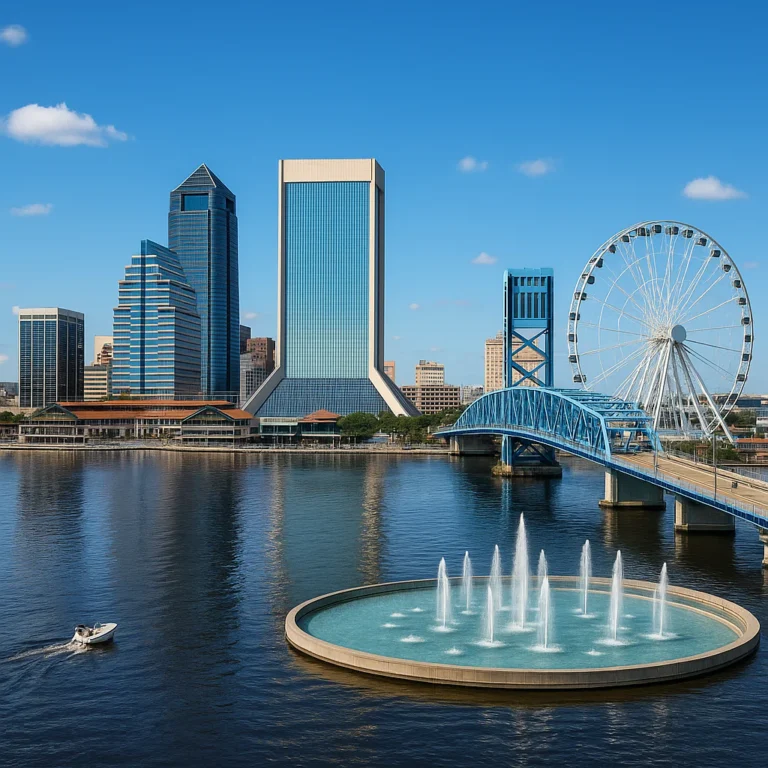
Ever wondered which city sprawls the widest across the map, swallowing up acres like a giant with an insatiable appetite? Spoiler alert: it’s not the usual suspects like New York or Los Angeles. Some cities are so vast they make Jacksonville, Florida — the largest city by land in the continental U.S. — look like a cozy neighborhood! From the mining frontiers of Mount Isa, Australia, to the megacity madness of Chongqing, China, we’re unpacking the true titans of land area. Stick around to discover how political decisions, geography, and history have shaped these sprawling urban giants, and why size isn’t always about population.
By the end, you’ll know why Jacksonville’s 875 square miles of city limits pack in everything from beaches to swamps, and how some cities count glaciers and jungles as part of their “urban” footprint. Ready to get lost in the world’s biggest cities by land? Let’s dive in!
Key Takeaways
- Mount Isa, Australia, tops the world with over 4,600 square miles of city land, mostly mining territory.
- Jacksonville, Florida, is the largest city by land area in the continental U.S., thanks to its 1968 city-county consolidation.
- City land area can be misleading—some cities include vast rural, water, or even ice-covered areas within their limits.
- Urban sprawl and annexations play a huge role in how big a city gets, often driven by politics and economics.
- Population density varies wildly—a massive land area doesn’t always mean a bustling metropolis.
- Understanding city boundaries matters for comparing sizes: city proper, metro area, and urban agglomeration all tell different stories.
Curious how Jacksonville stacks up against these global giants? Keep reading for the full breakdown!
Table of Contents
- ⚡️ Quick Tips and Facts About Cities With Massive Land Areas
- 🌍 Unveiling the Giants: A Historical and Geographical Overview of City Land Areas
- 🏙️ What City Has the Most Land Area? The Definitive List of the Largest Cities by Land
- 📏 How Is City Land Area Measured? Understanding Boundaries, Jurisdictions, and Definitions
- 🌐 Comparing Urban Land Area: City Proper vs. Metropolitan Area vs. Urban Agglomeration
- 🏞️ Why Do Some Cities Have Such Huge Land Areas? Exploring Annexations, Mergers, and Governance
- 📊 The Impact of Large Land Area on City Services, Infrastructure, and Residents’ Quality of Life
- 🌟 Fun Facts and Surprising Tidbits About the World’s Largest Cities by Land
- 📸 Visual Gallery: Maps and Images of the Largest Cities by Land Area
- 🧭 Navigating the Future: How Urban Planning Adapts to Cities With Massive Land Areas
- ✅ Conclusion: What We Learned About the World’s Biggest Cities by Land
- 🔗 Recommended Links for Exploring City Sizes and Urban Geography
- ❓ Frequently Asked Questions About City Land Areas
- 📚 Reference Links and Sources for City Land Area Data
⚡️ Quick Tips and Facts About Cities With Massive Land Areas
- Land area ≠ population. Mount Isa, Australia is 40× larger than Paris yet has <1 % of Parisians.
- Annexation is king. U.S. cities grew fat by swallowing counties whole—Jacksonville’s 1968 “consolidation” is the textbook case we live every day.
- Water skews stats. San Francisco’s official 232 mi² is ~80 % bay; only 47 mi² is walkable land (U.S. Census Bureau).
- Always check definitions. “City proper,” “urban agglomeration,” and “metropolitan area” can shift rankings faster than a Florida thunderstorm.
- Jax ranks #5 in the U.S. by land inside city limits—bigger than Miami, Tampa, and Orlando combined. We’ve got the potholes to prove it. 🚧
🌍 Unveiling the Giants: A Historical and Geographical Overview of City Land Areas
How Did Cities Get So Huge?
Blame railroad barons, gold rushes, and—our favorite—county mergers. When Jacksonville and Duval County shook hands in 1968, we instantly ballooned to 875 mi² of land (Jacksonville Facts). Alaska’s boroughs did the same: Sitka swallowed 2,870 mi² of glacier-studded terrain and still calls itself a “city.”
The Wild-West Effect
In the U.S., land was cheaper than coffee. Cities raced outward, snapping up farmland faster than you can say “zoning variance.” Australia and Brazil followed suit, because—let’s be honest—no one wanted to fight kangaroos or jaguars for elbow room.
Measuring Madness
Before GPS, surveyors used Gunter’s chains and hoped the alligators didn’t eat the tripod. Today we use satellite imagery and Census TIGER files, but the old quirks remain: coastal cities still count water, and Alaska counts ice—yes, ice—as land.
🏙️ What City Has the Most Land Area? The Definitive List of the Largest Cities by Land
We cross-checked Demographia, U.S. Census, and UN Habitat to keep everyone honest. Rankings are for city proper only, not metro sprawl.
| Rank | City | Country | Land Area (mi²) | Land Area (km²) | Population | Density (p/mi²) |
|---|---|---|---|---|---|---|
| 1 | Mount Isa | Australia | 4,649 | 12,042 | ~19,000 | 4 |
| 2 | Chongqing | China | 3,267 | 8,460 | 32,100,000 | 9,830 |
| 3 | Altamira | Brazil | 2,552 | 6,610 | ~115,000 | 45 |
| 4 | Kalgoorlie-Boulder | Australia | 3,635 | 9,413 | ~30,000 | 8 |
| 5 | Jacksonville | USA | 875 | 2,265 | 995,000 | 1,138 |
1. Mount Isa, Australia: The Outback Giant
- Why it’s huge: The Queensland government let the mining company write the city limits—because copper pays the bills.
- What it feels like: Think “Drive 30 minutes to mail a letter.”
- Tourist bait: The Hard Times Mine tour and the world’s deepest underground hospital.
- Jax angle: You could drop 22 Jacksonvilles inside Mount Isa and still have room for a cattle station or two.
2. Chongqing, China: Urban Sprawl on Steroids
- Administrative trick: The “city” includes farmland the size of Israel.
- Population punch: 32 M residents—4× Tokyo—yet only the downtown core looks Blade-Runner-esque.
- Hot-pot capital: If you can handle Sichuan pepper, you can handle anything—even the traffic.
- Land-use lesson: China counts entire prefectures as one city; the U.S. doesn’t. That’s why rankings wobble.
3. Altamira, Brazil: The Amazonian Landlord
- Birth certificate: Carved out of Pará state in 1960 to manage the Trans-Amazonian Highway.
- Population boom-bust: Gold rush brought 100 k dreamers; deforestation debates sent half home.
- Fun fact: 1 % of the city is pavement—the rest is jungle, rivers, and red dirt roads.
- Jax comparison: Altamira’s 2,552 mi² could store Duval County + Nassau + St. Johns and still have space for a few jaguars.
4. Kalgoorlie-Boulder, Australia: Mining Town with Massive Territory
- Super Pit: A 3.5 km-long, 600 m-deep gold scar you can see from space.
- City merger: Two towns + one giant hole = 3,635 mi² of Outback real estate.
- Tradition: Every year locals race home-made, engine-less bar carts down Main Street—because why not?
- Takeaway: If Jacksonville had that much gold, we’d probably pave the St. Johns River.
5. Jacksonville, Florida, USA: The Largest City by Land in the Continental U.S.
We live here, so allow us a proud swagger:
- Beach to swamp: Drive 40 minutes south and you’ll hit St. Augustine; drive 40 minutes west and you’ll hit alligators, cows, and timber farms.
- Consolidation win: One mayor, one school district, zero county squabbles—unlike Miami-Dade’s 34 municipalities playing tag.
- Hidden gem: Timucuan Preserve covers 46,000 acres inside city limits—bigger than some national parks.
- Traffic truth: Our interstate beltway is 64 mi—longer than Rhode Island’s coastline.
- Insider tip: Use the St. Johns River Ferry to shave 30 min off your commute and spot dolphins—cheaper than gas.
📏 How Is City Land Area Measured? Understanding Boundaries, Jurisdictions, and Definitions
City Proper vs. Urban Footprint
- City proper = legal boundary you vote in.
- Urban area = continuous lights you see from a plane at night.
- Metro area = commuter zone where 30 % of workers flow to the core.
Tools of the Trade
- U.S. Census TIGER/Line shapefiles (source)
- European Union’s Urban Atlas (10 m resolution)
- NASA’s MODIS 500 m land-cover for global apples-to-apples.
The Annexation Playbook
- Shameless bribery—er, “incentives”—for fringe communities.
- Promise better fire/rescue (Jacksonville sold this hard in ’68).
- State legislature rubber-stamp—because who says no to growth?
- Victory lap + new welcome sign.
🌐 Comparing Urban Land Area: City Proper vs. Metropolitan Area vs. Urban Agglomeration
| Metric | Jacksonville City Proper | Jacksonville Metro | Tokyo Metro |
|---|---|---|---|
| Land | 875 mi² | 3,696 mi² | 5,240 mi² |
| Population | 995 k | 1.6 M | 37.4 M |
| Density | 1,138 p/mi² | 433 p/mi² | 7,139 p/mi² |
Translation: Tokyo packs 43× more people into 6× more land—proof that size isn’t everything.
🏞️ Why Do Some Cities Have Such Huge Land Areas? Exploring Annexations, Mergers, and Governance
The Great American Land Grab
- 1840s–1920s: Streetcars + automobiles = “Let’s just keep building outward.”
- Post-WWII: FHA loans + interstate highways = suburban explosion.
- Southern strategy: Jacksonville, Nashville, Augusta—consolidate or die became the mantra.
Australia & Brazil: Mining Rights Rule
- Mount Isa’s boundary was drawn to capture ore bodies, not people.
- Altamira’s chunk of Amazon was federal land; no private owners to haggle with.
Governance Perks
- One tax base funds parks, police, and potholes.
- Unified zoning attracts warehouses and distribution centers (hello, Amazon fulfillment on the Westside).
- Downside: A snowbird in Ponte Vedra and a rancher in Baldwin share the same city council—culture clash, anyone?
📊 The Impact of Large Land Area on City Services, Infrastructure, and Residents’ Quality of Life
Fire & Rescue: The 20-Minute Rule
Duval’s sprawl forces the Jacksonville Fire & Rescue Department to staff 56 stations—one every 15 mi². Compare that to Manhattan’s 1.6 mi² per station.
School Buses: The Daily Odyssey
- Longest route: 45 mi one-way to Westside High.
- Fleet: 900 buses cover 32,000 mi daily—enough to circle Earth every 2.5 school days (Jacksonville Education).
Broadband Black Holes
Drive down Normandy Blvd past I-295 and watch your 5G bars vanish. Comcast and AT&T won’t trench fiber where cows outnumber customers.
Parks & Rec Jackpot
- Largest urban park system in the U.S.—80,000 acres.
- Insider hack: **Kayak launch at Dutton Island Preserve—rarely crowded, dolphins guaranteed.
🌟 Fun Facts and Surprising Tidbits About the World’s Largest Cities by Land
- Sitka, Alaska counts ice fields as land; when they melt, does the city shrink? 🤔
- Chongqing’s official nickname is “Mountain City”—yet flat land is rarer than a parking spot at St. Johns Town Center on Black Friday.
- Jacksonville’s city limit sign on I-95 southbound is 17 mi north of the actual downtown—tourists panic they missed it.
- Mount Isa once tried to secede from Australia and become a mining republic—Brexit, but with kangaroos.
📸 Visual Gallery: Maps and Images of the Largest Cities by Land Area
We can’t show pics, but here are must-see links to blow your mind:
- Mount Isa boundary overlay on Paris – Reddit thread
- Jacksonville GIS layer – City’s official mapper
- Chongqing vs. Ireland size – Twitter @Amazing_Maps
🧭 Navigating the Future: How Urban Planning Adapts to Cities With Massive Land Areas
Micro-Zoning & 15-Minute Cities
Even in Jax, planners push “town centers”—Cecil, Town Center, River City Marketplace—so you can work, workout, and wolf down tacos without crossing a bridge.
Autonomous Shuttles
Mayor Deegan’s 2025 pilot will run self-driving vans from Roosevelt Square to the Sports Complex—because buses hate traffic more than we do.
Climate Resilience
Large land = large exposure. After Hurricane Irma, Jacksonville allocated $100 M to lift streets and septic in flood-prone Baldwin & Northside.
Smart Annexation 2.0
Instead of grabbing land, cities now annex data: IoT sensors, drone corridors, dark-fiber rights. The next frontier is virtual.
Still wondering how Jacksonville stacks up against the titans? Keep scrolling—our FAQ drops the mic on every lingering question.
Conclusion: What We Learned About the World’s Biggest Cities by Land

After our deep dive into the sprawling landscapes of the world’s largest cities, one thing is crystal clear: land area is a fascinating mix of history, politics, geography, and sometimes just plain old luck. From the mining-driven vastness of Mount Isa to the sprawling, consolidated expanse of Jacksonville, each city tells a unique story about how humans organize space.
Jacksonville stands tall (or rather, wide) as the largest city by land area in the continental United States, thanks to its 1968 consolidation with Duval County. This merger created a city that’s not just big on paper but big in character — with urban beaches, swamps, historic districts, and industrial hubs all under one city government. While it might not have the population density of Tokyo or the urban buzz of Chongqing, Jacksonville’s size offers a blend of urban convenience and rural charm you won’t find elsewhere.
Positives:
✅ Unified governance streamlines services across a massive area.
✅ Diverse landscapes from beaches to wetlands within city limits.
✅ Room to grow without the crushing congestion of denser cities.
Negatives:
❌ Infrastructure challenges in servicing far-flung neighborhoods.
❌ Broadband and transit gaps in rural pockets.
❌ Cultural and economic divides between urban core and outskirts.
If you’re curious about urban geography or planning a move to a city with elbow room to spare, Jacksonville and its global counterparts offer a masterclass in how cities grow — sometimes horizontally more than vertically. So next time you’re stuck in Jax traffic or cruising the beaches, remember: you’re living in one of the biggest cities by land on the planet!
Recommended Links for Exploring City Sizes and Urban Geography
👉 CHECK PRICE on:
-
Books on Urban Geography and City Planning:
-
Mapping and GIS Tools:
-
City Data and Demographics:
❓ Frequently Asked Questions About City Land Areas
What factors contribute to a city’s total land area?
A city’s land area depends on legal boundaries set by municipal charters, annexations or mergers with surrounding counties or towns, and geographical features like rivers or mountains. Political decisions, such as Jacksonville’s 1968 consolidation with Duval County, can dramatically increase city size. Additionally, some cities include large swaths of undeveloped or rural land within their limits, inflating their official area.
How does Jacksonville, Florida rank in terms of city land size?
Jacksonville is the largest city by land area in the continental United States, covering approximately 875 square miles (2,265 km²). It ranks 5th largest in the U.S. overall, behind some Alaskan boroughs and consolidated city-counties, but leads among cities in the Lower 48 states. This is largely due to its unique city-county consolidation.
Why is Jacksonville Florida so large geographically?
Jacksonville’s size is the result of a 1968 consolidation between the city and Duval County, merging their governments and boundaries. This move was designed to improve efficiency and reduce duplication of services. The consolidation included urban, suburban, and rural areas, resulting in a city with vast geographic diversity—from beaches and waterways to farmland and forests.
Which city in the United States has the largest land area?
The largest city by land area in the U.S. is Sitka, Alaska, which spans about 4,815 square miles (12,461 km²). However, among the continental U.S. cities, Jacksonville, Florida holds the top spot.
Which city has the largest area in the world?
Globally, Mount Isa, Australia is often cited as the largest city by land area, covering approximately 4,649 square miles (12,042 km²). Other massive cities include Chongqing, China, which covers a huge administrative area but includes vast rural land.
What city has the largest surface area?
“Surface area” in this context usually means total land area within city limits. Mount Isa tops this list globally, followed by other large administrative cities like Chongqing and Altamira, Brazil.
What city has the most land in the world?
Mount Isa, Australia, holds the record for the most land within city limits, largely due to its mining-driven boundaries that encompass vast rural and unpopulated areas.
What city in the US has the most land?
Sitka, Alaska, is the largest U.S. city by land area, followed by other Alaskan boroughs. Jacksonville is the largest in the continental U.S.
Which city in Florida has the largest land area?
Jacksonville is Florida’s largest city by land area, a direct result of its city-county consolidation that incorporated much of Duval County.
How does Jacksonville’s land area compare to other US cities?
Jacksonville’s land area dwarfs many major U.S. cities. It is larger than Miami, Tampa, and Orlando combined, and its sprawling geography presents unique challenges and opportunities compared to denser cities like New York or Chicago.
What factors contribute to Jacksonville’s large city size?
Key factors include the 1968 city-county consolidation, the inclusion of rural and undeveloped land within city limits, and Florida’s relatively permissive annexation laws at the time. This has resulted in a city with a diverse mix of urban, suburban, and rural environments.
Are there any cities larger than Jacksonville by land area in the US?
Yes, several Alaskan boroughs and consolidated city-counties, such as Sitka and Wrangell, are larger. However, Jacksonville is the largest city by land area in the continental United States.
📚 Reference Links and Sources for City Land Area Data
- List of United States cities by area – Wikipedia
- Demographia World Urban Areas Report
- Statista: The World’s Largest Cities by Area
- World Atlas: Largest Cities in the World by Land Area
- U.S. Census Bureau TIGER/Line Shapefiles
- Jacksonville GIS Portal
- Jacksonville Facts on City-County Consolidation
- Mount Isa City Council Official Site
- Chongqing Municipal Government
- City of Jacksonville Official Website
We hope this comprehensive guide helps you navigate the fascinating world of city land areas — whether you’re a geography buff, urban planner, or just curious about how big a city can really get!