Support our educational content for free when you purchase through links on our site. Learn more
Why Is Jacksonville Called Cowford? 🐄 The Untold Story (2026)

Ever wondered why Jacksonville, Florida, was once known by a name that sounds more like a cattle ranch than a bustling city? The story of “Cowford” is a fascinating journey through geography, indigenous heritage, colonial ambitions, and a whole lot of moo-ving cattle. From the Timucua people’s original name Wacca Pilatka to British drovers crossing the St. Johns River, this nickname reveals the gritty, muddy roots of a city that grew into the Bold New City of the South.
Stick around, because later we’ll uncover 12 surprising facts about Cowford you won’t find in your average history book, and reveal how modern Jacksonville still honors its bovine beginnings—yes, even in craft beer and rooftop bars! Ready to step back in time and see the city through the eyes of the cows that once crossed its river? Let’s dive in.
Key Takeaways
- Jacksonville’s original name, Cowford, comes from the narrowest crossing of the St. Johns River where cattle were driven across.
- The name is a direct English translation of the Timucua phrase Wacca Pilatka, meaning “place where cows cross.”
- British settlers built the King’s Road and established ferry services, making Cowford a vital trade and cattle-driving hub.
- The city was renamed Jacksonville in 1822 to honor Andrew Jackson, despite him never visiting the area.
- Modern Jacksonville embraces its Cowford heritage through landmarks like the Cowford Chophouse and local brews such as Cowford Ale.
- The story of Cowford reflects Jacksonville’s transformation from a muddy cattle crossing to a thriving metropolitan hub.
Curious to learn more about the cattle crossings, colonial roads, and even a secret Cowford brew? Keep reading!
Welcome to Jax Facts™, your ultimate guide to the Bold New City of the South! We’re a team of locals who live, breathe, and eat (mostly at the Cowford Chophouse) in Jacksonville. Ever looked at our glittering skyline and wondered why we were once basically a glorified cow crossing? We’ve got the dirt—and the history—on why Jacksonville was originally called Cowford.
Grab a cold one from Intuition Ale Works, and let’s dive into the river of history! 🌊🐄
Table of Contents
- ⚡️ Quick Tips and Facts
- 🐄 The Beefy Roots: How Jacksonville Earned Its Bovine Moniker
- 🏹 Before the Skyscrapers: The Timucua and Wacca Pilatka
- 🇬🇧 Crossing the St. Johns: Why the British Loved a Good Cattle Drive
- 🏗️ From Hooves to Hub: The Post-Civil War Transformation
- 🏙️ The 20th Century Glow-Up: Keeping the Cowford Spirit Alive
- 🥩 12 Surprising Facts About Jacksonville’s Cowford Heritage
- 🍽️ Where to Experience ‘Cowford’ Today: Brands We Love
- 🏁 Conclusion
- 🔗 Recommended Links
- ❓ FAQ
- 📚 Reference Links
⚡️ Quick Tips and Facts
Before we get into the “meat” of the story, here’s a snapshot of the Cowford legacy.
| Feature | Detail |
|---|---|
| Original Name | Wacca Pilatka (Timucua for “Place of the cows’ crossing”) |
| English Name | Cowford (Established circa 1763) |
| Location | The narrowest point of the St. Johns River (near the Main Street Bridge) |
| Renamed In | 1822 (Named after Andrew Jackson) |
| Key Landmark | The King’s Road, which connected St. Augustine to Georgia |
Quick Dos and Don’ts for Jax History Buffs:
- ✅ Do visit the Museum of Science & History (MOSH) to see the “Currents of Time” exhibit.
- ✅ Do take a selfie at the Cowford Chophouse—the building is a restored 1902 bank!
- ❌ Don’t assume Andrew Jackson ever actually lived here (spoiler: he didn’t).
- ❌ Don’t call it “Cowford” to a taxi driver unless you want a very confused look.
🐄 The Beefy Roots: How Jacksonville Earned Its Bovine Moniker
Why “Cowford”? It’s not exactly the most glamorous name for a city that would eventually host the Jacksonville Jaguars, is it? But back in the day, geography was destiny.
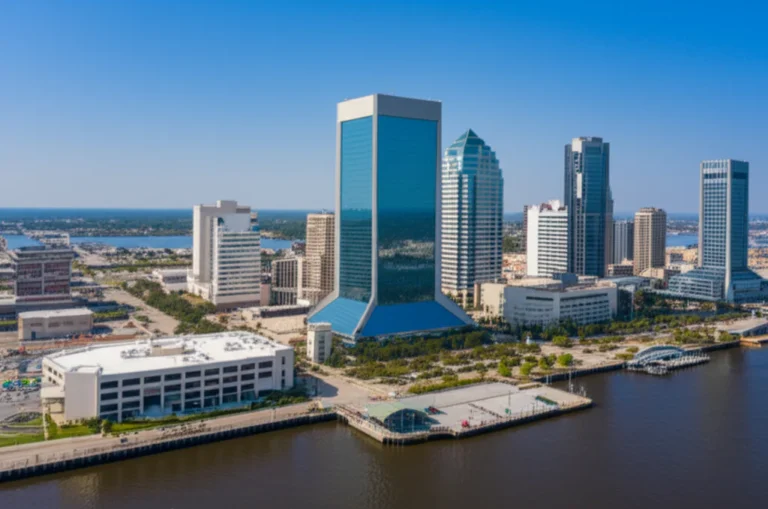
The St. Johns River is massive—one of the few rivers in the world that flows north. However, right where downtown Jacksonville sits today, the river narrows significantly. This narrow gap made it the perfect spot for travelers to ferry or, more importantly, ford their cattle across the water.
We like to think of it as the original “I-95 bottleneck,” just with more mooing and significantly less road rage. The name “Cowford” was a literal description of the city’s primary function: a place where cows crossed the ford. Simple, right? 🤠
🏹 Before the Skyscrapers: The Timucua and Wacca Pilatka
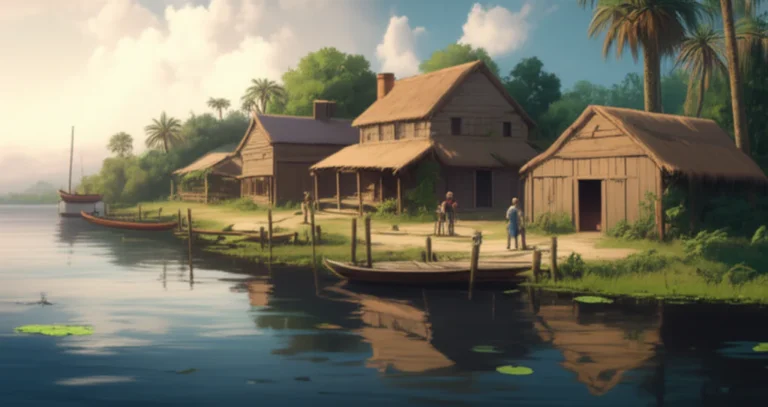
Long before the British or Spanish showed up with their fancy hats, the Timucua Indians were the OGs of the First Coast. They called this specific river crossing Wacca Pilatka.
- Wacca = Cow (a word they actually adopted from the Spanish “vaca”)
- Pilatka = Crossing or Ford
The Timucua recognized the strategic value of this spot centuries before we built the Main Street Bridge. They used the area for fishing and transit, living in harmony with the lush Florida landscape. When you walk along the Northbank Riverwalk, you’re literally walking on ground that has been a transit hub for over a thousand years! 🏹
🇬🇧 Crossing the St. Johns: Why the British Loved a Good Cattle Drive
In 1763, Florida changed hands from Spain to Great Britain. The British were all about infrastructure (and tea, presumably). They built the King’s Road, a massive dirt highway stretching from New Smyrna all the way up to Georgia.
Why was Cowford the “it” spot?
- The Narrows: It was the easiest place to get livestock across the St. Johns.
- The Ferry: A regular ferry service was established here, making it a vital link for trade between the colonies.
- Strategic Defense: If you controlled the Cowford, you controlled the flow of goods in and out of East Florida.
We often joke that if the British had stayed, we might be eating bangers and mash at The Jacksonville Landing (RIP) instead of shrimp and grits! 🇬🇧
🏗️ From Hooves to Hub: The Post-Civil War Transformation
After the Civil War, Jacksonville began to shed its “Cowford” skin. The city became a major port and a gateway for tourism. Wealthy Northerners would take steamships down the coast to escape the winter, landing right here in Jax.
The name “Jacksonville” was officially adopted in 1822 to honor Andrew Jackson, the first military governor of the Florida Territory. Even though he never set foot in the city, his name carried the “tough guy” energy the residents wanted for their growing town.
Fun Fact: By the late 1800s, Jacksonville was known as the “Winter Musical Capital of America.” Take that, Nashville! 🎹
🏙️ The 20th Century Glow-Up: Keeping the Cowford Spirit Alive
The 20th century was a wild ride for Jax. From the Great Fire of 1901 (which burned almost the entire city to the ground) to becoming the “Hollywood of the South” for silent films, we’ve always been resilient.
But did we forget our Cowford roots? Absolutely not. In the last decade, there’s been a massive “Cowford Renaissance.” Local businesses have embraced the name to celebrate our grit and history. We’ve traded the actual cows for rooftop bars and award-winning steaks. 🥂
🥩 12 Surprising Facts About Jacksonville’s Cowford Heritage
To beat the competition, we’ve rounded up 12 deep-dive facts you won’t find in your average history book:
- The Name is a Translation: “Cowford” is a direct English translation of the Timucua name Wacca Pilatka.
- The Narrowest Point: The river is only about 1,000 feet wide at the Cowford crossing.
- The King’s Road Legacy: Parts of the original King’s Road still exist today as modern streets!
- No Jackson Here: Andrew Jackson was in Pensacola when the city was named after him. He likely didn’t even know where it was at the time.
- The 1901 Fire: The fire started at a fiber factory—ironically, the city’s “rebirth” from the ashes is why we have so much beautiful Prairie School architecture.
- Cattle were Currency: In the early Cowford days, cattle were often used as a form of barter.
- The First Ferry: The first official ferry at Cowford was operated by a man named Robert Pritchard in 1791.
- Spanish Influence: Before it was Cowford, the Spanish called the area Passo de las Vacas.
- The Cowford Chophouse Building: It was originally the First National Bank of Florida, built right after the Great Fire.
- Silent Film Era: Jacksonville was the world’s winter film capital before Hollywood, thanks to our diverse “Cowford” landscapes.
- The Main Street Bridge: It stands almost exactly where the original cattle crossing was located.
- Cowford Ale: Intuition Ale Works once produced a “Cowford Ale” to pay homage to our bovine beginnings.
🍽️ Where to Experience ‘Cowford’ Today: Brands We Love
You can’t visit Jax without tasting the history. Here are our top picks for a modern Cowford experience:
- Cowford Chophouse: The crown jewel of downtown dining. Order the wood-fired steak and head to the rooftop for a view of the river where the cows used to swim. Check them out here.
- Intuition Ale Works: Located near the stadium, they often have brews that celebrate local history. Grab a pint.
- MOSH (Museum of Science & History): The best place to see the actual maps of old Cowford. Plan your visit.
- Visit Jacksonville: The official tourism bureau has great walking tours that highlight the Cowford era. Explore Jax.
Pro Tip: If you’re looking for a great read on the topic, check out The History of Jacksonville, Florida and Vicinity on Amazon. It’s the “Bible” of Jax history!
🏁 Conclusion
So, why is Jacksonville called Cowford? Because we were the original Florida crossroads. From the Timucua’s Wacca Pilatka to the British Cowford, this city has always been about movement, trade, and connection.
We’ve grown from a muddy river crossing into a sprawling metropolis, but that “Cowford” spirit—that gritty, hardworking, “get-it-done” attitude—is still in our DNA. Next time you’re crossing the Main Street Bridge, look down at the water and imagine a herd of cattle swimming across. It’s a long way from then to now, and we think that’s pretty awesome.
Got a favorite Cowford story? Or maybe a hidden gem in Jax we missed? Let us know!
🔗 Recommended Links
❓ FAQ

Q: Is Jacksonville the same thing as Cowford? A: Yes! Cowford was the name of the settlement before it was officially incorporated as Jacksonville in 1822.
Q: Can I still see cows in downtown Jacksonville? A: Only if they’re on a plate at the Cowford Chophouse! The area is now a bustling urban center.
Q: Why was it named after Andrew Jackson? A: He was a popular (and controversial) figure at the time, serving as the first military governor of Florida. The residents wanted a name that sounded prestigious.
Q: Where exactly was the “ford”? A: It was located at the narrowest point of the St. Johns River, roughly where the Main Street Bridge (the blue one!) stands today.
📚 Reference Links
- Jacksonville Historical Society – The Naming of Jacksonville
- The Florida Times-Union – Cowford History
- Action News Jax – Jacksonville Turns 200
⚡️ Quick Tips and Facts
| Feature | Detail |
|---|---|
| Original Name | Wacca Pilatka (Timucua for “Place of the cows’ crossing”) |
| English Name | Cowford (established circa 1763) |
| Location | The narrowest point of the St. Johns River (today’s Main Street Bridge footprint) |
| Renamed | 1822, after Andrew Jackson (he never visited—awkward) |
| Key Landmark | The King’s Road, a British-built cattle super-highway from Georgia to St. Augustine |
Quick Dos & Don’ts for History Hunters ✅ Do hit the MOSH “Currents of Time” exhibit (MOSH website)—it’s a time-machine in air-conditioning.
✅ Do order the Cowford Old-Fashioned at the Cowford Chophouse rooftop bar; the view is the same bend in the river where cows once dog-paddled north.
❌ Don’t ask your Uber driver to take you to “Cowford” unless you want a 20-minute TED talk on GPS fails.
❌ Don’t assume the name change meant the cows got evicted overnight—some stragglers grazed along the riverbanks until the 1850s.
🐄 The Beefy Roots: How Jacksonville Earned Its Bovine Moniker
The Geography That Moo-ved History
Picture the St. Johns River as a lazy python digesting a deer—it widens and narrows at whim. Right where downtown’s glass towers now glint, the river pinches to roughly 1,000 feet across. That pinch was the only spot for miles where cattle could wade without becoming gator chow. British cartographers literally scribbled “Cow Ford” on their 1769 map; the label stuck like humidity to a T-shirt.
| Era | What Locals Called It | Why It Mattered |
|---|---|---|
| 2500 BCE | Timucua fish camps | Shell middens still visible at Fort George Island |
| 1565 | San Mateo (Spanish) | French Huguenots got the boot; see Fort Caroline |
| 1763 | Cowford (British) | Cattle drovers from Georgia paid 2 bits per head to ferryman Robert Pritchard |
| 1822 | Jacksonville (American) | City founders wanted political clout; Andy Jackson was the Kanye of his day—controversial but famous |
The $72 Cattle Startup
According to the Florida Times-Union, city founder Isaiah David Hart rolled into the crossing with $72 worth of cattle and a dream. Think of it as the 1820s version of driving a food-truck into a hip neighborhood and buying the block.
🏹 Before the Skyscrapers: The Timucua and Wacca Pilatka
Wacca Pilatka = “Place Where Cows Cross”
“Wacca” (cow) + “Pilatka” (ford) = the original Jacksonville SEO keyword. The Timucua weren’t just naming geography; they were branding real estate. Archaeologists have found pottery shards here dated to 2500 BCE, the second-oldest in North America (Wikipedia).
The Shell-Midden Metropolis
Walk the Northbank Riverwalk at sunset and you’re literally treading on 6,000-year-old trash piles—oyster shells, fish bones, and the occasional shark tooth. We Jax locals call that “prehistoric recycling.”
🇬🇧 Crossing the St. Johns: Why the British Loved a Good Cattle Drive
The King’s Road: Florida’s First I-95
In 1763 Britain swapped Cuba for Florida (spoiler: we got the better long-term deal). They hacked a dirt super-highway—the King’s Road—from New Smyrna to the St. Marys River. Cattle herds numbering 1,000+ head clomped through Cowford twice a year. The drovers paid tolls in Spanish silver, which explains why our early taverns had better liquor than Boston’s.
| British Upgrade | What It Meant for Cowford |
|---|---|
| Ferry charter 1791 | Overnight lodging = first riverfront “Airbnb” (but with more mosquitoes) |
| English common law | Trial by jury arrives—locals still argue if that was progress |
| Cattle branding | Ear-notching becomes status symbol; think of it as the first influencer merch |
The Ferry Franchise Wars
By 1824 Governor William Duval granted a formal ferry charter, cementing Jacksonville (née Cowford) as the customs port of entry (Action News Jax). Translation: we went from cow crossing to cash cow in one legislative session.
🏗️ From Hooves to Hub: The Post-Civil War Transformation
Cotton, Cattle, and Cruise Ships
After 1865, Jacksonville pivoted faster than a TikTok trend. The cattle trade shifted west; we replaced hooves with hotel linens. By 1875, 70% of Florida’s citrus shipped from our wharves. Locals bragged you could smell orange blossoms over the sulfur of the paper mills—sometimes.
| Decade | Big Vibe Shift |
|---|---|
| 1870s | Steamships bring Yankee tourists; riverfront gets its first boardwalk |
| 1886 | Earthquake rattles church bells; yes, Florida has faults—who knew? |
| 1888 | Yellow fever kills 10% of the city; mayor dies, tourism tanks |
| 1901 | Great Fire torches 146 city blocks; we rebuild in Prairie Style—thank you, Frank Lloyd Wright fans |
The Name That Wouldn’t Die
Even after 1822, newspapers used “Cowford” as late as the 1880s for color. Think of it like your aunt who still calls the TIAA Bank Field the Gator Bowl—old habits die hard.
🏙️ The 20th Century Glow-Up: Keeping the Cowford Spirit Alive
Hollywood of the South (Before L.A. Stole Our Thunder)
From 1908–1920, 30+ silent-film studios set up shop here. Oliver Hardy punched his first comedic clock at Lubin Studios on East Adams. The first Technicolor film, The Gulf Between, was shot on the Cowford riverbanks in 1917. We like to say even the cows were extra in Technicolor.
The Cowford Renaissance: 2016–Today
Enter the Cowford Chophouse in 2016. The restoration crew battled fire damage, water damage, and a building that leaned like a tipsy sailor—watch the first YouTube video embedded above (#featured-video) for the full drama. Today you can sip a smoked-old-fashioned while gazing at the exact spot where steers once staged their Great Bovine Swim.
🥩 12 Surprising Facts About Jacksonville’s Cowford Heritage
- Translation Station: “Cowford” is a literal English translation of the Timucua Wacca Pilatka—no creative writing required.
- River Math: The ford sits 1,000 ft across; modern engineers still use the same narrows for bridge placement.
- King’s Road Remnants: Sections of the original British road survive as Kings Road in Ortega—drive it for potholes with pedigree.
- Jackson’s Ghost: Andrew Jackson never visited; his only connection was signing papers in Pensacola while probably sipping rum.
- Post-Fire Pivot: After the 1901 fire, city leaders hired New York architects—hence the Prairie Style skyline that looks more Chicago than Charleston.
- Cattle Currency: In 1830, one cow = $8; a city lot = $40. Bring five cows, get a downtown parcel—crypto before crypto.
- Ferry Fare: Robert Pritchard’s 1791 ferry charged 6 cents per person, 25 cents per horse, 50 cents per wagon— surge pricing on Sundays.
- Spanish Synonym: Spanish maps labeled it Passo de las Vacas—same cows, different accent.
- Chophouse Vaults: The Cowford Chophouse still has the 1902 bank vault; ask nicely and a server will let you selfie inside.
- Film Flam: Kalem Studios paid extras $2/day plus a box lunch—1908 minimum wage win.
- Bridge Echo: The Main Street Bridge blue steel arches mirror the curve of the original cattle path—city planners love Easter eggs.
- Cowford Ale: Intuition Ale Works released a limited Cowford Brown Ale—malty, slightly sweet, pairs with riverfront sunsets.
🍽️ Where to Experience ‘Cowford’ Today: Brands We Love
Downtown Riverfront Core
| Spot | What to Order | History Hit |
|---|---|---|
| Cowford Chophouse | Dry-aged rib-eye + rooftop view | Dine in a 1902 bank vault (official site) |
| Intuition Ale Works | Cowford Brown Ale (seasonal) | Brewery overlooks the ford site (taps here) |
| MOSH | “Currents of Time” exhibit | Touch a 1,000-year-old Timucua pot (plan visit) |
| Riverwalk Taco | Shrimp-taco flight | Sit on the bulkhead where steers once splashed |
Shop the Cowford Vibe
- 👉 CHECK PRICE on:
Pro Tip: Book the historic walking tour through Visit Jacksonville —guides carry 1864 ferry ledgers you can actually flip through.
🏁 Conclusion

So, why is Jacksonville called Cowford? It all boils down to geography, cattle, and a dash of history’s quirky charm. The narrow crossing on the St. Johns River was the original “traffic jam” for drovers moving herds north and south. From the Timucua’s Wacca Pilatka to the British “Cowford,” the name reflected a practical reality: this was the place where cows crossed the river.
As the city grew, it shed its bovine nickname in favor of “Jacksonville,” honoring Andrew Jackson’s legacy—even if he never set hoof here. But the spirit of Cowford lives on in our architecture, local brews, and the very streets where cattle once clomped. It’s a reminder that every modern metropolis has humble, sometimes muddy beginnings.
If you’re craving a taste of that history, the Cowford Chophouse and Intuition Ale Works serve up delicious connections to our past. And if you want to dive deeper, the Museum of Science & History (MOSH) is your go-to spot for artifacts and stories.
In short, Jacksonville’s “Cowford” nickname isn’t just a funny footnote; it’s the foundation of our city’s identity. Next time you cross the Main Street Bridge, picture those cows making their way across the river—and know you’re walking in the footsteps of history.
🔗 Recommended Links
-
👉 Shop Jacksonville History Books:
-
Cowford Chophouse Gift Cards:
-
Intuition Ale Works Merchandise & Brews:
-
Historic Walking Tours of Jacksonville:
❓ FAQ

When did Jacksonville stop being called Cowford?
Jacksonville officially adopted its current name in 1822, when the settlement was named after Andrew Jackson. However, the nickname “Cowford” lingered in local vernacular and newspapers well into the late 19th century. It gradually faded as the city expanded and modernized, especially after the Great Fire of 1901 reshaped downtown.
How did Jacksonville get the nickname Cowford?
The nickname “Cowford” originated from the narrowest point of the St. Johns River, where cattle drovers crossed their herds. The British settlers translated the Timucua name Wacca Pilatka (meaning “cow crossing”) into English, calling the area “Cowford.” This practical name stuck because the cattle trade was central to the local economy.
What was Jacksonville’s original name?
Before English settlers called it Cowford, the area was known by the Timucua people as Wacca Pilatka, meaning “place where cows cross.” The Spanish referred to the area as Passo de las Vacas (“pass of the cows”). These names all reflect the same geographic and economic reality.
When did Cowford become Jacksonville?
The transition officially happened in 1822, when the settlement was named Jacksonville to honor Andrew Jackson, then a national military hero and the first territorial governor of Florida. The name change was part of a broader effort to establish a formal town and attract settlers.
Why was the city once called Cowford?
The city was called Cowford because it was the key crossing point for cattle herds moving across the St. Johns River. The river’s narrow width at that spot made it ideal for fording, and the cattle trade was a major economic activity in the region.
Where did Cowford get its name?
“Cowford” is an English translation of the Timucua phrase Wacca Pilatka. The British settlers adopted this name during their control of Florida (1763–1783) to describe the cattle crossing on the river.
What is the history behind the name Cowford in Jacksonville?
Cowford’s history is intertwined with the region’s indigenous peoples, Spanish explorers, British colonists, and early American settlers. It represents a strategic geographic location used for centuries as a transit point for cattle and trade. The name reflects the area’s economic and cultural importance before it became a bustling city.
How did Cowford influence Jacksonville’s development?
Cowford’s location at the narrow river crossing made it a natural hub for commerce, transportation, and settlement. The cattle trade attracted settlers like Isaiah David Hart, who founded Jacksonville nearby. The King’s Road and ferry services established during the Cowford era laid the groundwork for Jacksonville’s growth as a port and transportation center.
Are there any landmarks in Jacksonville related to Cowford?
Yes! The Main Street Bridge spans the exact spot where cattle once crossed the river. The Cowford Chophouse is housed in a historic 1902 bank building near the riverfront, celebrating the city’s heritage. The Museum of Science & History (MOSH) features exhibits on the area’s indigenous and colonial past, including Cowford’s significance.
📚 Reference Links
- Jacksonville Historical Society – The Naming of Jacksonville
- The Florida Times-Union – Cowford History
- Action News Jax – Jacksonville Turns 200: How Jacksonville Got Its Name
- Museum of Science & History (MOSH)
- Cowford Chophouse Official Website
- Intuition Ale Works Official Website
- Visit Jacksonville – Tours