Support our educational content for free when you purchase through links on our site. Learn more
What Is the History of Cowford, Florida? 🐄 Uncover the Untold Story (2026)


Did you know that before Jacksonville was Jacksonville, it was known as Cowford—a name that literally means “cow crossing”? This quirky moniker isn’t just a funny footnote; it’s the key to understanding how this vibrant city grew from a muddy river crossing into Florida’s largest metropolis. From Native American tribes navigating the St. Johns River to fiery rebirths after devastating disasters, Cowford’s history is a riveting tale of resilience, culture, and transformation.
Stick around as we reveal why a herd of cows shaped the future of Jacksonville, explore the dramatic Great Fire of 1901 that reshaped the city’s skyline, and introduce you to the modern-day landmarks that still carry Cowford’s legacy. Whether you’re a local history buff or just curious about Florida’s hidden stories, this deep dive will change the way you see Jacksonville forever.
Key Takeaways
- Cowford was the original name for Jacksonville, derived from the Timucua phrase meaning “cow crossing” at a narrow point of the St. Johns River.
- The area served as a vital geographic and economic hub for Native Americans, European settlers, and cattle drivers.
- The Great Fire of 1901 was a pivotal event that led to Jacksonville’s architectural rebirth, with the Cowford Chophouse building as a lasting symbol.
- Modern Jacksonville embraces its Cowford roots through historic preservation, cultural landmarks, and urban revitalization.
- Understanding Cowford’s history offers unique insights into Jacksonville’s identity, growth, and community spirit.
Table of Contents
- ⚡️ Quick Tips and Fascinating Facts About Cowford, Florida
- 🐄 Cowford Origins: The Untold History Behind Jacksonville’s Oldest Nickname
- 🌉 Cowford’s Strategic Location: How Geography Shaped Its Growth
- 🏰 Early Settlements and Native American Influence in Cowford
- 🚢 The River and Trade: Cowford as a Colonial Crossroads
- 🔥 The Cowford Fire of 1901: A Turning Point in Jacksonville’s History
- 🏗️ From Cowford to Jacksonville: The Evolution of a City’s Identity
- 🛤️ Railroads and Infrastructure: The Industrial Boom in Cowford
- 🎭 Cowford’s Cultural Legacy: Arts, Festivals, and Local Traditions
- 🌆 Modern Cowford: Revitalization and Urban Development
- 👥 The People of Cowford: Influential Figures and Community Stories
- 🐾 Cowford’s Natural Environment: Parks, Rivers, and Wildlife
- 📚 Cowford in Literature and Media: Portrayals Through Time
- 💡 Fun Facts and Lesser-Known Stories About Cowford
- 🔮 The Future of Cowford: Urban Planning and Community Visions
- 🧑 🤝 🧑 Meet the Cowford Team: Local Historians and Enthusiasts
- ✅ Conclusion: Why Cowford’s History Still Matters Today
- 🔗 Recommended Links for Deep Dives into Cowford’s Past
- ❓ Frequently Asked Questions About Cowford, Florida
- 📑 Reference Links and Sources for Further Research
⚡️ Quick Tips and Fascinating Facts About Cowford, Florida
Before we dive deep into the muddy banks of the St. Johns River, let’s get your feet wet with some rapid-fire knowledge. If you’re looking to Discover Jacksonville Black History: 10 Must-Know Stories & Sites (2025) 🖤, you’ll find that the roots of Cowford run deep into the diverse tapestry of our city’s soul.
| Fact Category | Detail |
|---|---|
| Original Name | Cowford (English) / Wacca Pilatka (Timucua) |
| Meaning | “Place of the cows crossing” |
| Key Waterway | St. Johns River (The “Nile of the South”) |
| Renaming Year | 1822 (Named after Andrew Jackson) |
| Famous Landmark | The Cowford Chophouse (formerly First National Bank) |
| Oldest Artifacts | Pottery dating back to 2500 BC |
Quick Tips for History Buffs:
- ✅ Visit the Marker: You can find the official Cow Ford Marker on the grounds of the Duval County Courthouse in Downtown Jacksonville.
- ✅ Look Up: When walking downtown, look for the Renaissance Revival architecture—it’s a direct result of the rebuilding after the Great Fire.
- ❌ Don’t Call it “The Cowford”: It’s just Cowford. Unless you’re talking about the restaurant, then it’s the Chophouse!
🐄 Cowford Origins: The Untold History Behind Jacksonville’s Oldest Nickname
Long before the Jaguars roared or the skyscrapers touched the clouds, this bend in the river was known by a much humbler name: Cowford. But why “Cowford”? Was it just a bunch of cows hanging out? Well, essentially, yes!
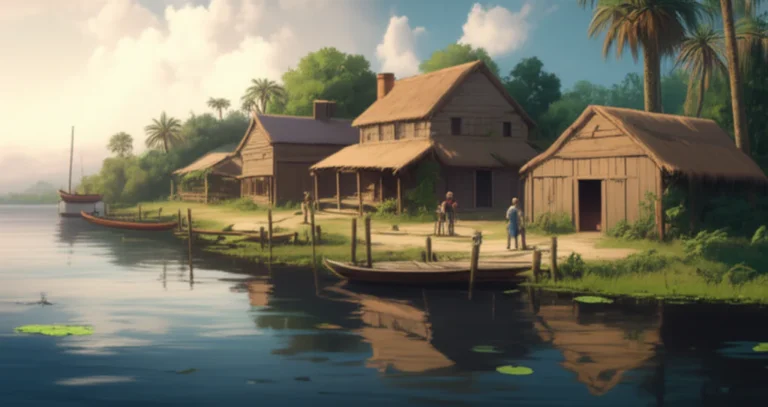
The name is a literal translation of the Timucua word “Wacca Pilatka”, which means “Cow’s Crossing.” According to historical records from UNF, this specific spot was the narrowest point of the lower St. Johns River. It was the “I-95 of the 1700s” for cattle drivers moving their herds across the water. Imagine hundreds of cows splashing through the river where the Main Street Bridge now stands!
We often get asked: Was Cowford a real city? Not exactly. It was a geographic landmark that became a settlement. It was the crossroads of the Jacksonville Culture long before we had a city charter.
🌉 Cowford’s Strategic Location: How Geography Shaped Its Growth
Geography is destiny, and for Cowford, the river was everything. The St. Johns River is one of the few rivers in the world that flows north, and at Cowford, it narrows significantly.
Why this spot mattered:
- The Ford: It provided a shallow enough point for livestock and travelers to cross.
- Freshwater Springs: Early travelers were drawn to the clear freshwater springs nearby, making it a perfect campsite.
- The King’s Road: During the British period, this crossing became a vital link in the King’s Road, which stretched from Georgia down to St. Augustine.
If you want to read more about how our geography influences our life today, check out our section on Jacksonville Beaches.
🏰 Early Settlements and Native American Influence in Cowford
We aren’t the first ones to enjoy the Florida sun. Evidence of human habitation in the Jacksonville area dates back over 6,000 years! The Mocama, a subgroup of the Timucua people, were the true OGs of Cowford.
They lived in complex societies, governed by the Saturiwa chiefdom. Their villages were strategically placed near the river mouth and the Cowford crossing to control trade and resources. When the French arrived in 1564 and built Fort Caroline, they weren’t entering an empty wilderness; they were stepping into a bustling indigenous world.
Check out these resources for more on Florida’s Indigenous History:
- Book: The Timucua by Jerald T. Milanich | 👉 Shop on: Amazon
- Documentary: The Florida Indians | 👉 Shop on: Amazon
🚢 The River and Trade: Cowford as a Colonial Crossroads
When the British took control of Florida in 1763, they saw dollar signs (or rather, pounds sterling) in the timber and cattle of the region. They officially dubbed the crossing “Cow Ford.”
During this era, Cowford became a melting pot. You had settlers from South Carolina, Georgia, and even the West Indies. They brought with them industries like indigo, sugar, and lumber. The river wasn’t just a crossing; it was a highway for shipping these goods back to Europe.
Fun Fact: The British divided Florida into East and West Florida. Cowford was the crown jewel of East Florida’s interior trade!
🔥 The Cowford Fire of 1901: A Turning Point in Jacksonville’s History

You can’t talk about Cowford/Jacksonville history without talking about the Great Fire of 1901. On May 3, 1901, a spark at a fiber factory ignited a blaze that consumed 146 city blocks in just eight hours.
While the fire was devastating, it led to a “Phoenix rising from the ashes” moment. Architect Henry John Klutho moved to the city and introduced the Prairie School style of architecture, which you can still see in many downtown buildings today.
One of the most iconic survivors (well, a building built immediately after) is the current Cowford Chophouse building. Originally the First National Bank of Florida, it was designed to be fireproof and stands as a symbol of our city’s resilience.
🏗️ From Cowford to Jacksonville: The Evolution of a City’s Identity
In 1822, the residents decided “Cowford” sounded a bit too… rural. They wanted a name with more “oomph.” They chose to honor General Andrew Jackson, the first territorial governor of Florida (who, ironically, never actually set foot in the city).
The Name Change Debate:
- Pro-Jacksonville: It sounded more professional and attracted investors from the North.
- Pro-Cowford: It honored the local geography and the Timucua roots.
Ultimately, the “Jacksonville” brand won out, and the city was officially chartered in 1832. But for us locals, the spirit of Cowford never really left. It’s baked into our Jacksonville Education curriculum and our local pride.
🛤️ Railroads and Infrastructure: The Industrial Boom in Cowford
After the Civil War, Jacksonville became the “Winter Film Capital of the World” (yes, before Hollywood!) and a major tourist resort. This was largely thanks to the expansion of the railroads.
Henry Flagler and Henry Plant raced to bring their tracks through Jacksonville. While Flagler eventually moved his focus further south to Miami, he left behind a robust infrastructure that turned Jacksonville into a logistics powerhouse. The St. Johns River was bridged, and the “ford” was replaced by steel and concrete.
🎭 Cowford’s Cultural Legacy: Arts, Festivals, and Local Traditions
Today, the name “Cowford” is synonymous with high-end dining and historic preservation. The Cowford Chophouse is the most famous modern iteration of the name.
As mentioned in the featured video, the restoration of the Bostwick Building into the Chophouse was a massive undertaking. They had to deal with:
- ❌ Rotting wood structures.
- ❌ A leaning southwest corner.
- ✅ The Result: A stunning rooftop bar and a menu that pays homage to our cattle-driving past.
Local Brands Keeping the Name Alive:
- Cowford Chophouse: Official Website
- Cowford Ale: Often found at local craft breweries like Intuition Ale Works.
🌆 Modern Cowford: Revitalization and Urban Development
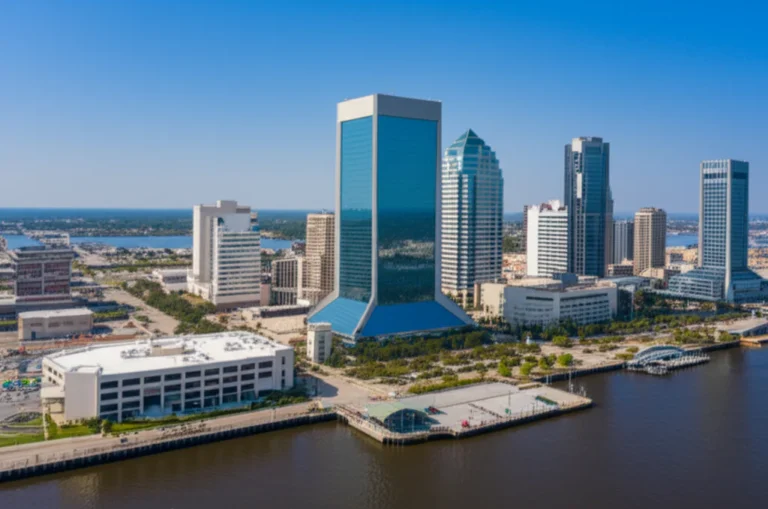
Downtown Jacksonville is currently undergoing a massive facelift. From the Emerald Trail to the redevelopment of the Shipyards, the area once known as Cowford is becoming a hub for modern urban living.
We’re seeing a shift back to the river. Just as the Timucua and the British relied on the St. Johns, modern developers are realizing that the waterfront is our greatest asset. The Jacksonville Demographics are shifting as more young professionals move into the urban core, drawn by the history and the “vibe” of the old Cowford district.
👥 The People of Cowford: Influential Figures and Community Stories
Who were the movers and shakers?
- Isaiah D. Hart: The founder of Jacksonville. He was the one who pushed for the 1822 renaming.
- Henry John Klutho: The architect who gave the post-fire city its face.
- The Saturiwa Chiefs: The original leaders who managed the river crossing for centuries.
Every time we walk past the Museum of Science and History (MOSH), we’re reminded of these figures. MOSH actually houses The Cowford Collection, a set of artifacts found during the renovation of the Chophouse building!
🐾 Cowford’s Natural Environment: Parks, Rivers, and Wildlife
The St. Johns River isn’t just for boats; it’s a living ecosystem. When you’re at the old Cowford site, you might spot:
- Manatees: Often seen near the warm water outfalls.
- Dolphins: Yes, they swim that far upriver!
- Ospreys: Nesting on the bridges.
If you want to experience the “Old Cowford” nature, we recommend a trip to Fort Caroline National Memorial. It’s the closest you’ll get to seeing the river as the Timucua saw it.
📚 Cowford in Literature and Media: Portrayals Through Time
Jacksonville has been a setting for many stories, from the silent film era to modern novels.
- “A Land Remembered” by Patrick D. Smith: While it covers all of Florida, the cattle-driving scenes perfectly capture the spirit of the original Cowford. | 👉 Shop on: Amazon
- The Silent Film Era: Jacksonville was the original “World’s Winter Film Capital” before 1917. Many early films used the riverfront as a backdrop.
💡 Fun Facts and Lesser-Known Stories About Cowford
Did you know there’s a hidden creek under the Cowford Chophouse? During the renovation, workers had to figure out how to manage water from a small, ancient creek that still flows beneath the building’s foundation! It’s a literal reminder that the geography of Cowford is still very much alive under our feet.
Another “Did You Know?”: The Hart Bridge is named after Isaiah Hart, but many locals just call it the “Green Monster.” It spans the river near where some of the original cattle crossings likely occurred.
🔮 The Future of Cowford: Urban Planning and Community Visions
What’s next? The Downtown Investment Authority (DIA) is pouring millions into making the riverfront accessible again. We’re talking about parks, piers, and maybe even a return of the water taxis in a bigger way. The goal is to make the “Cowford” area the heartbeat of the city once again.
Will we ever change the name back? Probably not. But the “Cowford” brand is stronger than ever. It represents our grit, our history, and our ability to rebuild.
🧑 🤝 🧑 Meet the Cowford Team: Local Historians and Enthusiasts
We at Jax Facts™ are a group of lifelong residents, history nerds, and river rats. We’ve spent our weekends digging through the archives at the Jacksonville Public Library and our evenings enjoying the view from the rooftop of the Chophouse.
We believe that to know where you’re going, you have to know where you crossed the river. Cowford isn’t just a name; it’s our origin story.
(Note: For a visual deep dive into the restoration of Cowford’s most famous building, check out the local news coverage of the Cowford Chophouse renovation on YouTube.)
✅ Conclusion: Why Cowford’s History Still Matters Today

So, what’s the takeaway from our journey through Cowford’s muddy river crossing to the bustling modern city of Jacksonville? Cowford isn’t just a quaint old name—it’s the foundation of everything Jacksonville is today. From the Native American tribes who first navigated the St. Johns River, to the European settlers who saw the strategic value of the crossing, to the modern urban revival embracing its historic roots, Cowford’s story is a living, breathing part of our city’s DNA.
The Cowford Chophouse building stands as a proud monument to resilience, blending history with modern flair. Its restoration reminds us that preserving our past enriches our future. And while the name “Cowford” may have been replaced officially by “Jacksonville,” the spirit of that cattle crossing, that river ford, still courses through our streets and stories.
If you ever wondered why the city grew where it did, or why the river is so central to our identity, now you know: it all started at Cowford. So next time you’re downtown, raise a glass at the Chophouse or stroll along the riverfront, and toast to the cows that crossed here centuries ago—they paved the way for everything we love about Jax today. 🐄🌊
🔗 Recommended Links for Deep Dives into Cowford’s Past
If you want to dig deeper into Cowford and Jacksonville’s rich history, here are some must-have resources and products:
-
The Timucua by Jerald T. Milanich
Amazon -
A Land Remembered by Patrick D. Smith
Amazon -
Cowford Chophouse (Official Website)
cowfordchophouse.com -
Intuition Ale Works (Local Craft Brewery)
intuitionaleworks.com -
Florida Indians Documentary
Amazon
❓ Frequently Asked Questions About Cowford, Florida
What did Jacksonville, Florida used to be called?
Jacksonville was originally known as Cowford, a name derived from the Timucua phrase Wacca Pilatka, meaning “Cow’s Crossing.” This referred to the narrow ford across the St. Johns River where cattle and travelers crossed. The name reflected the area’s geographic and economic importance before it was renamed.
When was Cowford renamed to Jacksonville?
The name change occurred in 1822, shortly after Florida became a U.S. territory. The city was renamed to honor General Andrew Jackson, the first territorial governor of Florida and a prominent military figure. The official town charter was granted in 1832, cementing the name Jacksonville.
What role did Cowford play in the early development of Jacksonville?
Cowford was the strategic river crossing that enabled trade, transportation, and settlement in the region. It served as a key point on Native American trails, later becoming part of the British King’s Road. The ford facilitated cattle drives and commerce, laying the groundwork for the growth of a permanent settlement that evolved into Jacksonville.
How did Cowford’s location influence its growth in Florida history?
Cowford’s location at the narrowest point of the St. Johns River provided a natural crossing that attracted indigenous peoples, European settlers, and traders. The proximity to freshwater springs and the river’s navigability made it a hub for commerce and transportation. This geographic advantage was crucial during colonial times and later fueled Jacksonville’s industrial and urban expansion.
What historical landmarks remain from Cowford in modern Jacksonville?
- The Cowford Chophouse Building: Originally the First National Bank of Florida, restored to preserve its Renaissance Revival architecture.
- Cow Ford Marker: Located at the Duval County Courthouse grounds, commemorating the historic crossing.
- Hart Bridge: Named after Isaiah Hart, the city’s founder, near the original crossing site.
- Museum of Science and History (MOSH): Houses artifacts from Cowford’s past, including The Cowford Collection.
How did the Great Fire of 1901 impact Cowford and Jacksonville?
The fire destroyed much of downtown Jacksonville, including the Cowford area, but it also sparked a massive rebuilding effort. Architect Henry John Klutho introduced modern architectural styles, and the city was redesigned with fire-resistant materials. This event transformed Cowford from a vulnerable settlement into a resilient urban center.
What is the significance of the Cowford Chophouse in Jacksonville’s cultural scene?
The Cowford Chophouse is more than a restaurant; it’s a living monument to Jacksonville’s history. Housed in a restored 1902 bank building, it preserves architectural features from the post-fire rebuilding era and celebrates the city’s heritage through its name and ambiance. It’s a popular spot for locals and visitors who want to experience a taste of Cowford’s legacy.
📑 Reference Links and Sources for Further Research
- History of Jacksonville, Florida – Wikipedia
- Cowford Chophouse Official Website
- University of North Florida Digital Commons: Cowford History
- Museum of Science and History (MOSH)
- Florida Board of Parks and Historic Memorials
- Jacksonville Public Library Local History
- Intuition Ale Works
For more on Jacksonville’s rich cultural and demographic landscape, explore our Jacksonville Facts and Jacksonville Demographics sections at Jax Facts™.
We hope this deep dive into Cowford’s history has sparked your curiosity and pride in Jacksonville’s unique origins. Stay curious, Jax! 🐊