Support our educational content for free when you purchase through links on our site. Learn more
Why Is Jacksonville Called the Bold City? 🏙️

Why is Jacksonville called Bold City? The nickname is a shortened form of “The Bold New City of the South,” a civic slogan associated with Jacksonville’s 1968 city–county consolidation. It captured the ambition of building a more unified city, though the exact first use of “Bold City” is not firmly documented.
Jacksonville’s size makes the story feel especially fitting: consolidation brought most of Duval County under one city government, creating a city of neighborhoods, beaches, riverfront, and wide-open natural spaces. Around here, “bold” can mean big plans—and, depending on the traffic, a bold decision to cross town at rush hour.
Key Takeaways
- “Bold City” grew from “The Bold New City of the South,” a slogan linked to Jacksonville’s post-consolidation identity.
- Consolidated city–county government took effect on October 1, 1968.
- The nickname is widely used, but it is not Jacksonville’s legal name or a universally documented official title.
- Jacksonville has other familiar nicknames, including River City, Jax, and the 904.
- The exact first use of “Bold City” remains unclear, so claims naming a specific person or date should be treated cautiously.
Table of Contents
- ⚡ Quick Tips and Facts
- 🧭 Why Is Jacksonville Called the Bold City?
- What “Bold City” Says About Jacksonville
- Is Bold City Jacksonville’s Official Nickname?
- 📜 Jacksonville’s History: From River Port to “Bold New City of the South”
- Jacksonville’s Historic Beginnings and Early Nicknames
- The Civil War’s Impact on Jacksonville
- The Great Fire and Jacksonville’s Rebuilding Spirit
- Jacksonville’s Modern History and Changing Identity
- 🔎 The Story Behind the “Bold City” Nickname
- When Did Jacksonville Start Using “Bold City”?
- Who Coined the Phrase “Bold New City of the South”?
- What’s the Difference Between “Bold City” and “Bold New City of the South”?
- Why the Nickname’s Exact Origin Can Be Hard to Pin Down
- 🏙️ Jacksonville’s Consolidation and the Making of a Bold City
- What Changed When Jacksonville and Duval County Consolidated?
- How Consolidation Shaped Jacksonville’s Big-City Identity
- 🌊 What Makes Jacksonville Feel Bold Today?
- The St. Johns River, Beaches, and Outdoor Lifestyle
- Arts, Music, Food, and Local Culture
- Sports, Business, and Community Pride
- 🗺️ Jacksonville Nicknames Compared
- “Bold City” vs. “River City”
- “Bold City” vs. “The 904”
- Jacksonville’s Other Local Slogans and Nicknames
- 📍 Where to Experience Jacksonville’s Bold City Spirit
- Downtown Jacksonville and the St. Johns Riverwalk
- Jacksonville’s Beaches and Coastal Communities
- Historic Neighborhoods, Museums, and Local Landmarks
- ❓ Frequently Asked Questions About Jacksonville’s “Bold City” Nickname
- Is “Bold City” an Official Jacksonville Slogan?
- What Does “Bold New City of the South” Mean?
- Why Is Jacksonville Also Called River City?
- What Is Jacksonville’s Most Famous Nickname?
- How Did Jacksonville Get Its Name?
- ✅ Conclusion
- 🔗 Recommended Links
- 🙋 FAQ
- 📚 Reference Links
Table of Contents
-
📜 Jacksonville’s History: From River Port to “Bold New City of the South”
-
What’s the Difference Between “Bold City” and “Bold New City of the South”?
-
🏙️ Jacksonville’s Consolidation and the Making of a Bold City
-
What Changed When Jacksonville and Duval County Consolidated?
-
❓ Frequently Asked Questions About Jacksonville’s “Bold City” Nickname
| Fact | Short answer |
|---|---|
| Why is Jacksonville called the Bold City? | The nickname is commonly traced to “The Bold New City of the South,” a civic slogan associated with the city–county consolidation era. |
| When did consolidation take effect? | October 1, 1968. |
| Did all of Duval County become Jacksonville? | No. Baldwin and the Beaches remained separate municipalities; Jacksonville’s consolidated government covers most of Duval County. |
| What did consolidation change? | It combined the city and county governments into a consolidated structure intended to streamline services and address political and fiscal problems. |
| Is “Bold City” the only nickname? | No. Jacksonville is also called River City, Jax, and the 904. |
| Is the nickname official? | It is widely used as a civic and local nickname, but it is not the city’s formal legal name. |
The shortest answer is also the truest: “Bold City” grew out of a slogan tied to Jacksonville’s ambitious consolidation story, not ancient nickname handed down by river pirates. For a closer look at the timeline, see our explainer on when Jacksonville started being referred to as the Bold City.
We’ll also separate the documented history from the friendly local shorthand. That matters because some accounts describe the nickname as a direct result of post-consolidation signs, while others focus on the slogan itself. Those explanations are related, but they are not quite the same claim.
- Bottom line: “Bold City” is a shortened form of a civic identity linked to “Bold New City of the South.”
- Key date: Consolidated city–county government took effect in 1968.
- Useful distinction: The slogan’s history is connected to consolidation; the nickname’s precise first use is less firmly documented.
- Local feel: These days, “Bold City” can refer to Jacksonville’s civic ambition, sports pride, creative scene, and sheer geographic scale.
- A small map-shaped caveat: Jacksonville is enormous by municipal land area, but it is not one continuous urban neighborhood. It includes beaches, riverfront districts, suburbs, wetlands, and rural stretches.
For more local context, browse our Jacksonville Facts and Jacksonville Culture guides.
🧭 Why Is Jacksonville Called the Bold City?
Jacksonville is called the Bold City because the nickname is associated with the post-consolidation slogan “The Bold New City of the South.” The slogan promoted a fresh civic identity after Jacksonville and Duval County’s governments consolidated in 1968.
The wording was meant to sound forward-looking: Jacksonville was presenting itself as a city willing to rethink how local government worked and to make a larger, more unified community out of a sprawling county. The nickname stuck because it is short, memorable, and easy to put on a T-shirt, brewery sign, or Jaguars fan’s social post.
The historical backbone is consolidation. The fine print is that sources don’t always tell the same story about exactly when the shortened phrase “Bold City” first caught on. The strongest practical explanation is that the nickname evolved from the slogan and its post-consolidation use, rather than from one clearly recorded coinage moment.
What “Bold City” Says About Jacksonville
“Bold” works on two levels:
- A civic ambition: Consolidation was a major structural change, intended to address fragmented services, uneven growth, and concerns about local government.
- A modern identity: Jacksonville is a city of contrasts—urban downtown and Atlantic beaches, a working river and broad marshes, historic neighborhoods and fast-growing suburbs.
That doesn’t mean every local agrees with every claim made for consolidation. Supporters saw a path to more efficient government; critics and later historians have also questioned whether its benefits were shared evenly. The nickname is a promotional phrase, not a verdict that every city problem vanished.
Jacksonville’s scale helps explain the nickname’s staying power. The city’s official consolidated-government overview and the U.S. Census Bureau’s Jacksonville profile help put that scale in context. For residents, “bold” can mean opportunity and room to grow. For others, it may bring to mind long drives, complicated service areas, and a city that can feel like several communities sharing one name.
Is Bold City Jacksonville’s Official Nickname?
“Bold City” is a widely recognized nickname, not Jacksonville’s legal name. The municipality’s name remains the City of Jacksonville, and official city materials use different language depending on the department, campaign, or event.
That distinction clears up a common mix-up:
| Phrase | What it is |
|---|---|
| City of Jacksonville | The city’s formal name |
| Bold New City of the South | A historic civic slogan associated with consolidation |
| Bold City | A popular shortened nickname |
| Jax / The 904 | Other widely used local shorthand |
So, if someone asks whether it is “official,” the most accurate answer is: it is an established civic nickname, but not a legal title or a single, permanent city brand used in every official context.
📜 Jacksonville’s History: From River Port to “Bold New City of the South”

To understand the nickname, it helps to look beyond one slogan. Jacksonville’s story includes Indigenous history, a river port, the Civil War, tourism, devastating fires, city growth, and a major government reorganization. That is a lot of plot for one Florida city. 🌴
For verified city-history context, start with the City of Jacksonville’s history resources and the Florida Memory collection.
Jacksonville’s Historic Beginnings and Early Nicknames
The St. Johns River has shaped life in northeastern Florida for thousands of years. Long before Jacksonville’s modern city government, Indigenous communities lived in the region, using the river and surrounding waterways for travel, food, and trade.
The settlement that became Jacksonville developed along the river and was first known as Cow Ford, a crossing point on the St. Johns. In 182, the community was renamed for Andrew Jackson, who had served as Florida’s military governor and later became the seventh U.S. president. Jackson did not live in the city named for him.
The date sometimes gets scrambled in online summaries: Jacksonville was founded in 182, not “182.” The city grew as a port and commercial center, with goods such as lumber and agricultural products moving through the region. Florida became a state in 1845, another milestone in the young settlement’s development. The Florida Department of State’s historical resources offer a useful starting point for checking Florida history against folklore.
The river mattered then, and it still matters now. Jacksonville’s riverfront location helped shape commerce, transportation, neighborhoods, and the city’s other famous nickname: River City.
The Civil War’s Impact on Jacksonville
During the Civil War, Jacksonville changed hands several times as Union forces occupied the city on multiple occasions. Its strategic location on the St. Johns River made it valuable to both sides, while the war disrupted commerce and daily life.
The conflict also changed the region’s population and social landscape. After emancipation, Black communities and institutions developed in and around Jacksonville, contributing to the city’s civic, cultural, and economic life. That story is far larger than the “Bold City” slogan, but it belongs in any honest account of Jacksonville’s identity.
For primary-source material and historical context, consult Florida Memory’s Civil War resources and the National Park Service’s Civil War resources. These sources help distinguish the documented history from the tidy one-line version that sometimes turns the past into a postcard.
The Great Fire and Jacksonville’s Rebuilding Spirit
In 1901, the Great Fire of Jacksonville destroyed much of the city’s downtown. The blaze devastated homes and businesses, but rebuilding followed, with architects and builders shaping a new city center.
The fire is not the origin of the Bold City nickname. It does, however, add depth to the “resilient city” interpretation that locals sometimes attach to the word bold. Jacksonville has repeatedly had to rebuild, adapt, and decide what kind of city it wants to become.
The Library of Congress’ Jacksonville materials and local historical collections document the fire and its aftermath. If you are walking downtown today, the contrast between surviving historic buildings, later development, and open riverfront spaces makes that history feel less abstract.
Jacksonville’s Modern History and Changing Identity
In the 20th century, Jacksonville expanded as transportation, tourism, industry, and suburban development reshaped the region. Rail connections helped bring visitors to Florida, while the beaches grew into popular destinations. A paved road to the beach opened in the early 20th century, connecting inland Jacksonville with its Atlantic coastline.
Modern Jacksonville’s identity also reflects the 1968 consolidation of city and county government. The change gave the area a new civic framework and a new slogan, while leaving a complicated legacy over representation, services, and how a vast city holds together.
Sports later added another highly visible piece of the city’s profile. The Jacksonville Jaguars joined the NFL in 1995, after being awarded a franchise in 1993. The team’s arrival gave the city a national sports identity—and gave local fans a recurring reason to wear teal in public, even on a Tuesday.
For a broader look at local people, places, and traditions, explore Jacksonville Culture.
🔎 The Story Behind the “Bold City” Nickname
The most commonly repeated explanation is that “Bold City” comes from “The Bold New City of the South,” a slogan associated with Jacksonville after consolidation. Local business Timoti’s Seafood Shak’s history of the nickname gives this account, connecting the slogan to signs installed after the government merger.
That account is consistent with the wider story, but it helps to be precise: a slogan’s association with an era does not automatically establish the exact date or person who first used its shortened version.
When Did Jacksonville Start Using “Bold City”?
There is no universally cited, definitive “first use” date for the exact phrase “Bold City.” The slogan “Bold New City of the South” is tied to the period following consolidation, which took effect on October 1, 1968. The shortened nickname appears to have grown from that broader civic branding.
The Coastal’s account of Jacksonville consolidation focuses on the government merger and the slogan that followed. Timoti’s account similarly says signs bearing the slogan appeared after consolidation. Read together, they support the connection while leaving the nickname’s precise first appearance open.
What we can say confidently: the “Bold City” identity is rooted in the post-consolidation slogan and civic promotion.
What we should avoid claiming without a primary document: that one named person coined the short nickname one exact day.
Who Coined the Phrase “Bold New City of the South”?
The sources commonly cited for the nickname do not clearly establish one individual as the phrase’s inventor. The slogan is usually described as part of Jacksonville’s post-consolidation civic identity rather than as a line with a securely documented author.
The consolidation campaign itself had identifiable leaders. The Coastal’s history highlights Claude Yates, then president of the Jacksonville Chamber of Commerce, as a key organizer of support for consolidation in the 1960s. But being a major advocate for consolidation is not the same thing as being proven to have coined the slogan.
That distinction may sound fussy. It is also how we keep local history from turning into a game of telephone with a nice logo at the end.
What’s the Difference Between “Bold City” and “Bold New City of the South”?
They are closely related, but not identical.
| Name | How it is used | What it emphasizes |
|---|---|---|
| “Bold New City of the South” | Longer civic slogan linked to the post-consolidation era | A new, ambitious municipal identity |
| “Bold City” | Shorter nickname used in local conversation and branding | Jacksonville’s civic character and local pride |
| “River City” | Long-running geographic nickname | The St. Johns River and Jacksonville’s riverfront setting |
| “The 904” | Casual regional shorthand | The area code associated with Jacksonville and much of Northeast Florida |
“Bold New City of the South” points more directly to a particular historical moment. “Bold City” is the portable version—less syllable-heavy, easier to chant, and much more likely to fit across a sign.
Why the Nickname’s Exact Origin Can Be Hard to Pin Down
Nicknames often spread through signs, newspapers, local organizations, sports, and everyday conversation before anyone thinks to record who said what first. A slogan may have an official campaign history; a shortened nickname can develop gradually.
There is also a difference between historical evidence and later retellings:
- Historical evidence can establish when consolidation took effect and how the new government was organized.
- Local histories and business accounts can preserve how residents remember the slogan being used.
- Later marketing can make a phrase feel older or more official than its documented record shows.
That is why we trust the broad connection to consolidation, while treating claims about a single inventor or exact first-use date cautiously. For the governance timeline, compare the City of Jacksonville’s government information with the detailed Coastal consolidation history.
🏙️ Jacksonville’s Consolidation and the Making of a Bold City
Consolidation is the reason “Bold City” is more than just a catchy phrase. On October 1, 1968, the City of Jacksonville and Duval County joined under a consolidated government. The change was intended to address overlapping services, political problems, and financial pressures caused by decades of urban and suburban growth.
It was a bold proposal in the literal civic sense: a large-scale redesign of local government. But it was not a magic wand. The merger reshaped administration and representation; it did not make the region small, simple, or free of disagreement.
What Changed When Jacksonville and Duval County Consolidated?
Before consolidation, city and county governments operated separately, alongside municipalities and service arrangements that could overlap or leave gaps. Consolidation created a single city–county government for much of Duval County.
The details matter: Baldwin and the beach communities remained separate municipalities. Jacksonville’s consolidated government therefore covers most—but not every municipality—within Duval County.
The Coastal’s historical account describes the campaign’s backdrop, including suburban growth, concerns over duplicated services, public-service funding, and corruption scandals. It also notes that consolidation had been proposed earlier and faced repeated resistance before support gathered in the 1960s.
A quick timeline:
| Year | Milestone |
|---|---|
| 1930s onward | Consolidation proposals begin circulating |
| 1964 | Business and civic leaders organize renewed support |
| 1967 | Voters approve the consolidation plan |
| October 1, 1968 | Consolidated government takes effect |
The 1967 vote passed with just under 65% support, according to the Coastal history. That was a substantial majority, but not unanimity—and the debates around who would benefit continued after the vote.
How Consolidation Shaped Jacksonville’s Big-City Identity
Consolidation gave Jacksonville an unusually large municipal footprint and a unified city–county government. The often-repeated claim that Jacksonville became the largest U.S. city by land area in the contiguous United States refers to municipal land area, not population or continuous urban development. It does not mean every acre is built up—or that Jacksonville is a single dense city center.
The change also influenced how residents experience the city:
- Potential benefit: A consolidated structure can reduce duplication between city and county services.
- Potential benefit: A shared government can plan across a broader geographic area.
- Challenge: The vast footprint can make public transportation, neighborhood access, and shared identity harder.
- Challenge: A uniform system does not guarantee equal influence or equal outcomes for every community.
The Coastal’s account takes a balanced view: consolidation was credited with improving efficiency and reducing corruption, while promises of greater political power for inner-city residents were not fully realized. That distinction is important. A government can become more consolidated without every resident feeling equally represented.
The resulting city is bold in scale and ambitious in design—but also sprawling, diverse, and sometimes wonderfully hard to summarize. Which brings us to the question locals answer in very different ways: what makes Jacksonville feel bold now?
🌊 What Makes Jacksonville Feel Bold Today?
The nickname started as civic language, but residents give it present-day meaning. For some, it is about the city’s size and growth. For others, it is the river, beaches, local arts, neighborhood pride, or the stubborn optimism required to support a hometown team through a dramatic fourth quarter.
Here’s our Jacksonville-resident take: the nickname works best as a mood, not a measurable civic achievement. It captures ambition and variety. It does not mean everyone experiences the city in the same way.
The St. Johns River, Beaches, and Outdoor Lifestyle
Jacksonville’s natural setting is a major part of its identity. The St. Johns River runs through the city, while the Atlantic coastline and barrier-island communities sit nearby. Water shapes recreation, transportation history, local weather, neighborhood character, and daily plans—especially when a “quick” beach trip meets bridge traffic.
If you want the coastal side of the story, check our Jacksonville Beaches guides. The National Park Service’s Timucuan Ecological and Historic Preserve is another excellent resource for understanding the region’s wetlands, maritime forests, and long human history.
A few local ways to experience that landscape:
- Walk or bike a section of the St. Johns Riverwalk.
- Explore the riverfront and historic district in Riverside and Avondale.
- Spend time at the Timucuan Preserve, including areas around Fort Caroline and Kingsley Plantation.
- Visit Jacksonville’s beach communities for a very different rhythm from downtown.
- Check tide, weather, and park conditions before setting out—Florida’s outdoors is lovely, but it does not read your calendar.
The contrast between river city and beach town is part of Jacksonville’s charm. You can watch a downtown skyline from the river and still be planning a coastal afternoon before lunch.
Arts, Music, Food, and Local Culture
Jacksonville’s cultural identity is not one single scene. It is a patchwork of neighborhood festivals, local restaurants, live music, museums, public art, and community traditions. That breadth suits a city spread across a large area: the best cultural afternoon may involve crossing a bridge, finding parking, and adding one “since we’re here” stop.
Local institutions such as the Cummer Museum of Art & Gardens, the Museum of Contemporary Art Jacksonville, and the Ritz Theatre and Museum offer different windows into the city’s visual arts and history.
Food is part of the local identity, too. Jacksonville’s dining scene draws on Southern cooking, seafood, Caribbean and Latin influences, and neighborhood favorites. Even a business using “Bold City” in its name is not proof of the nickname’s origin: Bold City Brewery is a local brand, not the historical source of Jacksonville’s slogan.
To discover more local traditions, start with Jacksonville Culture. And when you find a spot you love, tell a local. Jacksonville residents are often happy to give recommendations—sometimes with a five-minute explanation of which bridge to avoid.
Sports, Business, and Community Pride
Sports give the Bold City label a loudspeaker. Jacksonville is home to the Jacksonville Jaguars, and the annual Florida–Georgia football game brings a major college-football rivalry downtown. Local high school sports also matter deeply to communities across the city.
A video perspective associated with this article, linked at #featured-video, follows a high school matchup between the Jackson Tigers and KIPP Bold City Greyhounds. The highlights show Jackson leading 23–6 at halftime and winning 43–6, with quarterback Hans Price scoring on a keeper and later throwing a touchdown pass to Carlos Garvin. That is one small sports snapshot, not a definition of the nickname—but it shows how “Bold City” can appear in the names and identities of local schools as well as civic slogans.
Business and community pride matter, too. Jacksonville has a major port, healthcare and financial services employers, military installations, logistics operations, and a growing range of small businesses. That economic mix helps explain why residents often describe the city as a place with room to build something.
There are different perspectives here. A longtime resident may see opportunity in the city’s growth; another may worry about affordability, congestion, or whether growth is improving everyday services. Both can be true. A useful Jacksonville identity leaves room for pride and honest criticism in the same conversation.
🗺️ Jacksonville Nicknames Compared
Jacksonville’s nicknames each tell a different part of its story. They are not interchangeable, even when locals toss them around casually.
| Nickname | What it points to | Typical use |
|---|---|---|
| Bold City | Civic ambition and post-consolidation identity | Local branding, conversation, community pride |
| River City | The St. Johns River and the city’s waterfront geography | General description and local identity |
| The 904 | The region’s familiar telephone area code | Casual local shorthand |
| Jax | A short form of Jacksonville | Informal speech, sports, travel, business names |
| Bold New City of the South | Historic civic slogan associated with consolidation | Historical discussion and older branding |
“Bold City” vs. “River City”
Bold City refers to a civic identity; River City refers to geography. The two nicknames can overlap, but they answer different questions.
- If someone asks about Jacksonville’s government history, Bold City points toward consolidation and the post-merger slogan.
- If someone asks what defines Jacksonville’s landscape, River City points toward the St. Johns.
- If someone asks why the city feels so spread out, the answer is more likely to involve consolidation, geography, and decades of development—not just the river.
“Bold City” vs. “The 904”
The 904 is shorthand based on the telephone area code long associated with Jacksonville and Northeast Florida. Bold City is a nickname tied to civic identity.
You might hear “the 904” in sports talk, social media, or casual conversation. “Bold City” turns up in local branding and slogans. Neither term is the city’s formal name, and both help communicate local pride without requiring a full geography lesson.
Jacksonville’s Other Local Slogans and Nicknames
Some other labels refer to a place, an era, or a community rather than the whole city. They can be affectionate, historical, or promotional—and sometimes all three at once.
- Jax: The most compact version of Jacksonville.
- River City: A geographic nickname rooted in the St. Johns.
- The 904: A familiar regional shorthand.
- Bold New City of the South: The historic slogan connected to the consolidation era.
- The Beaches: Local shorthand for Jacksonville’s Atlantic beach communities, though individual beach municipalities have their own identities.
One caution: nicknames can flatten a complicated place into a catchy phrase. Jacksonville’s communities are distinct, so a slogan is a starting point—not a substitute for learning the neighborhoods.
📍 Where to Experience Jacksonville’s Bold City Spirit
Want to see what the nickname feels like rather than just read about it? Pair the downtown riverfront with a neighborhood visit and a coastal stop. That mix captures Jacksonville better than spending the whole trip in one district and concluding the entire city is parking lots.
Downtown Jacksonville and the St. Johns Riverwalk
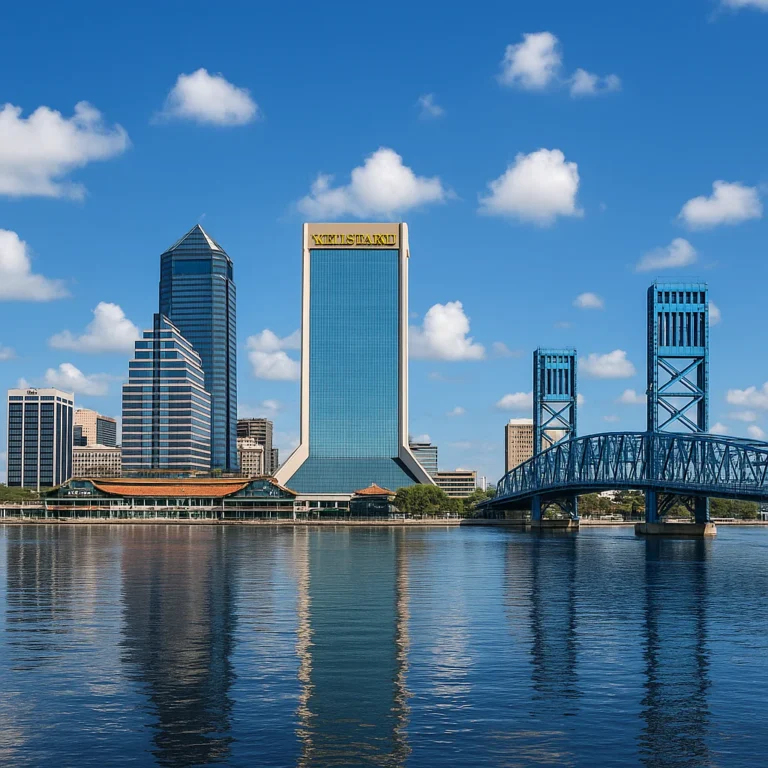
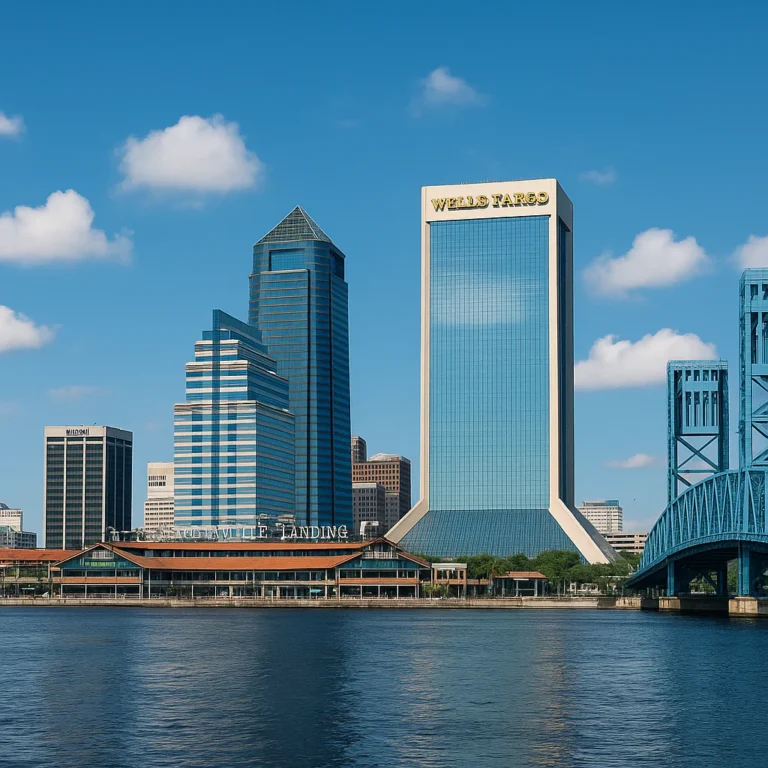
Downtown is the most direct place to connect the civic slogan with the city’s riverfront identity. Walk along the St. Johns, look toward the bridges, and notice how the river divides and connects the city at the same time.
Useful stops and resources include:
- Riverfront Plaza and nearby public spaces
- The Southbank Riverwalk
- Friendship Fountain and the surrounding riverfront
- Nearby museums, venues, and historic buildings
- City information from Visit Jacksonville
Downtown has quiet stretches, especially outside major events, so check opening hours and event schedules before you go. If you want to understand the city’s big-city ambition, look from the river toward the skyline. If you want to understand its challenges, ask a local about commuting across town.
Jacksonville’s Beaches and Coastal Communities
Jacksonville’s beaches show the other side of the city’s identity: open Atlantic coastline, coastal neighborhoods, fishing, surfing, and a pace that can feel worlds away from downtown. Jacksonville Beach, Atlantic Beach, and Neptune Beach each have their own character, while nearby areas such as Mayport connect the coast to maritime and military history.
Before you head out:
- Check the City of Jacksonville beach information.
- Review weather, surf, and beach-safety updates.
- Choose a beach access point and check parking rules.
- Allow extra time during busy weekends and peak season.
- Keep wildlife and dune vegetation undisturbed.
The coast is a major part of Jacksonville’s appeal, but it is not the origin of the Bold City nickname. It does help explain why residents often describe Jacksonville as a place with an unusual mix of city and outdoor life.
Historic Neighborhoods, Museums, and Local Landmarks
To see the city’s history in layers, visit a historic neighborhood and a museum rather than relying on a slogan alone.
- Riverside and Avondale: Historic architecture, local shops, parks, and riverfront access.
- Springfield: A historic neighborhood with distinctive homes and a strong community identity.
- Fort Caroline National Memorial: A site connected to early French colonial history; check National Park Service visitor information.
- Kingsley Plantation: A powerful place to learn about slavery and plantation history in the region; consult the NPS site.
- The Ritz Theatre and Museum: A major cultural and historical institution in the city’s African American community.
- The Cummer Museum of Art & Gardens: Art, gardens, and riverfront views in one stop.
Jacksonville’s history is not a straight line from “old town” to “bold new city.” It includes Indigenous heritage, enslavement, war, migration, civic activism, economic growth, and debate over who gets to shape the future. The nickname is more meaningful when we remember all of that.
❓ Frequently Asked Questions About Jacksonville’s “Bold City” Nickname
Is “Bold City” an Official Jacksonville Slogan?
Not in the sense of a legal city name. “Bold City” is a widely used nickname, while “The Bold New City of the South” is the longer historic slogan associated with the consolidation period. Official city materials may use different branding for different purposes.
What Does “Bold New City of the South” Mean?
The phrase promoted Jacksonville as a newly unified, forward-looking city after the 1968 consolidation of city and county government. “New” referred to the civic reorganization and fresh identity; “bold” expressed ambition. It was promotional language, not a claim that consolidation solved every public problem.
Why Is Jacksonville Also Called River City?
Jacksonville’s connection to the St. Johns River is central to its geography and history. The river supported transportation and commerce, shapes the city’s neighborhoods, and remains one of its most recognizable features. River City describes that physical relationship; Bold City points more toward civic identity and the consolidation-era slogan.
What Is Jacksonville’s Most Famous Nickname?
There is no official ranking, but Bold City, River City, Jax, and the 904 are all widely recognizable. Which one feels most familiar depends on the context: visitors may encounter “Bold City” in branding, while residents may say “Jax” or “the 904” in everyday conversation.
How Did Jacksonville Get Its Name?
The city was renamed for Andrew Jackson in 182. Jackson had served as Florida’s military governor and later became the seventh U.S. president, but he did not live in Jacksonville. The settlement was previously known as Cow Ford, a reference to a river crossing.
Why Did Jacksonville and Duval County Consolidate?
Support grew amid concerns about fragmented government, overlapping or missing services, suburban growth, fiscal pressure, and corruption scandals. Voters approved the consolidation plan in 1967, and the combined government took effect on October 1, 1968. The merger aimed to make government more efficient, but historians also point out that its benefits and political influence were not experienced equally by all communities.
Did Consolidation Make Jacksonville the Largest City in the United States?
Jacksonville is often described as the largest U.S. city by land area in the contiguous United States. That refers to municipal land area—not population, density, or uninterrupted urban development. Jacksonville includes extensive natural areas and low-density communities, and its consolidated government does not include every separate municipality in Duval County.
Does the nickname still fit Jacksonville today?
It remains relevant because residents, businesses, schools, and local organizations continue to use “Bold City” as shorthand for Jacksonville pride. But the nickname means different things to different people. Some hear ambition and growth; others ask whether the city’s services, transportation, and civic opportunities match that ambition.
What is the best source for the nickname’s history?
For the broad explanation, compare the local historical account from The Coastal with Timoti’s history of the Bold City nickname. Both connect the slogan to the consolidation era. For the exact first use or a single person who coined the phrase, the commonly cited accounts do not provide definitive proof, so treat those details cautiously.