Support our educational content for free when you purchase through links on our site. Learn more
How Big Is Jacksonville Compared to Other Cities? The Surprising Truth (2026) 🌆

You might think you know Jacksonville — sunny beaches, river views, and a laid-back vibe. But did you know Jacksonville is actually the largest city by land area in the contiguous United States? That’s right! It’s bigger than Chicago, Miami, and even New York City when it comes to sheer size. But what does that really mean for residents and visitors? How does Jacksonville’s massive footprint shape its neighborhoods, economy, and lifestyle?
In this deep dive, we’ll unpack Jacksonville’s sprawling geography, compare it to other major U.S. cities, and reveal surprising facts about its population density, urban development, and transportation challenges. Plus, we’ll share insider tips on navigating this vast cityscape and explore why Jacksonville’s size is more than just a number — it’s a defining feature of the city’s identity. Ready to see Jacksonville from a whole new perspective? Let’s jump in!
Key Takeaways
- Jacksonville covers nearly 900 square miles, making it the largest city by land area in the contiguous U.S., far surpassing cities like Chicago and Miami.
- Despite its size, Jacksonville’s population density is relatively low, offering residents more space and a blend of urban, suburban, and rural environments.
- The city’s 1968 city-county consolidation dramatically expanded its boundaries, creating a unique governance and geographic footprint.
- Jacksonville’s size impacts everything from transportation and infrastructure to real estate markets and cultural diversity.
- Visitors should plan for longer travel times and consider neighborhood-specific itineraries to fully experience the city’s variety.
Curious how Jacksonville’s size compares to other cities and what it means for you? Keep reading for detailed comparisons, fun facts, and expert insights from locals at Jax Facts™!
Table of Contents
- ⚡️ Quick Tips and Facts About Jacksonville’s Size
- 🌆 Jacksonville’s Geographic Footprint: How It Became the Largest City by Area in the US
- 📏 Jacksonville, Florida (US) Size Comparison: How It Stacks Up Against Other Major Cities
- 🏙️ Comparing Jacksonville’s Skyline and Urban Development to Other Cities
- 🌍 Why Jacksonville’s Size Matters: Economic, Cultural, and Environmental Impacts
- 📊 Fun Facts and Surprising Stats About Jacksonville’s Size and Growth
- 🗺️ How Jacksonville’s Size Affects Transportation and Infrastructure
- 🏞️ Exploring Jacksonville’s Neighborhoods: Size and Diversity Within the City
- 🛠️ Challenges and Opportunities of Managing America’s Largest City by Land Area
- 🔍 How Jacksonville’s Size Influences Real Estate and Housing Markets
- 🌟 Jacksonville vs. Other Large US Cities: What Makes It Unique?
- 💡 Quick Tips for Visitors: Navigating Jacksonville’s Vast Cityscape
- 🧠 Conclusion: What Jacksonville’s Size Really Means for You
- 🔗 Recommended Links for Further Exploration
- ❓ Frequently Asked Questions About Jacksonville’s Size
- 📚 Reference Links and Data Sources
⚡️ Quick Tips and Facts About Jacksonville’s Size
Welcome to the sprawling world of Jacksonville, Florida! If you’ve ever wondered how big Jacksonville really is compared to other cities, you’re in the right place. As proud locals at Jax Facts™, we’ve got the scoop on everything from land area to population density, and how our city’s size shapes life here.
- Jacksonville covers approximately 874 square miles (2,265 km²), making it the largest city by land area in the contiguous United States. That’s right — bigger than Chicago, Miami, and even New York City!
- Despite its massive size, Jacksonville’s population density is relatively low, around 1,270 people per square mile, giving residents plenty of breathing room.
- The city-county consolidation in 1968 expanded Jacksonville’s boundaries dramatically, combining city and county governments into one entity. This is why Jacksonville’s size is so unique compared to other cities.
- Jacksonville’s population is over 1 million residents as of 2024 estimates, ranking it the 9th most populous city in the U.S. but with a much larger footprint than many cities with similar populations.
- The city’s geography includes a mix of urban, suburban, and rural areas, plus extensive waterways and natural preserves, contributing to its vast land area.
Curious how Jacksonville’s size affects your daily life or how it compares to other major cities? Keep reading — we’ll break it all down with facts, stories, and insider tips! For a deep dive into Jacksonville’s size relative to states, check out our related article Is Jacksonville Bigger Than Any States? The Surprising Truth (2026) 🌍.
🌆 Jacksonville’s Geographic Footprint: How It Became the Largest City by Area in the US
Jacksonville’s massive size didn’t happen overnight. It’s the result of a unique political and geographic history that set it apart from other cities.
The 1968 City-County Consolidation: A Game Changer
Before 1968, Jacksonville was a typical-sized city, but the consolidation of the city government with Duval County expanded its boundaries to cover nearly the entire county — about 900 square miles. This move was designed to streamline government services and manage urban sprawl more effectively.
- Why consolidate?
The goal was to reduce bureaucracy, improve infrastructure planning, and unify services like police, fire, and public works. - Result:
Jacksonville became the largest city by land area in the contiguous U.S., dwarfing cities like Chicago (234 sq mi) and Miami (56 sq mi).
Geography and Natural Boundaries
Jacksonville’s location on the Atlantic coast, with the St. Johns River running through it, adds to its sprawling nature. The city includes:
- Extensive riverfronts and waterways
- Large forested and wetland areas
- Coastal beaches and barrier islands
This mix of urban and natural landscapes means Jacksonville’s size isn’t just about concrete and skyscrapers — it’s about diverse environments within one city boundary.
📏 Jacksonville, Florida (US) Size Comparison: How It Stacks Up Against Other Major Cities
Let’s get down to brass tacks. How does Jacksonville’s size really compare to other cities you may know? We’ve put together a handy table to visualize the differences.
| City | Land Area (sq mi) | Population (2024 est.) | Population Density (per sq mi) | Notes |
|---|---|---|---|---|
| Jacksonville, FL | 874 | ~1,009,833 | ~1,270 | Largest city by land area (contiguous US) |
| New York City, NY | 468.9 | 8,500,000+ | 18,200+ | Most populous US city |
| Chicago, IL | 234 | 2,700,000+ | 11,500+ | 3rd largest US city by population |
| Miami, FL | 56 | 470,000+ | 8,400+ | Much smaller land area |
| Los Angeles, CA | 503 | 4,000,000+ | 7,900+ | Large population, smaller area |
1. Land Area: Jacksonville vs. Other US Cities
Jacksonville’s 874 square miles is nearly 4 times larger than Chicago and over 15 times larger than Miami. This vast area includes urban centers, suburbs, and rural zones, which is quite unusual for a major U.S. city.
2. Population Density: What Size Really Means for Residents
Despite its size, Jacksonville’s population density is low compared to cities like New York or Chicago. This means:
- More space per person ✅
- Less crowded neighborhoods ✅
- More green spaces and natural areas ✅
- Potentially longer commutes ❌
3. Urban vs. Rural: The Spread of Jacksonville’s City Limits
Jacksonville’s boundaries include:
- Dense urban neighborhoods like Downtown and Riverside
- Suburban communities such as Mandarin and Southside
- Rural and undeveloped areas in the north and west
This mix affects city services, infrastructure, and lifestyle options.
🏙️ Comparing Jacksonville’s Skyline and Urban Development to Other Cities
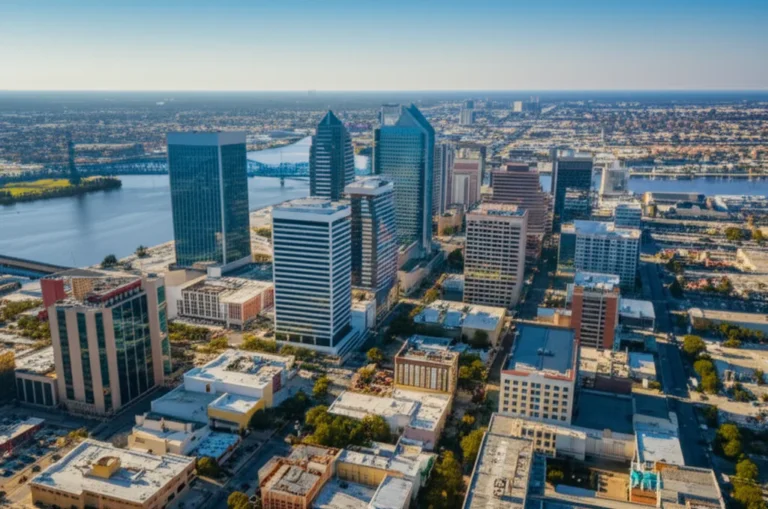
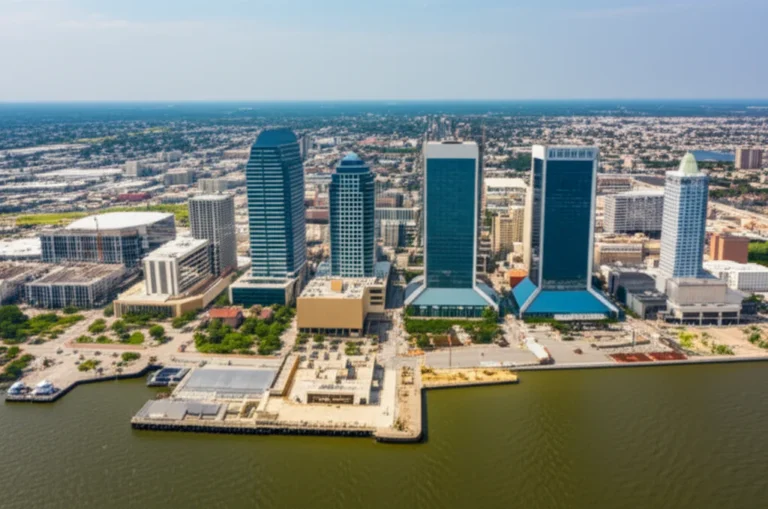
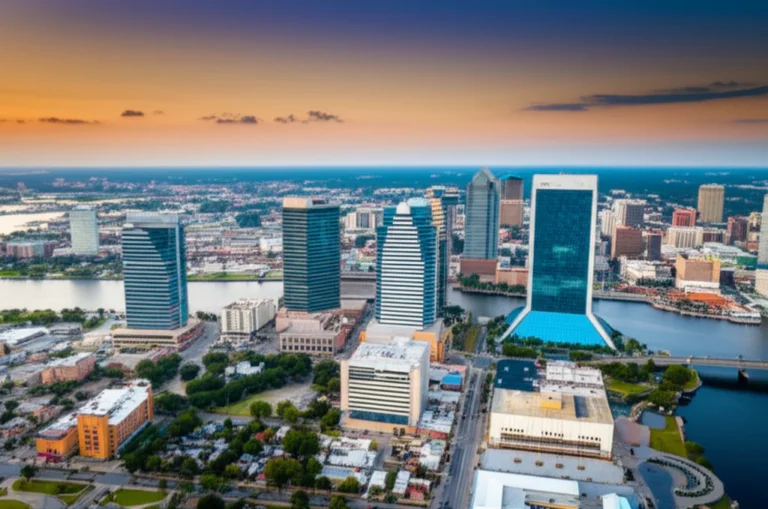
When you think of a big city, you might picture towering skyscrapers and a dense skyline. Jacksonville’s skyline is modest compared to cities like New York or Chicago, but it has its own charm.
Skyline Highlights
- The Bank of America Tower is the tallest building at 617 feet.
- Downtown Jacksonville has a cluster of mid-rise and high-rise buildings but is not densely packed.
- The city’s size means many neighborhoods have low-rise residential and commercial buildings, contributing to a sprawling feel rather than vertical growth.
Urban Development Patterns
- Jacksonville’s growth has been horizontal, not vertical.
- Suburban expansion dominates, with large shopping centers, parks, and residential subdivisions.
- The city’s size allows for diverse architectural styles and neighborhood characters, from historic districts like San Marco to modern developments in Southside.
🌍 Why Jacksonville’s Size Matters: Economic, Cultural, and Environmental Impacts
Jacksonville’s vast size isn’t just a trivia fact — it has real-world implications.
Economic Impact
- The large land area supports multiple industrial parks, including the massive JAXPORT, Florida’s largest seaport by volume.
- Diverse neighborhoods provide a range of housing and business opportunities.
- The city’s size supports a strong military presence with bases like Naval Station Mayport.
Cultural Impact
- Jacksonville’s size means it’s home to over 500 neighborhoods, each with unique cultural vibes.
- From the artsy LaVilla district to the beach communities, Jacksonville offers variety for residents and visitors alike.
Environmental Impact
- The city’s extensive natural areas include parks, wetlands, and beaches, helping preserve Florida’s unique ecosystems.
- Managing such a large area requires balancing development with conservation efforts.
📊 Fun Facts and Surprising Stats About Jacksonville’s Size and Growth
Here are some tidbits that might surprise you:
- Jacksonville’s land area is larger than the entire state of Rhode Island (1,034 sq mi).
- The city’s population grew by over 10% since 2010, but density remains low.
- Jacksonville’s urban area population is about 1.25 million, indicating many residents live in the sprawling metro region.
- The city’s water area covers over 127 square miles, including the St. Johns River and coastal waters.
Want more cool facts? Check out our Jacksonville Facts category for deep dives into local trivia and history.
🗺️ How Jacksonville’s Size Affects Transportation and Infrastructure
Covering nearly 900 square miles comes with transportation challenges and opportunities.
Road Networks
- Jacksonville has an extensive highway system, including I-95, I-10, and I-295 (the beltway).
- Traffic congestion is generally less severe than in denser cities, but long commutes are common.
Public Transit
- The Jacksonville Transportation Authority (JTA) operates buses and a Skyway monorail downtown.
- Public transit coverage is limited in sprawling suburban and rural areas, making car ownership almost essential.
Infrastructure Maintenance
- Maintaining roads, utilities, and services across such a large area is costly and complex.
- The city invests heavily in infrastructure upgrades to keep pace with growth.
🏞️ Exploring Jacksonville’s Neighborhoods: Size and Diversity Within the City
With over 500 neighborhoods, Jacksonville is like a city of cities.
Neighborhood Highlights
- Downtown: The urban core with business, arts, and entertainment.
- Riverside and Avondale: Historic districts with charming homes and vibrant nightlife.
- San Marco: Known for its Mediterranean-style architecture and cultural events.
- Mandarin: A suburban area with parks and riverfront living.
- Jacksonville Beaches: Coastal communities with a laid-back vibe and beautiful beaches.
Diversity in Size and Character
- Neighborhoods range from dense urban blocks to sprawling suburban developments and even rural farmland.
- This diversity reflects Jacksonville’s size and history, offering something for everyone.
Explore more about Jacksonville’s neighborhoods in our Jacksonville Culture and Jacksonville Beaches categories.
🛠️ Challenges and Opportunities of Managing America’s Largest City by Land Area
Managing a city as large as Jacksonville is no small feat.
Challenges
- Service Delivery: Providing police, fire, and emergency services across vast and varied terrain.
- Urban Sprawl: Balancing growth with environmental preservation.
- Infrastructure Costs: Maintaining roads, utilities, and public facilities over a large area.
- Transportation: Addressing long commutes and limited public transit options.
Opportunities
- Economic Development: Space for industrial parks, ports, and business expansion.
- Quality of Life: Access to parks, beaches, and open spaces.
- Community Identity: Diverse neighborhoods with unique cultures and histories.
Jacksonville’s city government continues to innovate to meet these challenges, making it a fascinating case study in urban management.
🔍 How Jacksonville’s Size Influences Real Estate and Housing Markets
If you’re house hunting or investing in Jacksonville, size matters.
Real Estate Variety
- Large land area means a wide range of housing options:
- Urban condos and apartments downtown
- Historic homes in Riverside and Avondale
- Suburban single-family homes in Mandarin and Southside
- Waterfront properties along the St. Johns River and beaches
Market Dynamics
- Lower population density often means more affordable housing compared to denser cities like Miami or New York.
- The sprawling nature can lead to longer commutes but offers more space and privacy.
- New developments continue to expand outward, especially in the suburbs.
For detailed real estate trends, check out local experts like Coldwell Banker Vanguard Realty.
🌟 Jacksonville vs. Other Large US Cities: What Makes It Unique?
Jacksonville’s size is impressive, but what truly sets it apart?
- Largest city by land area in the contiguous US — a fact that surprises many visitors.
- A blend of urban, suburban, and rural within one city boundary.
- Extensive natural landscapes including beaches, rivers, and forests.
- A diverse cultural scene with over 500 neighborhoods, each with its own flavor.
- A major port and military presence that drives the local economy.
Unlike cities that grow upward, Jacksonville grows outward — giving it a unique personality and lifestyle.
💡 Quick Tips for Visitors: Navigating Jacksonville’s Vast Cityscape
Planning a trip to Jacksonville? Here’s how to make the most of its size:
- Rent a car — public transit won’t get you everywhere in this sprawling city.
- Plan your itinerary by neighborhood — don’t try to cover everything in one day!
- Explore the beaches — Jacksonville Beaches communities are a must-see.
- Visit Downtown and Riverside for arts, dining, and nightlife.
- Allow extra travel time — distances can be deceiving!
For more visitor tips, check out our Jacksonville Beaches and Jacksonville Culture guides.
Before we move on, you might find it interesting to check out a popular YouTube video discussing Jacksonville’s population and size. The video claims Jacksonville is the 13th most populous city in the US and mentions some inflated population figures, such as 7.5 million residents, which are not supported by official data. It also compares Jacksonville’s population to Manhattan’s, stating Jacksonville has about 49% of Manhattan’s population. While the numbers are off, the video highlights the common confusion between population and land area.
Watch the video here: Jacksonville Population and Size Explained
That’s a wrap on the deep dive into Jacksonville’s size and how it compares to other cities! Next up: the conclusion and what all this means for you. Stay tuned!
Conclusion: What Jacksonville’s Size Really Means for You

So, how big is Jacksonville compared to other cities? Massive—and not just in land area, but in opportunity, diversity, and lifestyle. With nearly 900 square miles under its belt, Jacksonville stands tall as the largest city by land area in the contiguous United States, dwarfing cities like Chicago and Miami. Yet, it’s not just about size; it’s about how that size shapes the city’s character.
Jacksonville’s sprawling geography offers a unique blend of urban excitement, suburban comfort, and natural beauty. From the bustling downtown skyline to serene beaches and vast parks, the city’s size means there’s something for everyone. However, this vastness also brings challenges—long commutes, infrastructure demands, and the complexity of managing such a diverse area.
If you’re considering moving here, visiting, or investing, remember: Jacksonville’s size translates into space, variety, and opportunity, but also requires thoughtful navigation and planning. Whether you’re a fan of historic neighborhoods, beach life, or industrial hubs, Jacksonville’s size ensures you won’t run out of options.
In short: Jacksonville’s size is not just a number—it’s a lifestyle. And now, you’re equipped with the facts and insights to appreciate it fully.
Recommended Links for Further Exploration and Shopping
If you’re curious to explore Jacksonville’s culture, history, or even dive into real estate and local guides, check out these recommended resources and books:
-
Jacksonville History & Culture Books:
- Jacksonville: The Consolidation Story by Wayne Wood
- A History of Jacksonville, Florida by T.D. Allman
- Shop Jacksonville History Books on Amazon
-
Real Estate Resources:
- Coldwell Banker Vanguard Realty – Local expert real estate listings and advice.
-
Transportation Guides:
- Jacksonville Transportation Authority (JTA) – For transit routes and schedules.
-
Outdoor and Beach Gear:
- Explore beach essentials and outdoor gear on Amazon:
❓ Frequently Asked Questions About Jacksonville’s Size
Why is Jacksonville Florida so big?
Jacksonville’s size is primarily due to the 1968 city-county consolidation with Duval County, which merged the city and county governments and expanded city limits to cover nearly the entire county area. This political decision was aimed at improving governance efficiency and managing urban sprawl, resulting in Jacksonville becoming the largest city by land area in the contiguous U.S.
Where does Jacksonville rank in largest cities?
- By land area: Jacksonville ranks #1 in the contiguous United States, covering about 874 square miles.
- By population: It ranks approximately 9th in the U.S. with over 1 million residents as of 2024 estimates.
How big is Jacksonville FL compared to other cities?
Jacksonville is:
- About 4 times larger than Chicago in land area.
- Over 15 times larger than Miami.
- Nearly twice the size of New York City by land area, though NYC has a much larger population.
What is the population of Jacksonville compared to other major Florida cities?
Jacksonville is the most populous city in Florida, with over 1 million residents. It surpasses Miami, Tampa, and Orlando in population, but its density is lower due to its vast land area.
How does Jacksonville’s land area rank among U.S. cities?
Jacksonville is the largest city by land area in the contiguous United States, a distinction that sets it apart from most other major cities, which tend to be more densely packed and smaller in geographic size.
Is Jacksonville the largest city by area in Florida?
✅ Yes, Jacksonville is the largest city by land area in Florida, thanks to the city-county consolidation that expanded its boundaries.
How does Jacksonville’s size impact its economy and lifestyle?
Jacksonville’s size allows for:
- A diverse economy with major ports, military bases, and industrial parks.
- A variety of lifestyles, from urban living downtown to beach communities and rural areas.
- Challenges like longer commutes and infrastructure maintenance but also opportunities for growth and space to expand.
Additional FAQs
How does Jacksonville’s size affect transportation options?
Due to its sprawling area, car travel is essential for most residents. Public transit exists but is limited outside the urban core, making Jacksonville a car-dependent city.
Does Jacksonville’s size influence real estate prices?
Yes, the large land area and lower population density generally mean more affordable housing compared to denser cities like Miami or New York, with a wide range of options from urban condos to suburban homes.
Are there environmental concerns related to Jacksonville’s size?
Managing such a large area requires balancing development with conservation. Jacksonville has extensive natural areas and waterways, so environmental preservation is an ongoing priority.
📚 Reference Links and Data Sources
For verification and further reading, here are reputable sources we relied on:
- Jacksonville, Florida – Wikipedia
- MapFight: Jacksonville Size Comparison
- Jacksonville Transportation Authority (JTA)
- Coldwell Banker Vanguard Realty
- Jacksonville Florida City Skyline Review and Comparison – Facebook Cityscapes Group
- U.S. Census Bureau QuickFacts: Jacksonville city, Florida
For more on Jacksonville’s culture, neighborhoods, and beaches, explore our internal categories:
- Jacksonville Facts
- Jacksonville Culture
- Jacksonville Beaches
- Jacksonville Demographics
- Jacksonville Education
Thanks for exploring Jacksonville’s size and secrets with us at Jax Facts™! Ready to dive deeper? Stay curious, and keep discovering all the amazing things this sprawling city has to offer.