Support our educational content for free when you purchase through links on our site. Learn more
12 Bold Jacksonville Achievements That Earn Its Nickname 🌊

What are some examples of Jacksonville’s bold actions or achievements that support the nickname? Start with the city’s 1968 government consolidation, its remarkable recovery after the Great Fire of 1901, and its growth into a major port, military center, and home to an expansive park system. Together, these milestones show why “Bold City” is more than a catchy slogan: Jacksonville has repeatedly taken on big ideas and big challenges.
One detail surprises many visitors: Jacksonville’s enormous city limits reflect the consolidation of Jacksonville and Duval County, making it the largest U.S. city by land area under commonly used city-boundary comparisons. Add the St. Johns River, Atlantic beaches, and neighborhoods stretching across a huge landscape, and you get a city that doesn’t exactly think small.
Key Takeaways
- Jacksonville earned its bold reputation through big civic choices, especially the 1968 consolidation of city and county government.
- Resilience is part of the story: after the Great Fire of 1901, Jacksonville rebuilt and grew.
- Its achievements reach well beyond downtown, including a major seaport, military installations, professional sports, health care, and a wide-ranging park system.
- The St. Johns River and Atlantic beaches help define the city, supporting recreation, wildlife, and Jacksonville’s distinctive identity.
- Bold plans still need follow-through. Residents’ experiences vary, and the city’s next challenge is making ambitious projects work for the neighborhoods and people they’re meant to serve.
Table of Contents
- ⚡️ Quick Tips and Facts: Jacksonville’s “Bold City” Nickname
- 📜 How Jacksonville Earned the Bold City Name
- The origins and meaning of “Bold New City of the South”
- How civic pride helped the nickname stick
- 💥 What Does “Bold City” Say About Jacksonville?
- 🏆 12 Bold Jacksonville Achievements That Back Up the Nickname
- 1. Rebuilding after the Great Fire of 1901
- 2. Becoming a major center for the film industry
- 3. Creating the nation’s largest city by land area
- 4. Protecting the St. Johns River and its watershed
- 5. Building a nationally recognized urban park system
- 6. Welcoming major military commands and naval operations
- 7. Growing a powerful port and logistics economy
- 8. Making a mark in professional sports
- 9. Launching music, art, and cultural movements
- 10. Turning the riverfront into a civic gathering place
- 11. Advancing health care and medical research
- 12. Expanding beaches, neighborhoods, and outdoor recreation
- 🌴 What Makes Jacksonville Different from Other Florida Cities?
- A big-city footprint with beaches, river, and preserve
- Distinct neighborhoods and a strong local identity
- 🎭 What Jacksonville Is Best Known For Today
- 🏖️ Jacksonville Beaches, River Life, and Outdoor Adventures
- Can you swim at Jacksonville Beach?
- What color is the water at Jacksonville Beach?
- Is Jacksonville considered tropical?
- 🏡 Is Jacksonville a Good Place to Live?
- What newcomers should know about jobs, neighborhoods, and commuting
- The trade-offs behind Jacksonville’s laid-back lifestyle
- 📍 What to See and Do in Jacksonville
- Historic landmarks and museums
- Food, festivals, and live entertainment
- Parks, waterways, and beach-day favorites
- 🔎 How to Spot Jacksonville’s Bold Spirit on a Visit
- Conclusion
- Recommended Links
- FAQ
- Reference Links
Quick Tips and Facts
For the story behind the nickname itself, start with our guide to why Jacksonville is called the Bold City. The short version: “Bold City” is more than a catchy slogan—it reflects a history of big civic decisions, ambitious growth, and a city that keeps reinventing itself.
| Quick fact | What to know |
|---|---|
| Best-known nickname | The Bold City; Jacksonville is also called the River City and part of the First Coast. |
| A defining civic milestone | Jacksonville and Duval County consolidated governments in 1968. |
| A headline-grabbing result | The consolidated city covers a vast area and is the largest U.S. city by land area under commonly used city-proper comparisons. |
| A defining natural feature | The St. Johns River runs through the city, while the Atlantic beaches and extensive parks shape local life. |
| Big-league credentials | Jacksonville is home to the Jacksonville Jaguars, major military installations, a busy seaport, and a substantial logistics sector. |
| A useful perspective | Bold achievements coexist with unfinished plans, neighborhood needs, and ongoing debates about growth. |
A note about the “largest city” claim: it refers to land area within city limits, not population or the size of the continuous urbanized area. Jacksonville’s consolidation explains much of that distinction; the U.S. Census Bureau’s geographic data is a reliable place to compare measures.
For more local context, browse our Jacksonville facts and Jacksonville culture guides. 🌊
How Jacksonville Earned the Bold City Name
The origins and meaning of “Bold New City of the South”
Jacksonville’s bold reputation is closely associated with 1968, when the city and Duval County combined much of their local government into one consolidated system. The reform was a major civic experiment: instead of maintaining separate city and county administrations for the consolidated area, Jacksonville established a unified municipal government.
Promotional language helped turn that structural change into an identity. The phrase “The Bold New City of the South” appeared in civic promotion, presenting Jacksonville as ambitious, modern, and ready to grow. Accounts differ on exactly when the phrase first appeared: some trace it to earlier promotional materials, while others connect its wider use to the consolidation era. The safest conclusion is that the slogan’s meaning became firmly associated with the post-consolidation city, even if the wording may have circulated earlier.
The City of Jacksonville’s government history and local historical resources help explain the consolidation, while the Florida League of Cities provides broader context about municipal government in Florida.
How civic pride helped the nickname stick
A nickname lasts when people can point to something behind it. Jacksonville residents can point to the scale of consolidation, a major port, military installations, professional sports, a large park network, and a riverfront that continues to attract redevelopment proposals.
That doesn’t mean every resident experiences the city in the same way. A downtown business owner may see opportunity in new projects; a longtime neighborhood resident may ask whether the improvements reach their community, too. Both perspectives belong in the story.
For an outside snapshot of Jacksonville’s character and regional assets, the Jacksonville Chamber of Commerce highlights the business case, while our Jacksonville demographics section helps put growth and community change in context.
What Does “Bold City” Say About Jacksonville?
At its best, “Bold City” means Jacksonville has been willing to attempt things at an unusually large scale: consolidate local government, build a regional logistics hub, host major sporting events, and invest in public spaces shaped by its river and coastline.
At its more skeptical, very-Jacksonville end, the nickname can also invite a fair question: Does the bold vision show up in residents’ everyday lives? Big renderings, announcements, and groundbreaking ceremonies are not the same as completed projects or well-maintained public services.
That tension is especially visible downtown. The first YouTube video embedded in this article captures both sides: Jacksonville is trying to reshape its riverfront with projects such as Riverfront Plaza and plans for Metropolitan Park, while residents also voice frustration about a lack of places to go downtown. One resident sums up the concern bluntly: “The hotels are really nothing for anybody to do.” The quote is a useful reminder that a bold plan only earns public confidence when it delivers places people actually use.
12 Bold Jacksonville Achievements That Back Up the Nickname
1. Rebuilding after the Great Fire of 1901
The Great Fire of 1901 destroyed much of central Jacksonville and became one of the city’s defining disasters. The fire burned thousands of buildings and displaced residents, but Jacksonville rebuilt its downtown and expanded as a commercial center.
The story is not simply “disaster struck, then everything got better.” Reconstruction brought opportunity, but it also changed neighborhoods and created uneven impacts. Still, the scale of rebuilding is a clear example of the city’s resilience. The Florida Historical Society and the Jacksonville Historical Society offer useful historical context.
2. Becoming a major center for the film industry
Before Hollywood became synonymous with American filmmaking, Jacksonville attracted movie companies with its warm climate, varied scenery, rail connections, and access to the East Coast. In the early 20th century, the city became a significant production center, earning the nickname “Winter Film Capital of the World.”
That prominence faded as the film industry concentrated in California, but the legacy still gives Jacksonville a surprising place in film history. The Library of Congress holds early film resources, and the Florida State Archives can help researchers explore the state’s production history.
3. Creating the nation’s largest city by land area
The 1968 consolidation created Jacksonville’s huge municipal footprint. Jacksonville is commonly described as the largest city by land area in the contiguous United States, a distinction that often surprises people who picture only the downtown core.
The caveat matters: “largest” can mean land area, population, metropolitan population, or urbanized area. Jacksonville’s claim is about the area within its municipal boundaries, not a claim that it has the country’s largest population. The U.S. Census Bureau is the best source for comparing population and geographic measures.
4. Protecting the St. Johns River and its watershed
The St. Johns River is more than a scenic backdrop. It shapes transportation, recreation, wildlife habitat, flood risk, and the city’s sense of place. Protecting it requires cooperation among residents, local government, state agencies, utilities, and environmental organizations.
Local conservation work includes monitoring water quality, restoring habitat, and managing stormwater runoff. The St. Johns Riverkeeper advocates for the river, while the St. Johns River Water Management District provides information on regional water resources.
The bold part is ongoing: a beautiful river can still face pollution and development pressures. Support for clean water is measured not only in plans, but in enforcement, infrastructure, and long-term stewardship.
5. Building a nationally recognized urban park system
Jacksonville’s park system is one of its major quality-of-life assets, stretching from neighborhood playgrounds to large preserves and waterfront spaces. That scale gives residents and visitors many ways to walk, kayak, picnic, watch wildlife, or simply find shade when Florida’s sun is doing the absolute most.
The City of Jacksonville Parks, Recreation and Community Services Department lists parks and programs, while the National Recreation and Park Association offers broader measures for understanding parks’ health and community benefits.
A sprawling system also brings a practical challenge: access and upkeep can vary by neighborhood. The best way to experience the network is to check specific park facilities before you go, especially for restrooms, trail conditions, parking, and accessibility.
6. Welcoming major military commands and naval operations
Jacksonville has a substantial military presence, including Naval Air Station Jacksonville and Naval Station Mayport. These installations contribute to the region’s economy, support thousands of service members and civilian workers, and connect the city to generations of military families.
A distinction worth keeping clear: Kings Bay Naval Submarine Base is in Georgia, not Jacksonville. It contributes to the wider region’s military geography, but it should not be counted as a Jacksonville installation. For accurate information, consult Naval Air Station Jacksonville, Naval Station Mayport, and Naval Submarine Base Kings Bay.
7. Growing a powerful port and logistics economy
The Port of Jacksonville, commonly known as JAXPORT, is a major economic engine for Northeast Florida. Its connections to highways, rail, shipping, and air cargo help move goods across the region and beyond. Logistics is not always glamorous, but it keeps everything from groceries to vehicle parts moving.
JAXPORT reports port activity and infrastructure on its official site. The U.S. Bureau of Transportation Statistics and U.S. Census Bureau offer broader data for comparing trade and transportation.
| Jacksonville asset | Why it matters | What to keep in mind |
|---|---|---|
| Seaport terminals | Support cargo movement and maritime jobs | Port expansion must balance commerce with community and environmental concerns |
| Rail and highway links | Connect cargo to inland markets | Freight traffic can affect congestion and nearby neighborhoods |
| Jacksonville International Airport | Supports passenger travel and air cargo | Airport and port activity are separate parts of the logistics network |
| Regional distribution centers | Help businesses reach customers efficiently | Job quality and access to training matter alongside job totals |
8. Making a mark in professional sports
The Jacksonville Jaguars arrived in 1993, giving the city an NFL team and a national sports profile. The franchise’s presence has made game days a civic ritual, with fans gathering downtown and neighborhoods buzzing in teal.
Jacksonville also hosts the annual Florida–Georgia football game, a major college rivalry played in the city for decades, and hosted Super Bowl XXXIX in 2005. The Jaguars’ official site and Visit Jacksonville provide event and visitor information.
The trade-off? Large events bring visibility and visitors, but they also require public planning around transportation, security, stadium operations, and downtown access. A winning weekend is exciting; making the benefits last beyond the final whistle is the harder civic play.
9. Launching music, art, and cultural movements
Jacksonville’s cultural story includes museums, local music, live performance, public art, and neighborhood festivals. The city has produced artists and musicians whose influence reaches far beyond Northeast Florida, while local institutions keep history and creative work in public view.
The Cummer Museum of Art & Gardens, Museum of Contemporary Art Jacksonville, and Jacksonville Center for the Performing Arts are key cultural anchors. For local events and community traditions, explore our Jacksonville culture coverage.
A resident’s view may be less about major institutions and more about a neighborhood art walk, a small venue, or a community festival. That’s part of the point: culture is not only what gets a building downtown; it’s also what people make together.
10. Turning the riverfront into a civic gathering place
Jacksonville’s riverfront has long inspired plans and renderings. The challenge is turning those concepts into public spaces that are welcoming, connected, and active throughout the year. Riverfront Plaza and redevelopment plans around Metropolitan Park represent efforts to create more reasons to spend time downtown.
The city shares updates through its Downtown Investment Authority and Riverfront Parks resources. Project schedules and designs can change, so check official sources for current details rather than treating an early rendering as a finished park.
The video linked above highlights the gap between aspiration and daily experience: residents want restaurants, coffee shops, green space, and places to gather, not just a pretty illustration. The bold achievement will be a riverfront people return to—not merely one they admire from a presentation.
11. Advancing health care and medical research
Jacksonville is a regional health care center, with major providers and research institutions serving Northeast Florida and surrounding communities. Health care supports employment, specialized treatment, medical education, and clinical research.
Local institutions include Mayo Clinic in Florida, UF Health Jacksonville, and Baptist Health. Their services and specialties vary, so patients should use official provider directories and consult qualified clinicians for care decisions.
The achievement comes with a practical question: How evenly can residents access that expertise? Regional medical leadership matters most when people can reach appropriate care, understand their options, and afford treatment.
12. Expanding beaches, neighborhoods, and outdoor recreation
Jacksonville’s appeal comes from having distinct settings within one large city: Atlantic beaches, riverfront neighborhoods, historic districts, suburban centers, and natural preserves. That variety supports surfing, fishing, paddling, cycling, birding, and everyday walks.
For beach conditions and local guidance, visit our Jacksonville beaches section and check official information from the National Weather Service and Florida Department of Health beach water program.
If you’re heading to the coast, check weather, surf conditions, parking rules, and posted swimming advisories before setting out. Jacksonville’s outdoors can be spectacular—and Florida weather can change its mind mid-afternoon.
What Makes Jacksonville Different from Other Florida Cities?
A big-city footprint with beaches, river, and preserve
Jacksonville is unusual because its municipal boundaries cover a very large area, bringing together urban neighborhoods, suburban communities, coastal districts, waterways, and protected landscapes. It feels less like one compact downtown surrounded by suburbs and more like a collection of places connected under one city government.
| Feature | Jacksonville’s version | Why visitors notice |
|---|---|---|
| River | The St. Johns runs through the city | Bridges, boating, riverfront views, and waterfront neighborhoods |
| Coast | Atlantic beaches sit within the wider city area | Beach days are part of the local routine, not a distant excursion |
| Parks | Neighborhood parks and large natural areas | Outdoor options range from playground visits to preserve trails |
| Urban scale | A broad city footprint | Travel times can be longer than a map makes them look |
That size is an asset, but it also means you should plan trips by neighborhood. Downtown, the beaches, and the Westside are not a quick stroll apart.
Distinct neighborhoods and a strong local identity
Jacksonville’s identity is shaped by many communities rather than a single postcard district. Riverside and Avondale have historic streets and independent businesses; the Beaches have a coastal pace; Springfield has a deep architectural history; and other neighborhoods each have their own character and concerns.
For local background, browse our Jacksonville facts and Jacksonville demographics sections. A neighborhood’s reputation can be broad-brush, so check current conditions and visit in person before making assumptions about where to live, work, or explore.
What Jacksonville Is Best Known for Today
Jacksonville is best known for a mix of the St. Johns River, Atlantic beaches, the Jaguars, military installations, JAXPORT, and its unusually large municipal area. Its identity also includes a serious arts scene, historic districts, major health care institutions, and access to outdoor recreation.
The list changes depending on who you ask:
- Sports fans may lead with the Jaguars and Florida–Georgia rivalry.
- Military families often point to the area’s Navy presence and long-standing service community.
- Outdoor lovers talk about beaches, paddling, fishing, and parks.
- Business travelers may know JAXPORT, logistics, finance, health care, and regional headquarters.
- Residents may simply say it’s a city where you can spend the morning by the river and the afternoon at the beach—provided you budget for the drive.
For a visitor overview, Visit Jacksonville is a practical starting point. For local context beyond the visitor brochure, our Jacksonville culture section gets into the people and places that make the city feel like home.
Jacksonville Beaches, River Life, and Outdoor Adventures
Can you swim at Jacksonville Beach?
Yes, swimming is popular at Jacksonville Beach, but conditions vary by weather, surf, currents, and water-quality advisories. Check posted beach flags and lifeguard guidance, swim near a staffed area when possible, and never treat a calm-looking ocean as proof that currents are harmless.
Before you go:
- Check the National Weather Service Jacksonville forecast.
- Review beach water-quality information from the Florida Department of Health.
- Look for current beach flags and obey lifeguards.
- Keep children within arm’s reach in the water.
- Leave the water if thunderstorms approach.
Jacksonville Beach, Neptune Beach, Atlantic Beach, and other coastal access points each have their own rules and facilities. Our Jacksonville beaches guide can help you compare areas.
What color is the water at Jacksonville Beach?
The water can look blue-green, gray-blue, or brownish, depending on light, clouds, waves, sediment, and what’s flowing into the ocean. Jacksonville’s Atlantic water is not reliably the bright turquoise shade people associate with some Caribbean destinations, and color alone does not tell you whether water is safe to swim in.
For safety, rely on official advisories—not a quick glance from the pier. The Florida Department of Health’s beach water program explains monitoring and advisories.
Is Jacksonville considered tropical?
Jacksonville has a humid subtropical climate, not a tropical climate classification. Summers are hot and humid, winters are generally milder than much of the United States, and the city can experience heavy rain, thunderstorms, and tropical systems.
The National Weather Service provides local forecasts and storm information. If you’re visiting during hurricane season, keep an eye on forecasts and follow official evacuation and safety guidance rather than relying on social media’s most confident uncle.
Is Jacksonville a Good Place to Live?
Jacksonville can be a good fit if you want beaches, river access, a large job market, varied neighborhoods, and room to spread out. It can be less appealing if you strongly prefer dense, walkable urban living or want to avoid driving.
What newcomers should know about jobs, neighborhoods, and commuting
The local economy includes health care, financial services, logistics, transportation, military-related work, tourism, and professional services. The Florida Department of Commerce and U.S. Bureau of Labor Statistics provide employment data.
Before choosing a home, map the daily commute at the time you’ll actually travel. Jacksonville is expansive, and a neighborhood that looks “close” on a map may involve a long drive across bridges or along busy roads.
Newcomers should also compare:
- Distance to work, schools, medical care, and everyday services
- Access to public transit, sidewalks, and bike routes
- Flood risk and insurance considerations
- Neighborhood amenities and maintenance
- Commute patterns during peak hours
For school and education context, see our Jacksonville education coverage and official information from Duval County Public Schools.
The trade-offs behind Jacksonville’s laid-back lifestyle
| Potential advantage | Possible drawback |
|---|---|
| Beaches and outdoor recreation | Hot, humid summers and storm-season planning |
| Many distinct neighborhoods | Long drives between parts of the city |
| Major employers across several sectors | Job opportunities vary by field and location |
| A large park network | Access, amenities, and upkeep vary across neighborhoods |
| Big-city services with a coastal feel | Public transit and walkability are uneven |
We’ve heard newcomers describe Jacksonville as “a city where you can breathe”—then discover that “just across town” can mean a longer drive than expected. That’s not a deal-breaker; it’s a reminder to pick your home around your real routine, not only the beach photo on the listing.
What to See and Do in Jacksonville
Historic landmarks and museums
Start with downtown and nearby historic districts, then build your day around one or two destinations rather than trying to cross the whole city between stops.
- Visit the Cummer Museum of Art & Gardens for art and riverfront gardens.
- Explore the Museum of Contemporary Art Jacksonville.
- Learn about the region’s past through the Jacksonville Historical Society.
- Check the City of Jacksonville’s parks listings for riverfront and neighborhood stops.
Hours, exhibits, and access can change, so confirm details directly with each venue before you go.
Food, festivals, and live entertainment
Jacksonville’s food and entertainment scene reflects its scale: you’ll find seafood, Southern staples, international restaurants, breweries, live music, festivals, and arena events spread across several districts.
Check Visit Jacksonville’s events calendar and Jacksonville Center for the Performing Arts for current listings. For a more local view of arts, traditions, and neighborhood happenings, explore Jax Facts’ Jacksonville culture coverage.
A little local advice: choose an area first, then look for dinner and an event nearby. Jacksonville traffic is much less charming when you’re racing across town to make a curtain time.
Parks, waterways, and beach-day favorites
For a day outdoors, match the activity to the weather and your group:
- Beach day: Check flags, surf, water advisories, parking, and facilities.
- River outing: Confirm launch access and boating conditions before paddling or boating.
- Park visit: Check trail conditions, hours, pets rules, and restroom access.
- Wildlife viewing: Keep a respectful distance and follow posted rules.
- Hot-weather walk: Choose shaded trails, bring water, and avoid the hottest hours.
The National Weather Service Jacksonville, Florida State Parks, and City of Jacksonville Parks are useful planning sources. For beach-specific local coverage, visit Jacksonville Beaches on Jax Facts.
How to Spot Jacksonville’s Bold Spirit on a Visit
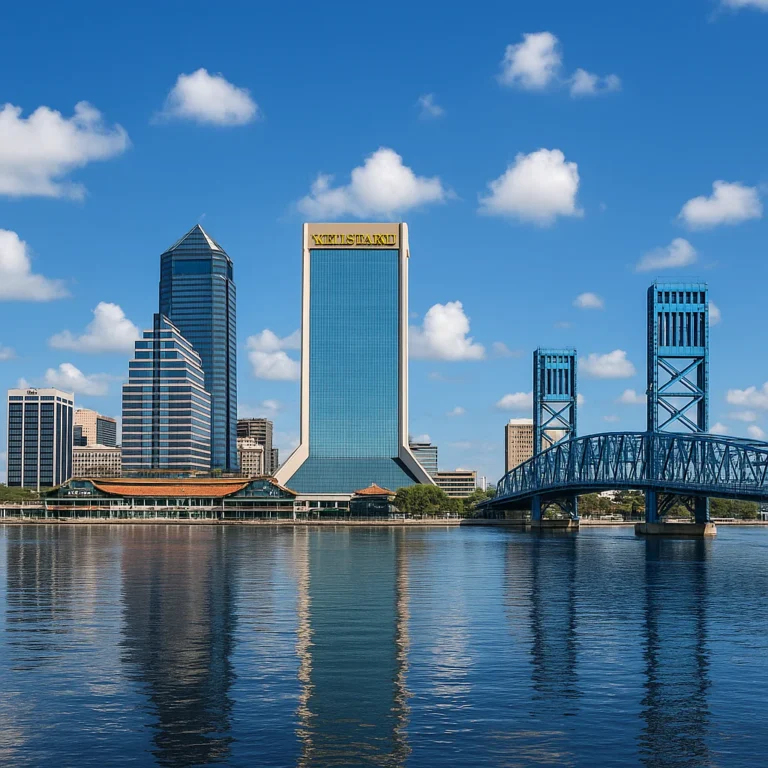
You don’t need a special tour to see why Jacksonville leans into “Bold City.” Look for the scale of the river, the bridges, the spread of neighborhoods, and the way military, maritime, sports, and outdoor life overlap.
Try this simple route:
- Start downtown and notice how the St. Johns shapes the city’s layout.
- Visit a riverfront park or museum to see how public space and cultural institutions connect.
- Check a neighborhood beyond downtown, such as Riverside, Avondale, or Springfield, for a different pace and architecture.
- Head toward the coast and experience the Atlantic side of the city.
- Ask what’s working—and what residents still want. A local conversation will tell you more than a slogan alone.
That last step is the key. Jacksonville’s boldness is not just a collection of past milestones; it’s a live argument about what the city should build next, who benefits, and how it can make ambitious plans real. The riverfront video leaves us with one useful test: Will the new downtown spaces give people a reason to stay, gather, and come back? That answer depends on what gets built—and how residents use it.