Support our educational content for free when you purchase through links on our site. Learn more
Why Did Jacksonville Get a Football Team? 🏈

Jacksonville got an NFL team because local leaders made a determined expansion bid and proved the city could draw football fans. On November 30, 1993, NFL owners voted 26–2 to award Jacksonville a franchise, despite concerns about its small television market and the work needed to prepare the Gator Bowl.
The answer to “Why did Jacksonville get a football team?” starts well before the Jaguars took the field in 1995. The Jacksonville Bulls’ impressive USFL crowds, a sold-out NFL preseason game, and a committed local campaign helped convince the league that North Florida had a real appetite for pro football.
Jacksonville was no sure thing. Its bid nearly unraveled over stadium negotiations, making the eventual win feel less like a coronation and more like a fourth-quarter comeback. Here’s how the underdog city landed the Jaguars—and why the decision surprised so many people.
Key Takeaways
- Jacksonville won an NFL expansion franchise in 1993 after NFL owners voted 26–2 in its favor.
- Local leadership and fan demand made the difference: Wayne Weaver’s Touchdown Jacksonville! campaign built the bid, while the Bulls and other football events showed fans would turn out.
- The stadium was both an obstacle and an asset: The Gator Bowl needed major reconstruction, and resolving that challenge helped make Jacksonville’s proposal credible.
- The Jaguars were an expansion team, not a relocated franchise. They began playing in the NFL in 1995.
- Jacksonville was an underdog, not an obvious pick: Its comparatively small TV market made the win surprising, but the city’s football history and regional appeal strengthened its case.
Table of Contents
- ⚡️ Quick Tips and Facts
- 🏈 Why Did Jacksonville Get a Football Team? The Short Answer
- 📜 Jacksonville’s Road to the NFL: Football History Before the Jaguars
- The Jacksonville Bulls and the USFL years
- The 1989 NFL exhibition game that changed everything
- Why earlier attempts to land a team fell short
- 🔍 The 8 Reasons the NFL Chose Jacksonville
- 1. Jacksonville was one of the largest U.S. cities without an NFL team
- 2. Local leaders and business owners made a serious bid
- 3. The city showed it could sell tickets and rally fans
- 4. The Gator Bowl offered a foundation for a home stadium
- 5. Jacksonville brought a strong regional fan base
- 6. Florida was a fast-growing, football-loving market
- 7. The NFL wanted to expand its national footprint
- 8. Jacksonville’s underdog status made its bid stand out
- 🗳️ How Jacksonville Won an NFL Expansion Franchise
- The 1993 expansion process and competing cities
- The 1993 NFL owners’ vote
- Why Jacksonville beat out St. Louis and other contenders
- 🐆 The Birth of the Jacksonville Jaguars
- Wayne Weaver, Tom Coughlin, and the first team leadership
- Choosing the Jaguars name and identity
- When the Jaguars began playing in the NFL
- 🏟️ The Gator Bowl Becomes EverBank Stadium
- How the stadium was prepared for NFL football
- Stadium renovations, names, and the Jaguars’ home field
- 📈 Did Jacksonville Prove the NFL Made the Right Choice?
- The Jaguars’ rapid rise in the 1990s
- Playoff runs, AFC Championship Games, and memorable seasons
- The team’s impact on Jacksonville’s identity and economy
- 🤔 Why Jacksonville Was a Surprising NFL Choice
- Market size, television reach, and major-league concerns
- Stadium capacity and the challenge of supporting an NFL team
- How the Jaguars built a regional following
- 🧭 Jacksonville Jaguars Timeline: Key Dates and Milestones
- ❓ Common Misconceptions About Jacksonville Getting an NFL Team
- ✅ Quick Tips and Facts About the Jaguars’ Arrival
- Conclusion
- Recommended Links
- FAQ
- Reference Links
⚡️ Quick Tips and Facts
| Fast fact | What to know |
|---|---|
| Jacksonville’s NFL team | The Jacksonville Jaguars |
| Franchise awarded | November 30, 1993 |
| First NFL season | 1995 |
| Expansion decision | NFL owners voted 26–2 to award Jacksonville a franchise |
| Original expansion plan | The NFL planned to expand from 28 to 30 teams |
| Local bid group | Touchdown Jacksonville!, led by businessman Wayne Weaver |
| Home stadium foundation | The Gator Bowl, later rebuilt and renamed several times |
| The surprise | Jacksonville’s TV market was small, but its history of drawing football crowds was hard to ignore |
Short version: Jacksonville got a football team because local organizers mounted a determined bid, the city had a long track record of supporting pro football, and the NFL saw a credible stadium and regional fan opportunity—even though Jacksonville was considered a long shot.
For a little local context, the city’s “Bold City” identity and underdog spirit have deep roots; we explore that in our story on why Jacksonville is called the “Bold City” 🏙️. For more local history, see our Jacksonville Facts and Jacksonville Culture coverage.
🏈 Why Did Jacksonville Get a Football Team? The Short Answer
Jacksonville got the 30th NFL franchise after a sustained local campaign persuaded NFL owners that the city could support a team. Its bid was led by Touchdown Jacksonville!, a group of business and civic leaders that included Wayne Weaver. The city’s strongest argument was not that it had the biggest TV market or the newest stadium. It was that football fans here had repeatedly shown up.
Before the Jaguars, Jacksonville had supported several professional teams and hosted high-profile football games. The Jacksonville Bulls, for example, drew strong crowds in the USFL, while NFL preseason games and the annual Florida–Georgia rivalry helped reinforce the city’s football credentials. That history made Jacksonville more than a dot on an expansion map: it offered evidence of demand.
The city still faced serious obstacles. Its television market ranked low, the Gator Bowl needed major work, and other expansion candidates looked stronger on paper. Jacksonville’s campaign nearly collapsed over stadium negotiations, then recovered with a renewed commitment to renovations and ticket sales. In 1993, NFL owners voted 26–2 to award Jacksonville the franchise.
The NFL’s decision was a bet on fan commitment, local leadership, stadium readiness, and the broader North Florida region. Was it a safe bet? Not exactly. That is part of what made the Jaguars’ early success so satisfying.
📜 Jacksonville’s Road to the NFL: Football History Before the Jaguars
Professional football did not suddenly arrive in Jacksonville with a shiny new NFL logo. The city had spent decades building a football résumé, sometimes with teams that succeeded at the gate even when their leagues struggled to survive.
A 2017 history from Dawgs By Nature traces local pro football back to the 1920s. In 1925, future Hall of Famer Ernie Nevers played for a Jacksonville team that folded after it could not afford his salary. The details are a reminder that enthusiasm alone cannot keep a team afloat—but Jacksonville’s football story kept going.
The city later hosted teams in the World Football League (WFL), the American Football Association (AFA), and the United States Football League (USFL). Their ups and downs offered a useful lesson: Jacksonville could attract crowds, but a stable league and a sustainable business model mattered just as much.
| Team or event | Era | Why it mattered |
|---|---|---|
| Jacksonville pro team featuring Ernie Nevers | 1925 | Early evidence of local professional-football interest |
| Jacksonville Sharks | 1974 | WFL crowds demonstrated that fans would turn out for a new team |
| Jacksonville Express | 1975 | Continued the city’s WFL experiment before the league collapsed |
| Jacksonville Firebirds/Sunbirds | 1979–82 | AFA football brought more pro games and a title-winning team |
| Jacksonville Bulls | 1984–85 | USFL attendance became one of the clearest arguments for an NFL team |
| Houston Oilers–Miami Dolphins preseason game | 1989 | A sellout showed the local appetite for top-tier football |
The numbers from these earlier teams deserve a little care. Attendance accounts do not always distinguish paid tickets from complimentary tickets or announced attendance from turnstile counts. The Dawgs By Nature history discusses those caveats for the WFL Sharks, while also noting that Jacksonville teams repeatedly drew attention at the gate. The broad lesson is more trustworthy than any single crowd figure: professional football kept finding an audience in Jacksonville.
The Jacksonville Bulls and the USFL years
The Jacksonville Bulls became the city’s most persuasive pre-Jaguars proof of concept. They played in the USFL in 1984 and 1985, and the team drew major crowds even during an uneven first season.
According to the historical attendance figures summarized by Dawgs By Nature, the Bulls averaged 46,730 fans per game in 1984, leading the league. In 1985, they remained among the attendance leaders. A game featuring star running back Herschel Walker drew a reported 73,227, a league record.
That performance mattered because NFL owners were not just choosing a city; they were judging the likelihood that residents would buy tickets and keep buying them. The Bulls were a strong signal. But they were not a guarantee: the USFL eventually collapsed after moving toward a fall schedule that put it in direct competition with the NFL.
Jax Facts takeaway: The Bulls helped make Jacksonville’s case, but the Jaguars’ bid had to demonstrate that the city could support a stable NFL operation—not simply sell out a few headline games.
The 1989 NFL exhibition game that changed everything
A 1989 Houston Oilers–Miami Dolphins preseason game in Jacksonville sold out quickly, according to the retrospective by Dawgs By Nature. It became a vivid example of how much appetite the city had for NFL football.
The game did not single-handedly win Jacksonville a franchise. Expansion decisions involve ownership, stadium plans, market analysis, and league politics—not just a packed preseason crowd. Still, a fast sellout gave local boosters a real-world talking point: when NFL teams came town, people showed up.
That evidence sat alongside decades of support for football events, including the Florida–Georgia game. The game’s longstanding Jacksonville connection helped demonstrate that the city could host a major football crowd and turn a sporting event into a civic occasion. The NFL could see a football culture here; the question was whether the other pieces could line up.
Why earlier attempts to land a team fell short
Jacksonville tried to attract an NFL team before the Jaguars. In 1987, local efforts sought to bring the Houston Oilers to the city. The move did not happen: owner Bud Adams remained in Houston after obtaining stadium improvements at the Astrodome, according to the history of the Jaguars franchise.
That unsuccessful pursuit exposed a recurring challenge. Jacksonville could be part of relocation conversations, but being mentioned as leverage is not the same as winning a team. A city needed an owner willing to commit, a stadium plan the league considered credible, and enough political and business support to get a proposal over the finish line.
Earlier leagues also folded for reasons that were larger than Jacksonville. The WFL and USFL faced broad financial and organizational problems. Those collapses did not erase local fan interest, but they made it essential for the NFL bid to present a more durable foundation.
The Jaguars campaign would have its own near-breakup over the stadium. The next question was whether local leaders could turn football enthusiasm into an NFL-ready offer.
🔍 The 8 Reasons the NFL Chose Jacksonville
There was no single magic reason. Jacksonville’s selection came from a combination of fan demand, a determined ownership group, expansion timing, and a stadium solution. The candid version: the city was not the obvious favorite, but it made a persuasive case where it counted.
1. Jacksonville was one of the largest U.S. cities without an NFL team
Jacksonville had a substantial city population, but its geography makes simple comparisons tricky. The consolidated City of Jacksonville and Duval County share a government, so the city’s official population includes a broad area that other cities may count separately as suburbs. The U.S. Census Bureau’s Jacksonville profile provides current city figures; historical comparisons should use the boundaries and definitions in place at the time.
In the 1990 Census, Jacksonville had about 635,000 residents within the city and roughly 900,000 in its metropolitan area, as summarized in the Jaguars history. That made Jacksonville a sizable city but not necessarily a large regional television market.
The distinction matters. City population did not equal TV-market size. Jacksonville’s consolidated boundaries made it look large on a city-population list, while its broadcast reach laged behind several competing markets. The NFL’s decision therefore cannot be reduced to “Jacksonville was a huge city.” It was a promising city with a passionate audience and an unusual geographic profile.
2. Local leaders and business owners made a serious bid
The local campaign took shape through Touchdown Jacksonville!, formed in 1989. The group brought together business and civic leaders who could make the city’s case to the league and work on the details that an expansion bid required.
Key figures included:
- Wayne Weaver, the businessman who became the group’s leading figure and later the Jaguars’ first owner.
- Tom Petway, a prominent local businessman involved in the effort.
- Ron Weaver, Wayne Weaver’s brother, who helped bring him into the campaign.
- Jeb Bush, who was among the early participants in the prospective ownership effort.
- John Delaney, Jacksonville’s mayor during the final push, whose administration had to deal with the stadium and city negotiations.
The campaign was not all handshakes and stadium tours. News4JAX’s 2016 retrospective describes a bruising process, with former Mayor Delaney recalling “cursing and yelling back and forth” during negotiations. The direct quote captures how close the effort came to derailing.
Local leadership mattered because an NFL franchise needed more than fans: it needed a credible owner, local investment, public cooperation, and a workable stadium plan. Jacksonville’s organizers kept working through the disagreements rather than treating the first setback as the final whistle.
3. The city showed it could sell tickets and rally fans
The city’s pro-football history gave the expansion bid a tangible advantage. The Bulls’ crowds, the Florida–Georgia game, and the fast-selling 1989 preseason matchup all helped establish that football could draw a crowd in Jacksonville.
During the expansion campaign, prospective fans also put money behind their interest. The Dawgs By Nature account reports that more than 10,000 seats were sold in 10 days, contingent on Jacksonville receiving a franchise. That was a powerful signal to NFL owners: people were not merely cheering for the idea; they were willing to commit.
A caveat: attendance records from defunct leagues can vary depending on whether a source reports tickets distributed, paid attendance, or people entering the stadium. The strongest conclusion is not that every historic number is perfectly comparable. It is that Jacksonville repeatedly produced strong football crowds across different leagues and events.
4. The Gator Bowl offered a foundation for a home stadium
The Gator Bowl gave Jacksonville a stadium site and a football venue already familiar to local fans. It did not, however, give the city a ready-made modern NFL stadium. The structure required extensive renovation, and negotiations about the project became a major sticking point.
That problem nearly ended the bid. The Jaguars franchise history notes that the ownership group withdrew in July 1993 amid disputes over the stadium lease and renovation plan. Jacksonville’s effort only recovered after the sides moved toward a workable renovation agreement.
The stadium story was therefore both a drawback and a solution:
- Drawback: The existing Gator Bowl was outdated for a new NFL franchise.
- Advantage: A known football site already existed, and city leaders could pursue a major rebuild rather than starting from scratch elsewhere.
- Proof point: The stadium commitment showed the NFL that Jacksonville intended to meet the practical demands of hosting a team.
5. Jacksonville brought a strong regional fan base
Jacksonville was positioned to draw fans from beyond its city limits, including communities across Northeast Florida and parts of Southeast Georgia. That regional reach mattered because the franchise did not depend solely on residents within the consolidated city boundary.
Jacksonville’s scale is also shaped by geography: it is a large, spread-out city, with neighborhoods, beaches, riverfront districts, and communities that do not all feel like one compact metro. Our Jacksonville Demographics and Jacksonville Beaches coverage offers more context on the region’s varied communities.
The regional case was attractive, but it was not a blank check. A broad catchment area only helps if people can get to games, find a reason to follow the team, and remain engaged across good and bad seasons. Jacksonville would still need to prove that loyalty could last after the novelty wore off.
6. Florida was a fast-growing, football-loving market
Florida had a strong football culture, a growing population, and existing NFL franchises in Miami and Tampa Bay. Adding Jacksonville gave the league another foothold in the state and the Southeast, though it also meant placing three NFL teams in Florida.
The state’s growth was a long-term opportunity, not a guarantee that every new resident would become a Jaguars fan. New arrivals bring different team loyalties, and Jacksonville competes for attention with college football, other Florida franchises, and a crowded sports calendar.
Still, the city had an established football audience and a recognizable event tradition. The league could plausibly see a path to growing its reach in North Florida while giving local fans a team of their own.
7. The NFL wanted to expand its national footprint
In 1991, the NFL announced a plan to expand from 28 to 30 teams, its first expansion since 1976, according to the Jaguars history. The league was looking for cities that could support new franchises and expand its national reach.
Expansion was not just a popularity contest among cities. The league had to consider stadiums, ownership, local commitments, market reach, and the possibility of long-term growth. Jacksonville’s bid gave the NFL a way to plant a team in a football-friendly region where the league saw room to build.
The league awarded the first expansion team to Charlotte, which became home to the Carolina Panthers. Jacksonville won the second franchise after a competitive process that included several cities with stronger market numbers on paper.
8. Jacksonville’s underdog status made its bid stand out
Jacksonville was often described as the least likely finalist. It had a smaller TV market than many rivals, an outdated stadium, and a campaign that nearly fell apart. Former mayor John Delaney later called the win a “Cinderella story” in the News4JAX retrospective.
That phrase is memorable, but the win was not a fairy tale handed down by the league. Jacksonville’s organizers had to show evidence: sell tickets, work through stadium disputes, and persuade owners that the city could be a viable NFL home.
The underdog narrative also obscures a more practical truth: Jacksonville was unusual, not unqualified. The city had genuine football attendance history and a local group willing to make the bid work. The surprise was how those strengths outweighed the market concerns.
🗳️ How Jacksonville Won an NFL Expansion Franchise
The expansion campaign unfolded over several years, not one dramatic vote. Jacksonville first had to make the shortlist, then survive stadium negotiations, and finally convince NFL owners to choose it over cities that appeared to have stronger market advantages.
The 1993 expansion process and competing cities
The NFL planned to add two teams for the 1995 season. Jacksonville competed for one of those franchises alongside Baltimore, Charlotte, Memphis, and St. Louis.
Charlotte received the first team in October 1993 and became home to the Carolina Panthers. The remaining cities faced the second decision, with St. Louis and Baltimore often viewed as stronger contenders on market size and stadium appeal.
| Candidate city | What it brought to the bid | Challenge or context |
|---|---|---|
| Jacksonville | Strong football attendance history; committed local bid group | Smaller TV market and major stadium work required |
| Charlotte | A strong expansion bid and a growing market | Ultimately received the first franchise |
| St. Louis | Large market and established football history | Did not receive the 1993 expansion team |
| Baltimore | Large regional market and passionate football audience | Continued pursuing an NFL return after the Colts left |
| Memphis | Regional reach and a serious bid | Did not win a franchise in this round |
The population numbers in news retrospectives can be confusing because sources may compare city limits, metro areas, or broader market regions. For understanding the vote, the more relevant point is that Jacksonville’s television market was comparatively small, while the city had unusually strong evidence of football attendance.
The 1993 NFL owners’ vote
On November 30, 1993, NFL owners selected Jacksonville for the league’s 30th franchise. The vote was reported as 26–2, a decisive margin despite the city’s underdog status. NFL Commissioner Paul Tagliabue announced, “Membership has selected Jacksonville as the next NFL club,” according to News4JAX’s account.
The win came after a turbulent stretch. The prospective ownership group had temporarily pulled out over the Gator Bowl agreement, and the city still had to show it could deliver the stadium work. A renewed commitment and strong ticket interest helped revive the bid.
Why did owners vote so decisively? There is no single public explanation that reduces the vote to one factor. The evidence points to a combination: the local group was organized, demand had been demonstrated, the stadium plan was moving forward, and owners saw long-term value in expanding into Jacksonville.
Why Jacksonville beat out St. Louis and other contenders
Jacksonville did not win because it was the biggest market. By many conventional measures, it was not. It won because its bid paired credible local commitment with a demonstrated football audience.
The competing cities had advantages of their own. St. Louis had a larger market, and Baltimore had a long NFL history and a sizable regional base. Jacksonville’s edge was its combination of ticket demand, local leadership, and a path to a renovated stadium. It was also a fresh market for the league rather than a direct return to a city with a complicated relocation history.
Some retrospective accounts frame Jacksonville as a surprise or “Cinderella” winner; others emphasize the long record of football attendance. Those are not contradictory explanations. The surprise describes the market rankings; the attendance history helps explain the outcome.
🐆 The Birth of the Jacksonville Jaguars
Winning a franchise was the beginning, not the finish. Jacksonville had to build an organization, choose its identity, prepare a stadium, and get ready for its first NFL season.
Wayne Weaver, Tom Coughlin, and the first team leadership
Wayne Weaver became the Jaguars’ first owner after leading the local bid effort. His involvement gave the expansion campaign a committed local face and helped connect the bid to the business community.
The first head coach was Tom Coughlin, who helped establish the team’s football operations ahead of its inaugural season. Jacksonville’s early leadership had to build a roster, coaching staff, front office, and fan culture at the same time. Expansion teams face a steep challenge: they start without the long-established systems, stars, or traditions that older franchises have had decades to develop.
The Jaguars entered the league alongside the Carolina Panthers in 1995. The two expansion teams were built in parallel, though they quickly developed separate identities and rivalries.
Choosing the Jaguars name and identity
The team’s name became the Jacksonville Jaguars, drawing on the jaguar’s image as a powerful, swift animal and a recognizable emblem for a new franchise. The name also gave the team a visual identity suited to helmets, uniforms, and merchandise.
The logo and uniform designs have changed over the years, but the franchise’s central identity remains tied to the jaguar. For current team branding and official history, visit the Jacksonville Jaguars’ official site.
Choosing a name was more than a branding exercise. A new team needed to become part of Jacksonville’s civic vocabulary. “The Jaguars” gave fans a shared identity before the team had played a single regular-season game.
When the Jaguars began playing in the NFL
The Jaguars began play in the 1995 NFL season, after receiving the franchise in 1993 and spending the intervening period preparing the organization and stadium.
Their first seasons were about establishing an NFL foundation: assembling a competitive roster, introducing the team to fans, and turning a new franchise into a regular part of the city’s calendar. Jacksonville’s early performance would soon exceed what many observers expected from an expansion team—but first, it needed a home stadium ready for the league.
🏟️ The Gator Bowl Becomes EverBank Stadium
The stadium was one of Jacksonville’s most important assets and one of its biggest headaches. The Gator Bowl offered an existing football site, but the old structure needed a major rebuild before it could serve as a long-term NFL home.
How the stadium was prepared for NFL football
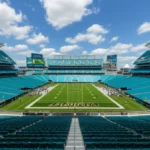
After the NFL awarded Jacksonville a franchise, the old Gator Bowl hosted its final game on December 31, 1993. The stadium was then largely demolished and rebuilt with a new reinforced-concrete structure, according to the Jaguars franchise history.
This was not a cosmetic refresh. Jacksonville needed a venue that could host NFL games and demonstrate that the city had followed through on the promise made during its bid. The stadium project also made the initial franchise campaign more difficult: the city and ownership group had to agree on who would pay for and oversee the necessary work.
From a fan’s perspective, the rebuild made a meaningful difference. A team needs more than a crowd; it needs a stadium that can safely and reliably host games, support game-day operations, and serve as a recognizable home.
Stadium renovations, names, and the Jaguars’ home field
The Jaguars’ stadium has had several names over the years, reflecting changing sponsorship agreements. It has been known as Alltel Stadium, Jacksonville Municipal Stadium, EverBank Field, TIAA Bank Field, and EverBank Stadium.
| Stadium name | Period or context |
|---|---|
| Gator Bowl | The venue name before the Jaguars era |
| Jacksonville Municipal Stadium | Used after the original rebuild |
| Alltel Stadium | A later sponsored name |
| EverBank Field | Sponsor name adopted in the 2010s |
| TIAA Bank Field | Name used after the financial company rebranding |
| EverBank Stadium | Current name |
The naming history can be confusing, especially for longtime fans who still say “the Gator Bowl.” The easiest way to keep it straight: the stadium’s site and role as the Jaguars’ home stayed constant, while its formal name changed with sponsorships. For current venue information, check the Jaguars’ official stadium page.
📈 Did Jacksonville Prove the NFL Made the Right Choice?
The Jaguars gave the league an early answer: they could compete quickly, attract passionate fans, and become a prominent part of Jacksonville’s identity. Whether the franchise has been consistently successful is a different question. NFL history, like Jacksonville weather, has its bright stretches and its sudden storms.
The Jaguars’ rapid rise in the 1990s
The Jaguars’ early seasons were remarkably successful for a new franchise. After beginning play in 1995, the team reached the playoffs in its second season and became a serious contender in the AFC.
That fast start helped answer the critics who wondered whether Jacksonville could support an NFL team. It gave local fans a reason to embrace the Jaguars quickly and strengthened the sense that the 1993 vote had been more than a gamble.
The early success did not mean every season would be smooth. The team has experienced rebuilding periods and frustrating stretches, as any franchise does. But the strong start created an enduring foundation for a fan base that had waited decades for a local NFL team.
Playoff runs, AFC Championship Games, and memorable seasons
The Jaguars reached the AFC Championship Game in 1996 and again in 199, establishing themselves as one of the league’s most exciting young teams. The 199 season remains a landmark: Jacksonville finished with a franchise-best regular-season record at the time and reached the conference championship.
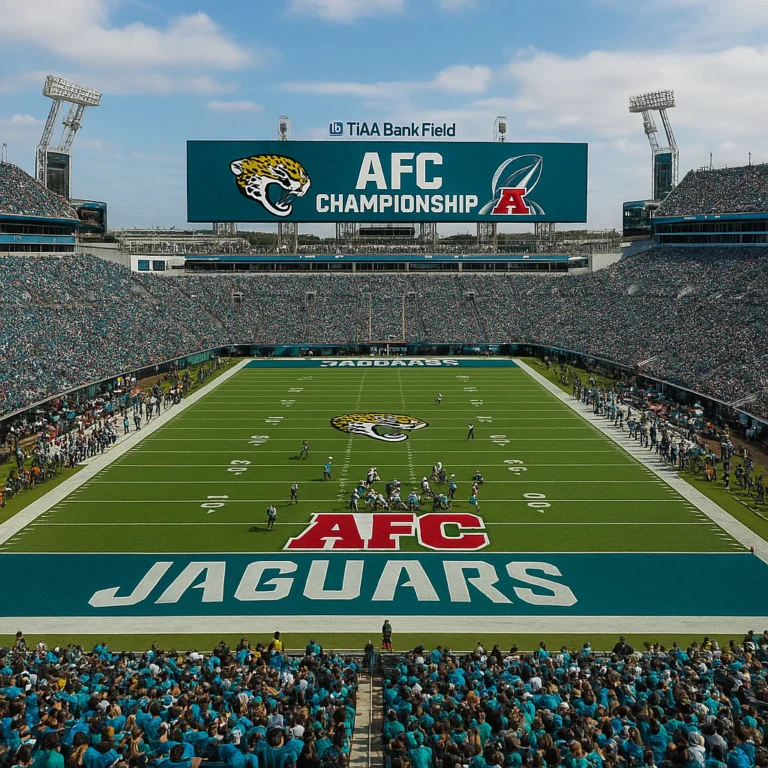
The team has had later playoff highlights, too, including the 2017 season, when Jacksonville returned to the AFC Championship Game. For updated records and official season history, the Jaguars’ team site and the Pro Football Hall of Fame are useful reference points.
Those runs mattered beyond wins and losses. They gave the city shared memories: playoff gatherings, packed game days, and the particular Jacksonville feeling of realizing that a team once considered an unlikely expansion choice had become a genuine contender.
The team’s impact on Jacksonville’s identity and economy
The Jaguars became a visible part of Jacksonville’s civic identity. Home games draw visitors, support game-day businesses, and put the city on national television. The franchise also gives local residents a shared sports identity that stretches across neighborhoods and, at times, across county and state lines.
Economic impact claims deserve careful reading. Stadium events can bring spending to nearby businesses, but the benefits are not automatic or evenly distributed. Public costs, infrastructure needs, and alternative uses of public funds are part of the conversation too. A balanced view asks who benefits, who pays, and whether the investment delivers lasting value, rather than treating a stadium project as an uncomplicated win.
For a broader look at Jacksonville’s civic character, explore our Jacksonville Culture and Jacksonville Facts sections.
🤔 Why Jacksonville Was a Surprising NFL Choice
Jacksonville’s selection surprised plenty of sports observers because the city did not lead the competition in the obvious categories. The market was small, the stadium needed major work, and several rivals appeared to have a better claim on paper.
Market size, television reach, and major-league concerns
The Jaguars’ history is often summarized with an apparent contradiction: Jacksonville was a large city but a small NFL market. Both statements can be true.
The city’s consolidated government covers a broad area, while a television market measures the reach of local broadcast households. These are different ways to define a place. Jacksonville’s city population could look impressive next to other cities, but the TV market ranked low compared with most NFL markets, as discussed in the Jaguars franchise history.
The concern was that a smaller TV market might limit revenue and national media interest. Jacksonville’s counterargument was that the market’s football demand had been underestimated. The NFL owners ultimately judged the bid on more than one metric.
Stadium capacity and the challenge of supporting an NFL team
The Gator Bowl was not an NFL-ready stadium in its existing form. Renovation was essential, and disagreement over the project nearly cost Jacksonville the franchise.
That makes the stadium story a key part of the answer to “Why did Jacksonville get a football team?” The city did not win despite having no stadium plan; it won after local officials and the bid group addressed the problem with a substantial rebuild commitment.
There were trade-offs:
- ✅ A stadium site already existed, avoiding the need to find a completely new home.
- ✅ The renovation demonstrated that Jacksonville would make a serious civic commitment.
- ❌ The work required significant planning and public negotiation.
- ❌ The bid’s stadium disagreement became a real risk to the franchise effort.
How the Jaguars built a regional following
The Jaguars’ support has never been confined neatly to Jacksonville city limits. The team serves fans across Northeast Florida and parts of Southeast Georgia, with game days drawing people from communities beyond the city.
But building a regional following takes more than placing a logo on a map. The franchise needed winning seasons, recognizable players, community presence, and a reason for newer residents to connect with the team. The early playoff runs helped, while the fan traditions that grew around home games made the Jaguars a familiar local institution.
Not every fan arrived as a Jaguars supporter. Some residents brought loyalties to other NFL teams when they moved to Florida. The team had to earn attention—and, through its early success, it did.
🧭 Jacksonville Jaguars Timeline: Key Dates and Milestones
| Year | Milestone |
|---|---|
| 1925 | Ernie Nevers plays for a Jacksonville professional team |
| 1974 | The Jacksonville Sharks begin WFL play |
| 1975 | The Jacksonville Express continues the city’s WFL chapter |
| 1979–82 | Jacksonville Firebirds/Sunbirds play in the AFA |
| 1984–85 | The Jacksonville Bulls draw major USFL crowds |
| 1987 | Jacksonville’s effort to attract the Houston Oilers falls through |
| 1989 | Touchdown Jacksonville! organizes its NFL bid; an Oilers–Dolphins preseason game sells out |
| 1991 | The NFL announces a plan to expand from 28 to 30 teams |
| 1993 | Charlotte receives the first expansion franchise |
| November 30, 1993 | NFL owners award Jacksonville the 30th franchise |
| December 31, 1993 | The Gator Bowl hosts its final game before major reconstruction |
| 1995 | The Jaguars begin play in the NFL |
| 1996 | Jacksonville reaches the AFC Championship Game |
| 199 | The Jaguars return to the AFC Championship Game |
| 2002 | Jacksonville moves to the newly formed AFC South |
For the dates and team history, consult the official Jaguars site and the History of the Jacksonville Jaguars. Wikipedia is useful for orientation, but verify key historical details against primary or established news sources when you need a citation-ready reference.
❓ Common Misconceptions About Jacksonville Getting an NFL Team
“Jacksonville got the team because it was the biggest city.”
Not exactly. Jacksonville’s city population was substantial, but its TV market was small compared with other NFL markets. Its consolidated city-county boundaries also make direct population comparisons less straightforward.
“The Jaguars moved to Jacksonville from another city.”
No. The Jaguars were an expansion franchise, awarded to Jacksonville in 1993. They did not relocate from an existing NFL city.
“The Jacksonville Bulls became the Jaguars.”
No. The Bulls played in the USFL, a separate league that later folded. Their strong attendance helped demonstrate local football demand, but the Jaguars were a new NFL franchise.
“One sold-out preseason game convinced the NFL.”
That game helped the case, but it was not the whole case. Jacksonville also had a local ownership group, a history of football attendance, a stadium renovation plan, and a broader expansion opportunity.
“The Gator Bowl was already ready for NFL football.”
It was not. The existing stadium needed extensive reconstruction. The stadium plan was one of the bid’s biggest challenges—and one of the commitments Jacksonville eventually made.
“The NFL chose Jacksonville because the market was obviously stronger than St. Louis or Baltimore.”
The numbers do not support that simple explanation. Jacksonville’s market was smaller than several competitors. The decision reflected a broader evaluation of local backing, fan demand, stadium plans, and expansion strategy.
✅ Quick Tips and Facts About the Jaguars’ Arrival
- Need the key date? Jacksonville was awarded the franchise on November 30, 1993.
- Need the first season? The Jaguars began playing in 1995.
- Was Jacksonville the first expansion winner? No. Charlotte received the first of the two new franchises; Jacksonville got the second.
- Who led the local campaign? Wayne Weaver and the Touchdown Jacksonville! group.
- What made the bid persuasive? A combination of strong football attendance, local commitment, a regional fan base, and a stadium plan.
- What nearly derailed it? Disagreement over the Gator Bowl lease and renovations.
- Why do sources describe Jacksonville as a surprise? The city’s TV market was relatively small, and other bidders appeared stronger on paper.
- Where can you verify the basics? Start with the Jaguars’ official history and the News4JAX retrospective.
- Want more local context? Explore Jacksonville Facts, Jacksonville Culture, and Jacksonville Demographics.