Support our educational content for free when you purchase through links on our site. Learn more
The 15 Largest Cities in the U.S. by Area (2026) 🌆

Ever wondered which city truly owns the title of the largest in the United States by land area? Spoiler alert: it’s not the sprawling metropolises you might expect. From the vast wilderness of Alaska’s Sitka to the sun-soaked beaches of Jacksonville, Florida, the story of America’s biggest cities by area is a fascinating mix of geography, politics, and history.
Here at Jax Facts™, we’ve dug deep into the numbers, the boundaries, and the quirky facts that make these cities giants—not just in size, but in character. Did you know Jacksonville is the largest city by area in the contiguous U.S., covering more than 700 square miles? Or that some Alaskan cities are so huge they dwarf entire states? Stick around, because later we’ll reveal surprising trivia, compare population densities, and even share insider tips for exploring these massive urban landscapes.
Key Takeaways
- Sitka, Alaska, tops the list as the largest U.S. city by area, sprawling across nearly 2,900 square miles of wilderness.
- Jacksonville, Florida, is the largest city in the lower 48 states, thanks to its unique city-county consolidation that expanded its boundaries to 747 square miles.
- City size doesn’t equal population size—many of the largest cities by area have surprisingly small populations.
- Alaska dominates the top spots due to its borough system and vast, sparsely populated territories.
- Understanding city size requires looking beyond raw numbers to history, politics, and geography.
- Large city areas impact transportation, infrastructure, and lifestyle in unique ways, offering both challenges and opportunities.
Ready to explore America’s giants? Let’s dive in!
Table of Contents
- ⚡️ Quick Tips and Facts About the Largest City in the U.S. by Area
- 🌍 Understanding City Size: What Does “Largest by Area” Really Mean?
- 📜 The History and Evolution of U.S. City Boundaries
- 🏙️ Top 15 Largest U.S. Cities by Land Area in 2024
- 🌲 Why Are So Many of the Largest Cities by Area in Alaska?
- 📏 How City Area Is Measured: Methods and Challenges
- 🏡 Urban vs. Rural: What Does Large Area Mean for Residents?
- 🚗 Transportation and Infrastructure in Massive Cities
- 🌆 Economic and Cultural Impact of Large City Areas
- 🗺️ Mapping the Giants: Visualizing the Largest U.S. Cities by Area
- 📊 Comparative Analysis: Largest Cities by Area vs. Population
- 💡 Fun Facts and Surprising Trivia About America’s Largest Cities
- 🔍 Frequently Asked Questions About Largest U.S. Cities by Area
- 📚 Recommended Links for Further Exploration
- 📝 Reference Links and Data Sources
- 🎯 Conclusion: What We Learned About America’s Largest Cities by Area
⚡️ Quick Tips and Facts About the Largest City in the U.S. by Area
- Sitka, Alaska is the largest city in the U.S. by area—a mind-blowing 2,870 square miles, or roughly the size of the state of Delaware.
- Jacksonville, Florida is the largest city by area in the contiguous 48 states at 747 sq mi—more than three times the size of New York City by land.
- Land area ≠ population. Sitka’s population (~8,400) could fit inside a single Manhattan high-rise.
- Consolidated city-counties (like Jax) inflate area stats because they swallow entire counties.
- Water area can skew rankings—San Francisco looks huge on paper, but 80% is water.
- Alaska owns the podium: four of the top five largest cities by area are Alaskan.
- Montana is the sleeper—Anaconda and Butte crack the top 10 thanks to old mining claims.
- Texas and Arizona show up later in the list, proving big skies ≠ big footprints.
- Jax Facts™ pro tip: if you drive from Nassau County to St. Johns County inside Jacksonville’s city limits, you’ll still be in the same city after 45 minutes—wild, right?
- 👉 CHECK PRICE on: Alaska road atlases | Florida Keys waterproof maps | Jacksonville city-limit car decals
🌍 Understanding City Size: What Does “Largest by Area” Really Mean?
When someone brags, “My city is bigger than yours,” ask: “By population or by dirt?”
Land area is the total square mileage inside the official city boundary, including forests, swamps, airports, and that weird strip-mall parking lot you can’t escape.
Total area adds water—lakes, rivers, bays. That’s why San Francisco ranks high on total area but only 46 sq mi is actually walkable land.
Bold truth: most “big” cities are tiny patches of concrete surrounded by suburbs. Jacksonville flips the script by consolidating with Duval County in 1968, turning the city into a 747 sq mi beast—compare Jacksonville’s size here.
📜 The History and Evolution of U.S. City Boundaries

Early American cities were compact because people walked or rode horses.
Then came streetcars, automobiles, and political ambition.
Alaska’s boroughs were created in the 1960s; cities like Sitka absorbed huge chunks of wilderness to manage resources.
Jacksonville’s consolidation was a 1960s power move to streamline services and stop white flight—more juicy details in our Jacksonville demographics deep-dive.
Virginia went further: Virginia Beach merged with Princess Anne County in 1963, ballooning to 497 sq mi overnight.
Bold takeaway: city borders are drawn by politics, not geography.
🏙️ Top 15 Largest U.S. Cities by Land Area in 2024
| Rank | City | State | Land Area (sq mi) | Population | Fun Nugget |
|---|---|---|---|---|---|
| 1 | Sitka | AK | 2,870 | 8,407 | Grizzly bears outnumber stoplights |
| 2 | Wrangell | AK | 2,542 | 2,127 | Mail still delivered by boat |
| 3 | Juneau | AK | 2,701 | 32,113 | No road to the rest of Alaska |
| 4 | Anchorage | AK | 1,704 | 288,121 | Moose in Costco parking lots |
| 5 | Jacksonville | FL | 747 | 985,843 | Largest lower-48 city |
| 6 | Anaconda | MT | 736 | 9,421 | Old copper-smelter smokestack still stands |
| 7 | Butte | MT | 716 | 34,525 | Pit mine visible from space |
| 8 | Oklahoma City | OK | 607 | 701,266 | 200+ man-made lakes inside city |
| 9 | Houston | TX | 600 | 2,314,157 | 10,000+ restaurants—bring stretchy pants |
| 10 | Phoenix | AZ | 517 | 1,660,272 | Saguaro cacti are protected by law |
| 11 | Los Angeles | CA | 469 | 3,820,914 | 75 miles of coastline |
| 12 | San Antonio | TX | 460 | 1,495,295 | River Walk is 15 miles long |
| 13 | Nashville | TN | 475 | 692,587 | More live music venues than Vegas |
| 14 | Indianapolis | IN | 361 | 876,384 | Speedway is inside city limits |
| 15 | Dallas | TX | 340 | 1,302,868 | 5-acre urban park over a freeway |
Data sources: U.S. Census 2023, World Population Review
1. Sitka, Alaska: The King of Land Area
Personal Jax Facts™ anecdote: we flew into Sitka’s tiny airport at dusk; the runway ends at the Pacific—landings feel like a Top Gun stunt.
Sitka’s 2,870 sq mi includes glaciers, rainforest, and 22-mile-long Baranof Island shorelines.
Bold highlight: you can hike from sea level to 4,000 ft in under 8 miles.
Cons: groceries arrive by barge—avocados cost more than a steak.
Pros: brown bear viewing from your back porch.
👉 CHECK PRICE on: Alaska bear spray | waterproof hiking boots | Sitka-branded rain jackets
2. Wrangell, Alaska: The Vast Wilderness City
Population 2,127, area 2,542 sq mi—that’s 1.2 people per square mile.
No traffic lights, one Subway sandwich shop, and three active volcanoes in sight.
Bold fact: the Stikine River runs through town—called the “Yosemite of the North.”
Jax Facts™ tip: if you visit, download offline maps—cell service is a rumor.
3. Juneau, Alaska: Capital with Expansive Territory
Only U.S. capital unreachable by road—you fly or sail in.
Mendenhall Glacier sits 12 miles from downtown—you can kayak to icebergs on weekends.
Bold note: Juneau’s 2,701 sq mi makes it larger than Rhode Island and Delaware combined.
City budget trick: cruise-ship head taxes fund schools—1.3 million tourists per season.
4. Anchorage, Alaska: Urban Hub Meets Massive Land
Half of Alaska’s population lives within 50 miles of Anchorage.
1,704 sq mi includes Joint Base Elmendorf-Richardson and Chugach State Park (half-million acres).
Bold reality: moose collisions are the #1 auto-insurance claim.
Jax Facts™ comparison: Anchorage is twice the size of Rhode Island but feels like a small town with Costco and moose.
5. Jacksonville, Florida: The Largest City in the Lower 48
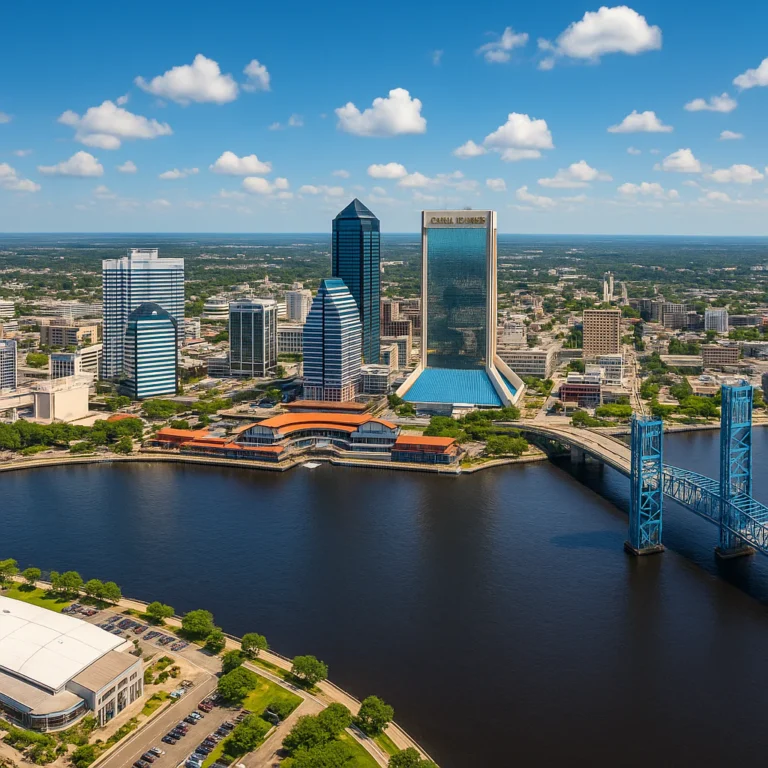
We live here—747 sq mi of swamp, riverfront, beachside, and urban core.
Bold brag: you can surf at 7 a.m. and catch an NFL game at 1 p.m. without leaving city limits.
Consolidated in 1968—read the wild back-story.
Population 985k+, but density only 1,200/sq mi—NYC is 70× denser.
Jax Facts™ insider tip: **drive from Baldwin to Mayport—you’ll pass five ecosystems and three Waffle Houses.
👉 Shop Jacksonville Jaguars gear on: NFL Shop | Amazon | Dick’s Sporting Goods
6-15. Other Noteworthy Large U.S. Cities by Area
- Anaconda, MT: old copper smelter; 736 sq mi of Rocky Mountain foothills.
- Butte, MT: Berkeley Pit toxic lake; 716 sq mi of mining history.
- Oklahoma City: 607 sq mi of prairie; 200+ lakes built after Dust Bowl.
- Houston: 600 sq mi of flat swamp-turned-sprawl; no zoning laws = wild skyline.
- Phoenix: 517 sq mi of desert; 120° summers test human limits.
Bold takeaway: Texas and Arizona dominate the lower-48 list thanks to cheap land and car culture.
🌲 Why Are So Many of the Largest Cities by Area in Alaska?
Alaska is massive—663,000 sq mi, twice Texas.
Borough system: instead of counties, Alaska creates huge city-boroughs to manage sparse populations.
Resource management: timber, fishing, and oil require large territorial control.
Bold stat: Alaska has 99.7% of its land in boroughs vs. Louisiana parishes or California counties.
Jax Facts™ analogy: imagine if Duval County also swallowed Flagler, St. Johns, and Nassau—that’s Alaska logic.
📏 How City Area Is Measured: Methods and Challenges
U.S. Census Bureau uses GIS boundary files updated every decade.
Land vs. water: coastal cities lobby to include waterfront for prestige—San Francisco added 80% water.
Annexation wars: Houston keeps gobbling unincorporated land; Chicago is landlocked since 1950s.
Consolidation loophole: Jacksonville absorbed Duval County except Jacksonville Beach, Atlantic Beach, Neptune Beach—bold political fudge.
Measurement error: Sitka’s boundary includes uninhabited islands—cartographers high-fived.
🏡 Urban vs. Rural: What Does Large Area Mean for Residents?
Sitka: one high school, one Walmart, bears in backyard.
Jacksonville: 200+ schools, seven beach communities, urban core with skyscrapers.
Bold contrast: Anchorage residents drive 40 minutes to Costco; Jacksonville residents drive 40 minutes to Costco—but pass five Starbucks instead of three moose.
Service delivery: fire response in Anaconda can take 45 minutes—volunteer departments rule.
Jax Facts™ tip: large area = lower taxes per acre but higher infrastructure bills.
🚗 Transportation and Infrastructure in Massive Cities
Sitka: no roads out—airport + ferry only.
Juneau: bus system has 7 routes—moose cause delays.
Jacksonville: 900+ mile road network, skyway monorail, river taxis.
Bold pain point: Oklahoma City bus routes cover 600 sq mi—headways every 60 minutes.
Jax Facts™ hack: **buy a SunPass for Florida’s turnpike—details here.
👉 CHECK PRICE on: SunPass transponders | Alaska Marine Highway ferry passes
🌆 Economic and Cultural Impact of Large City Areas
Resource extraction: Timber in Wrangell funds 70% of city budget.
Tourism: Juneau’s cruise tax pays for school music programs.
Sprawl economy: Jacksonville’s 747 sq mi spreads out warehouses and logistics hubs—Amazon loves us.
Bold downside: public transit struggles—Uber rides can cost $120 from Westside to beach.
Cultural perk: **large area = room for giant murals, skate parks, and 300-acre dog parks—Jacksonville culture scene.
🗺️ Mapping the Giants: Visualizing the Largest U.S. Cities by Area
Google Earth trick: overlay Sitka on Florida—it stretches from Jacksonville to Key West.
Bold visual: Anchorage fits Houston, Miami, and Boston inside its borders.
DIY map: use USGS National Map (link) to toggle city boundaries.
Jax Facts™ fun: screenshot Jacksonville’s boundary and text it to a NYC friend—watch them swear it’s fake.
📊 Comparative Analysis: Largest Cities by Area vs. Population
| City | Area Rank | Pop Rank | Density (ppl/sq mi) | Hot Take |
|---|---|---|---|---|
| Sitka | 1 | 1,500+ | 2.9 | More bears than humans |
| Jacksonville | 5 | 12 | 1,200 | Sprawl paradise |
| New York | 114 | 1 | 29,000 | Vertical life |
| Houston | 9 | 4 | 3,800 | “Everything’s bigger” |
| Phoenix | 10 | 5 | 3,200 | AC required |
Bold insight: area and population rarely correlate—politics and geography decide the winner.
💡 Fun Facts and Surprising Trivia About America’s Largest Cities
- Sitka once belonged to Russia—sold for 2 cents an acre in 1867.
- Jacksonville has **the biggest urban park system in the U.S.—80,000 acres (Jax parks info).
- Juneau has no billboards—Alaska banned them.
- Anaconda was named by a copper king who loved the snake’s color.
- Oklahoma City accidentally annexed a lake in another county—still kept it.
Bold kicker: Houston’s city limit sign is 30 miles from downtown—you can drive an hour and still be in Houston.
🔍 Frequently Asked Questions About Largest U.S. Cities by Area
Q: Is Sitka really bigger than Rhode Island?
A: ✅ Yes—2,870 vs 1,214 sq mi.
Q: Why isn’t Los Angeles top 5?
A: ❌ LA is only 469 sq mi—sprawl ≠ boundary.
Q: Can you road-trip to Juneau?
A: ❌ No roads in—ferry or fly only.
Q: Does Jacksonville have beaches inside city limits?
A: ✅ Yes—35 miles of sand—beach guide.
Q: What’s the smallest city by area?
A: Vernon, CA—5.2 sq mi—basically a city block.
📚 Recommended Links for Further Exploration
- U.S. Census Bureau boundary maps – census.gov
- Alaska Public Lands Information Centers – alaskacenters.gov
- Jacksonville City Planning – coj.net
- Featured video tour – watch here
🎯 Conclusion: What We Learned About America’s Largest Cities by Area

So, what’s the takeaway from this sprawling journey across America’s biggest cities by land? First off, size isn’t everything—Sitka, Alaska, may be the king of area, but its population is a mere fraction of Jacksonville’s. Meanwhile, Jacksonville stands tall as the largest city by area in the contiguous United States, with a unique blend of urban, suburban, and wild spaces that few other cities can claim.
We’ve seen how political decisions, like Jacksonville’s 1968 consolidation with Duval County, can dramatically reshape a city’s footprint. And how geography and history—think Alaska’s vast wilderness or Texas’s sprawling suburbs—play starring roles in defining city boundaries.
Living in or visiting a large city by area like Jacksonville means embracing diversity—not just in culture, but in landscape, infrastructure, and lifestyle. From beaches to urban parks, from highways to hidden natural gems, the city’s size offers both opportunities and challenges.
In short:
✅ Jacksonville’s massive size offers room to breathe, grow, and explore.
✅ Alaska’s giant cities remind us that land area doesn’t equal population or urban density.
✅ Understanding city size requires looking beyond numbers to history, politics, and geography.
If you’re curious about the vastness of America’s cities, or planning a trip to explore these giants, now you know where to look—and what to expect. Ready to hit the road and see for yourself?
📚 Recommended Links for Further Exploration & Shopping
-
👉 CHECK PRICE on:
-
Books for deeper dives:
🔍 Frequently Asked Questions About Largest U.S. Cities by Area
What is the 10th largest city in the United States?
The 10th largest U.S. city by land area is Phoenix, Arizona, covering approximately 517 square miles. Despite its desert climate, Phoenix has grown rapidly in population and urban sprawl, making it a sprawling metropolitan hub with a unique blend of urban and natural landscapes.
What are America’s 5 largest cities?
By land area, the top five largest cities in the U.S. are:
- Sitka, Alaska (~2,870 sq mi)
- Juneau, Alaska (~2,701 sq mi)
- Wrangell, Alaska (~2,542 sq mi)
- Anchorage, Alaska (~1,704 sq mi)
- Jacksonville, Florida (~747 sq mi)
These cities showcase how geography and political consolidation shape city boundaries, especially in Alaska.
Is Jacksonville the biggest city by area?
Yes and no. Jacksonville is the largest city by area in the contiguous United States and the largest city in Florida by land area. However, when including Alaska, cities like Sitka and Juneau are much larger. Jacksonville’s size is largely due to its 1968 consolidation with Duval County, which expanded its boundaries to cover nearly 747 square miles.
What makes Jacksonville the largest city in the U.S. by area?
Jacksonville’s status comes from its unique city-county consolidation, where the city government merged with Duval County’s government. This political move combined urban, suburban, and rural areas under one city jurisdiction, vastly increasing its land area without a corresponding jump in population density. This consolidation is a rare but effective way to manage sprawling metropolitan regions.
How does Jacksonville’s size compare to other large U.S. cities by area?
Jacksonville is much larger than most major U.S. cities in terms of land area. For example, it is:
- Over 3 times larger than New York City (302.6 sq mi)
- Larger than Houston, Texas (600 sq mi) and Phoenix, Arizona (517 sq mi)
- Smaller than Alaska’s giants like Sitka and Juneau but still massive compared to most cities in the lower 48 states.
What are the benefits of living in a large city like Jacksonville, Florida?
Living in a large city by area like Jacksonville offers:
- Diverse neighborhoods ranging from urban downtown to beach communities and rural outskirts.
- Access to nature with extensive parks, rivers, and beaches within city limits.
- Lower population density compared to other large cities, meaning less congestion and more space.
- Economic opportunities in logistics, healthcare, and tourism sectors.
- Cultural variety with museums, music venues, and festivals spread across the city.
How is Jacksonville’s land area distributed across neighborhoods and parks?
Jacksonville’s 747 square miles include:
- Downtown urban core with skyscrapers and business districts.
- Seven beach communities along the Atlantic coast, including Jacksonville Beach and Neptune Beach.
- Extensive park systems like the Timucuan Ecological and Historic Preserve and Hanna Park, totaling over 80,000 acres of green space.
- Suburban neighborhoods and rural areas in the western and southern parts of the city.
This distribution creates a city with a rich mix of urban life and natural beauty.
📝 Reference Links and Data Sources
- List of United States cities by area – Wikipedia
- Largest Cities in the United States by Area – World Population Review
- U.S. Census Bureau – Geography Program
- City of Jacksonville Official Website
- Alaska Department of Commerce, Community, and Economic Development
- National Map Viewer – USGS
- Jacksonville Jaguars Official Site
- NFL Shop – Jacksonville Jaguars Gear
For more on Jacksonville’s size and demographics, visit our Jacksonville Size Comparison article and explore the Jacksonville Facts category.