Support our educational content for free when you purchase through links on our site. Learn more
🏆 Is Miami or Jacksonville Bigger? The 2026 Truth Revealed

We’ve all been there: sitting at a backyard BBQ in Jacksonville, debating with a friend from Miami about which city actually reigns supreme. “Miami is huge!” they argue, waving a hand at the skyline. “No way,” you counter, “I drove for an hour today and I’m still in the same city!” Who’s right? The answer is more twisted than a St. Johns River bend. While Miami feels like a global metropolis packed into a tiny footprint, Jacksonville is a sprawling giant that technically dwarfs it in every physical measurement, yet feels worlds apart in density.
In this deep dive, we’re cutting through the confusion to answer the ultimate question: Is Miami or Jacksonville bigger? We’ll unpack the 1968 consolidation that turned Jacksonville into the largest city by area in the contiguous U.S., compare the crushing density of Miami-Dade, and break down the real costs of living in each. By the end, you’ll know exactly which city fits your lifestyle, whether you crave the vertical energy of the 305 or the horizontal freedom of the 904.
Key Takeaways
- Land Area Winner: Jacksonville is the undisputed champion, covering 874 square miles compared to Miami’s mere 56 square miles, making it the largest city by area in the contiguous U.S.
- Population Paradox: While Jacksonville has more residents within its city limits (~1 million), the Miami metropolitan area is a massive powerhouse with over 6.2 million people.
- Cost of Living: Living in Jacksonville is significantly more affordable, with median home prices roughly half that of Miami and lower insurance premiums.
- Lifestyle Vibe: Choose Miami for a dense, walkable, international urban experience; choose Jacksonville for space, a suburban feel, and a slower pace.
- The Verdict: If you measure by square miles, Jacksonville wins. If you measure by economic and cultural influence, Miami takes the crown.
Table of Contents
- ⚡️ Quick Tips and Facts
- 🏛️ Historical Context: How Jacksonville and Miami Evolved into Giants
- 📏 The Big Showdown: Comparing Land Area and Population Density
- 🏙️ Urban Sprawl vs. Skyline: Which City Actually Fels Bigger?
- 🌴 Climate Clash: Humidity, Hurricanes, and Weather Extremes
- 💰 Cost of Living Battle: Housing, Taxes, and Daily Expenses
- 🚗 Traffic and Transportation: Navigating the 904 vs. the 305
- 🍽️ Food Scene Face-Off: Seafood, Cuban Sandwiches, and Local Eats
- 🎨 Culture and Entertainment: Museums, Sports, and Nightlife
- 🏖️ Beach Life: Atlantic Coast Vibes in Miami vs. Jacksonville
- 👨 👩 👧 👦 Family Life: Schools, Safety, and Kid-Friendly Activities
- 🏢 Job Market and Economy: Tech, Tourism, and Finance Hubs
- 🏆 The Verdict: Which City Wins the “Bigger” Title?
- 📝 Conclusion
- 🔗 Recommended Links
- ❓ FAQ: Your Burning Questions Answered
- 📚 Reference Links
⚡️ Quick Tips and Facts
Before we dive into the deep end of the “Is Miami or Jacksonville bigger?” debate, let’s hit you with the hard truths that often get lost in the shuffle of tourism brochures and Wikipedia summaries.
- The Land Giant: If you are talking strictly about land area, Jacksonville is the undisputed heavyweight champion. It covers a staggering 874 square miles, making it the largest city by total area in the contiguous United States. 🏆
- The Population Paradox: Here is where it gets tricky. While Jacksonville has more people within its city limits (approx. 1 million), the Miami metropolitan area is a beast of its own, housing over 6.2 million people. 🐋
- The Consolidation Factor: Jacksonville’s size isn’t a fluke; it’s a result of the 1968 consolidation of the city and Duval County. Miami, conversely, is a dense urban core surrounded by independent cities like Coral Gables and Hialeah.
- The Cost Gap: Want to buy a home? You’ll pay significantly less in the 904. The median home price in Jacksonville is roughly $370,0, compared to a jaw-dropping $674,0+ in Miami. 🏠💸
- Traffic Reality Check: Miami ranks as one of the most congested cities in the nation (often top 10). Jacksonville? We have traffic, sure, but it’s manageable compared to the gridlock of the 305. 🚗🛑
If you’re wondering how a city can be so big yet feel so spread out, stick around. We’re about to unpack the geography, the history, and the sheer scale of these two Florida giants.
🏛️ Historical Context: How Jacksonville and Miami Evolved into Giants
To understand why these two cities are so different, you have to look at their origins. It’s not just about when they were founded; it’s about how they decided to grow.
The Consolidation Miracle: Jacksonville’s 1968 Gamble
In the mid-20th century, Jacksonville was facing a classic urban problem: the city was shrinking while the suburbs were booming. The solution? Consolidation. On October 1, 1968, the City of Jacksonville and Duval County merged.
This wasn’t just a name change; it was a geopolitical earthquake. By merging, the city absorbed all the surrounding suburbs, effectively drawing a massive circle around the entire county. This is why, if you drive 45 minutes from downtown Jacksonville, you might still technically be “in the city.”
Did you know? This consolidation made Jacksonville the largest city by area in the contiguous U.S. overnight. You can read more about this unique political structure in our deep dive on Jacksonville Facts.
The Patchwork Quilt: Miami’s Fragmented Growth
Miami took a different path. Instead of merging, the Miami-Dade area grew as a collection of independent municipalities. Cities like Coral Gables, Hialeah, Miami Beach, and Miami itself all have their own mayors, police forces, and zoning laws.
This fragmentation means that while the “Miami” metro area is massive, the actual City of Miami is relatively small (about 56 square miles). It’s like a giant puzzle where every piece is a separate city. This is why Miami feels so dense; the population is packed into a tiny footprint, whereas Jacksonville’s population is spread across a massive canvas.
For more on how this affects our local culture, check out our article on Jacksonville Culture.
📏 The Big Showdown: Comparing Land Area and Population Density
Let’s get the numbers out of the way. We love a good table here at Jax Facts™.
The Numbers Game: City Proper vs. Metro Area
| Metric | Jacksonville, FL | Miami, FL | The Winner? |
|---|---|---|---|
| Total Land Area | ~747 sq mi (City) / 874 sq mi (Total) | ~56 sq mi | Jacksonville (by a landslide) 🌍 |
| City Proper Population | ~1,017,0 (2025 Est.) | ~450,0 (2025 Est.) | Jacksonville (City Limits) 🏙️ |
| Metro Area Population | ~1.76 Million | ~6.2 Million | Miami (Metro Region) 🌏 |
| Population Density | ~1,360 people/sq mi | ~13,0+ people/sq mi | Miami (Much denser) 🏢 |
Why the Confusion?
You might be asking, “Wait, if Miami has 6 million people in the metro, isn’t that bigger?” Yes and no.
- City Limits: If you draw a line around the official city boundaries, Jacksonville is bigger in both people and land.
- Metro Influence: If you look at the economic and cultural influence, the Miami metro area dwarfs Jacksonville.
This is the crux of the debate. When people say “Miami is bigger,” they are usually thinking of the Miami-Dade County experience. When they say “Jacksonville is bigger,” they are talking about the municipal footprint.
If you want to see how this compares to other Florida cities, we have a great breakdown on is jacksonville the biggest city land wise that breaks down the math.
🏙️ Urban Sprawl vs. Skyline: Which City Actually Fels Bigger?
Numbers are great, but feelings matter more when you’re choosing a place to live.
Jacksonville: The “Suburban” Metropolis
Driving through Jacksonville feels like driving through a very large, very green suburb. Because of the consolidation, you can drive for 20 minutes and see more trees than skyscrapers.
- The Vibe: Relaxed, spread out, car-dependent.
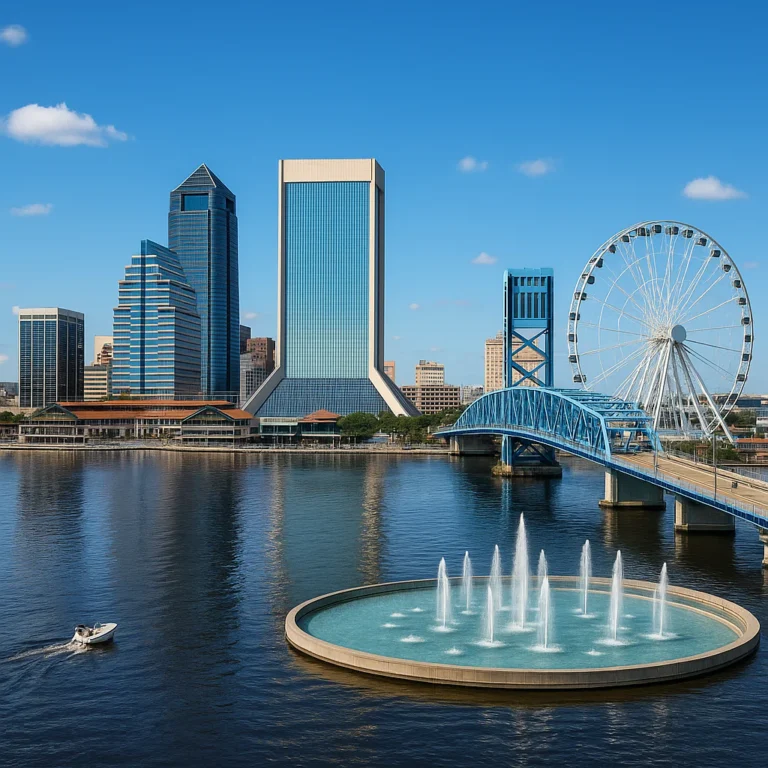
- The Skyline: Modest. The tallest building is the Wells Fargo Center, but it doesn’t dominate the horizon like in NYC or Chicago.
- The Experience: You need a car for everything. There is no “downtown” in the traditional sense where you can walk to work, shop, and eat without a vehicle.
Miami: The “Concrete” Jungle
Miami feels like a metropolis in the traditional sense.
- The Vibe: Fast-paced, vertical, walkable (in parts), and international.
- The Skyline: Dominated by high-rises in Brickell and Downtown. It feels like a major global city.
- The Experience: You can walk, take the Metromover, or use ride-shares easily in the core. But once you leave the core, you hit the “patchwork” of other cities.
The Verdict on “Feel”:
- If you want a big city feel with skyscrapers and nightlife, Miami wins.
- If you want space, a yard, and a slower pace, Jacksonville wins.
🌴 Climate Clash: Humidity, Hurricanes, and Weather Extremes
Both cities are in Florida, so you know it’s going to be hot. But there are nuances.
The Heat Index
- Jacksonville: We get hot, but we also get a bit of a northern breeze from the Atlantic. Summers are humid, but winters are milder than Miami’s tropical heat. We actually get a few days where you might need a light jacket in January. ❄️
- Miami: It’s tropical. It’s hot and humid year-round. Winters are short and warm. If you hate the cold, Miami is paradise. If you like four distinct seasons (even if they are mild), Jacksonville is better.
Hurricane Risk
- Jacksonville: Located further north, we are often on the periphery of major hurricane tracks. We get hit, but less frequently than South Florida.
- Miami: Sitting right on the edge of the Caribbean, Miami is in the bullseye for Atlantic hurricanes. The risk is higher, and the insurance costs reflect that.
For a deeper dive into our local weather patterns, check out our Jacksonville Demographics section where we discuss how climate affects population growth.
💰 Cost of Living Battle: Housing, Taxes, and Daily Expenses
This is where the rubber meets the road. Let’s talk money.
Housing Market
- Jacksonville: You can get a single-family home with a yard for a fraction of the Miami price. The median home price is around $370,0.
- Miami: You are paying for the location. A similar home in Miami can easily cost $674,0 or more. In Miami, you often pay a premium just to be near the water.
Taxes and Insurance
- Property Taxes: Both are in Florida, so no state income tax! However, Miami-Dade property taxes can be higher due to the higher assessed values.
- Homeowner’s Insurance: This is the kicker. Insurance in Miami is significantly higher due to the hurricane risk. In Jacksonville, it’s high, but manageable.
- Auto Insurance: As mentioned in our quick tips, Miami auto insurance is nearly double that of Jacksonville.
Daily Expenses
- Groceries & Dining: Miami has a higher cost of living for everything from coffee to groceries.
- Utilities: Miami utilities are about 2.5% higher due to the constant need for AC.
The Bottom Line: You can live a luxurious lifestyle in Jacksonville for the price of a modest lifestyle in Miami.
🚗 Traffic and Transportation: Navigating the 904 vs. the 305
Jacksonville: The Car Kingdom
- Infrastructure: We have wide roads, but we rely heavily on cars. The Skyway (monorail) exists, but it’s mostly for tourists and doesn’t go far.
- Congestion: We have traffic, especially on I-95 and the bridges, but it rarely grinds to a complete halt like in Miami.
- Commute: Average commute times are reasonable, but distances are long.
Miami: The Gridlock Capital
- Infrastructure: We have the Metrorail, Metromover, and buses, but they are often overcrowded.
- Congestion: Miami is notorious for traffic. I-95 and the Turnpike can be a parking lot for hours.
- Commute: Even short distances can take 45 minutes.
Pro Tip: If you hate sitting in traffic, Jacksonville is the clear winner. If you prefer public transit options (even if imperfect), Miami has more of them.
🍽️ Food Scene Face-Off: Seafood, Cuban Sandwiches, and Local Eats
Jacksonville: The Seafood Capital
- Specialty: Fresh shrimp, oysters, and stone crab.
- Vibe: Casual, beachy, and local. Think The Fish House or Cedar River.
- Diversity: Growing, but still dominated by Southern and seafood cuisine.
Miami: The Global Kitchen
- Specialty: Cuban sandwiches, empanadas, and Latin American fusion.
- Vibe: High-end, trendy, and international. You can find authentic food from Colombia, Peru, Spain, and beyond.
- Diversity: Unmatched. It’s a melting pot of cultures.
The Verdict:
- Love seafood and a laid-back dinner? Jacksonville.
- Craving Cuban coffee and a world-class dining scene? Miami.
🎨 Culture and Entertainment: Museums, Sports, and Nightlife
Jacksonville: Sports and Family Fun
- Sports: Home of the Jacksonville Jaguars (NFL) and the Jacksonville Sharks (Arena Football). We also host the PGA Tour (The Players Championship).
- Nightlife: More focused on bars and local breweries. Less “club” culture, more “patio” culture.
- Museums: The Cummer Museum and MOSH are great, but smaller than Miami’s options.
Miami: The Party Capital
- Sports: Miami Heat (NBA), Miami Dolphins (NFL), and Miami Marlins (MLB).
- Nightlife: World-famous clubs, beach parties, and late-night dining.
- Museums: The Pérez Art Museum, Vizcaya, and the Wynwood Walls offer a world-class cultural experience.
The Verdict:
- Want family-friendly sports and a relaxed night out? Jacksonville.
- Want world-class art, music, and partying? Miami.
🏖️ Beach Life: Atlantic Coast Vibes in Miami vs. Jacksonville
Jacksonville Beaches
- Vibe: Relaxed, family-oriented, and less crowded.
- Water: The water is a bit cooler and can be murkier due to the St. Johns River influence.
- Access: Easy to get to from downtown.
Miami Beaches
- Vibe: Glamorous, crowded, and party-focused.
- Water: Crystal clear, turquoise, and warm.
- Access: Can be tricky due to traffic and parking.
The Verdict:
- For a quiet family day? Jacksonville.
- For a glamorous beach party? Miami.
👨 👩 👧 👦 Family Life: Schools, Safety, and Kid-Friendly Activities
Jacksonville
- Schools: Public schools vary, but there are excellent private and charter options. The Duval County Public Schools system is large and diverse.
- Safety: Varies by neighborhood. Some areas are very safe, others less so.
- Activities: Great parks, the Jacksonville Zoo, and the Museum of Science & History.
Miami
- Schools: Similar to Jacksonville, with a mix of public, private, and charter. The Miami-Dade County Public Schools is one of the largest in the nation.
- Safety: Also varies by neighborhood.
- Activities: Zoo Miami, Seaquarium, and countless cultural festivals.
The Verdict:
- Both cities offer great options for families. Jacksonville offers more space for kids to play, while Miami offers more cultural diversity and activities.
🏢 Job Market and Economy: Tech, Tourism, and Finance Hubs
Jacksonville
- Key Industries: Logistics, Finance, Healthcare, and Military.
- Major Employers: CSX, Fidelity National Financial, Mayo Clinic, and the Navy.
- Growth: Steady growth in tech and finance.
Miami
- Key Industries: International Trade, Tourism, Finance, and Real Estate.
- Major Employers: Carnival Cruise Line, American Airlines, and various international banks.
- Growth: Rapid growth in tech and startups.
The Verdict:
- Looking for logistics or military jobs? Jacksonville.
- Looking for international trade or tourism? Miami.
🏆 The Verdict: Which City Wins the “Bigger” Title?
So, we’ve covered the land, the people, the money, and the vibe. Who wins?
If you define “bigger” by land area and city-proper population:
🏆 Jacksonville takes the crown. It is the largest city in Florida by land and city population.
If you define “bigger” by metropolitan influence, cultural impact, and metro population:
🏆 Miami wins. The Miami metro area is a global powerhouse with over 6 million people.
The Final Word:
- Jacksonville is the bigest city in Florida.
- Miami is the bigest metro area in Florida.
It all depends on what you’re looking for. Do you want space and a lower cost of living? Jacksonville. Do you want a global city feel and a vibrant cultural scene? Miami.
As we mentioned in the video summary, “Life is too short not to love where you’re living.” Choose the city that fits your lifestyle, not just the numbers.
📝 Conclusion

We started this journey asking, “Is Miami or Jacksonville bigger?” and the answer is a resounding “It depends on how you measure it.”
Jacksonville is the land giant, a sprawling metropolis that offers space, affordability, and a relaxed pace. It’s the perfect home for families, professionals in logistics and finance, and anyone who loves the outdoors without the crowds.
Miami, on the other hand, is the cultural and economic giant. Its metro area is a powerhouse of global influence, offering a vibrant, fast-paced lifestyle with world-class dining, arts, and nightlife.
Our Recommendation:
- Choose Jacksonville if: You value space, affordability, and a family-friendly environment. You don’t mind driving and prefer a slower pace.
- Choose Miami if: You crave a cosmopolitan lifestyle, love international culture, and don’t mind paying a premium for the “Miami experience.”
Both cities are incredible in their own right. Whether you’re a “904” native or a “305” local, the choice is yours.
🔗 Recommended Links
If you’re ready to explore these cities further, here are some resources to help you plan your next move.
For Jacksonville Living:
- Explore Jacksonville Beaches: Jax Facts Beaches
- Jacksonville Real Estate: Zillow Jacksonville Homes
- Jacksonville Tourism: Visit Jacksonville
For Miami Living:
- Explore Miami Beaches: Miami Beach Official
- Miami Real Estate: Zillow Miami Homes
- Miami Tourism: Visit Miami
Books to Read:
❓ FAQ: Your Burning Questions Answered

Is Jacksonville bigger than Tampa?
Yes, in terms of land area. Jacksonville covers about 874 square miles, while Tampa is around 175 square miles. However, Tampa’s metro area is larger in population than Jacksonville’s metro area.
Read more about “🏆 Is Jacksonville the Largest City in Florida? (2026)”
Is Miami the biggest city in Florida?
No, not by city limits. Miami is the largest city in Florida by metro area population, but Jacksonville is the largest by city proper population and land area.
Read more about “🌴 What is Jacksonville Florida Noted For? 15 Surprising Facts (2026)”
Is Jacksonville, FL bigger than Miami, FL?
It depends on the metric.
- Land Area: Yes, Jacksonville is much bigger.
- City Population: Yes, Jacksonville has more people within city limits.
- Metro Population: No, Miami’s metro area is significantly larger.
Read more about “Is Jacksonville FL Bigger Than NYC? The Surprising Truth! 🏙️🌴”
Is Jacksonville bigger than Miami in area?
Absolutely. Jacksonville is the largest city by total area in the contiguous United States. Miami is a dense urban core surrounded by other cities.
Read more about “🏆 The Real Largest U.S. City by Land: It’s Not NYC! (2026)”
Why is Jacksonville the largest city by area in Florida?
Consolidation. In 1968, the City of Jacksonville merged with Duval County, creating a massive municipal footprint. Miami never consolidated, so its city limits remain small.
Read more about “🏙️ When Did Jacksonville Become the Bold City? (2026)”
How does Jacksonville’s population compare to Miami’s?
City Proper: Jacksonville has more people (approx. 1 million vs. 450,0).
Metro Area: Miami has more people (approx. 6.2 million vs. 1.76 million).
Read more about “Why is Jacksonville Bigger than Miami? 7 Surprising Reasons! 🌆 …”
Is Miami more populated than Jacksonville?
In the metro area, yes. In the city limits, no. This is the key distinction that often causes confusion.
Read more about “🌊 What Is Jacksonville Famous For? 20 Top Secrets Revealed (2026)”
📚 Reference Links
- Jacksonville, Florida – Wikipedia
- Miami, Florida – Wikipedia
- U.S. Census Bureau: Population Estimates
- Florida Department of Economic Opportunity
- CSX Corporation Official Site
- Fidelity National Financial Official Site
- Port of Jacksonville (JAXPORT)
- Miami-Dade County Official Site
- Duval County Public Schools
- Miami-Dade County Public Schools